
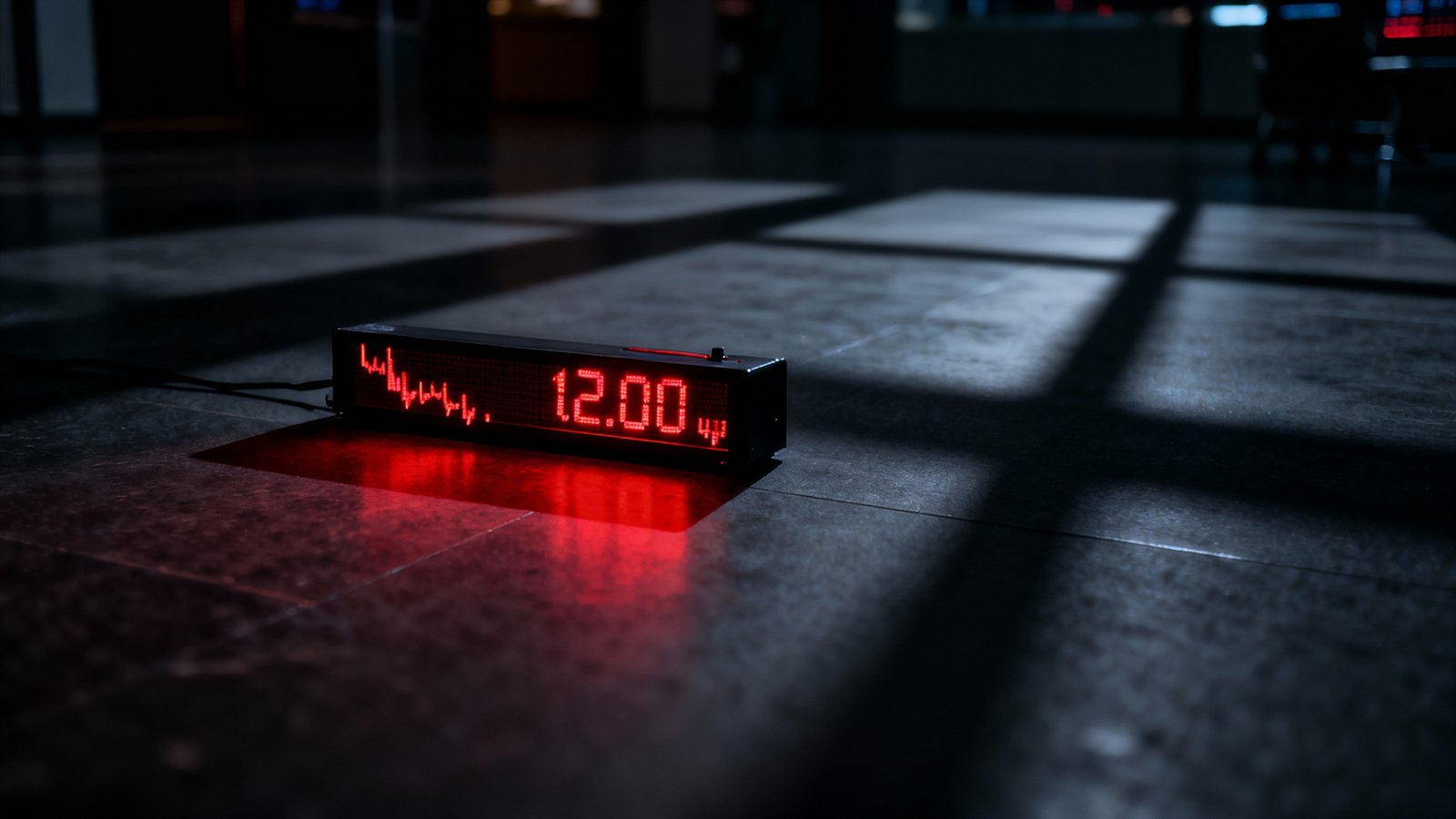
Saudi Stocks Plunge: Is a Market Crash Looming?
Okay, so last week, my brother-in-law-the one who thinks he’s a stock guru because he finally bought crypto last year-called me, practically shouting. “Did you see the Tadawul?!” he yelled. I had, actually. And let me tell you, it wasn’t pretty. On Thursday, October 26th, the Saudi Arabian stock market, specifically the Tadawul All Share Index (TASI), took a nosedive, closing down a pretty significant 1.52%. That might not sound utterly catastrophic at first blush, but it was enough to wipe billions-yes, billions-off market capitalization in a single day. And it felt like a cold shower.
Now, you might think, “Well, markets go up, markets go down. That’s just the game, right?” And yes, you’d be absolutely correct. Volatility is the name of the game. But what makes this particular dip noteworthy, interesting even, is the context. This isn’t just a random blip; it’s happening when things in the region are-shall we say-a bit spicy. Geopolitical tensions, oil price uncertainty, and a general air of “what’s next?” seem to be fueling this kind of jittery behavior, especially among those big institutional players.
It gets you thinking, doesn’t it? Is this just a correction, a healthy trimming of some fat, or are we looking at something much, much bigger bubbling under the surface? The kind of thing that sends shivers down the spine of even the most seasoned investors. Because when one of the world’s major oil producers and economic powerhouses starts to wobble, everyone watches. Closely.
The Jitters Are Real-What’s Cooking?
So, why the sudden downturn? It’s not usually just one thing, is it? Markets are like a complex stew-you throw in a bunch of ingredients, and sometimes it tastes great, and sometimes…well. In this case, there are a few ingredients that seem to be really spoiling the broth.
Geopolitics: The Elephant in the Room (and the Market)
Let’s be frank: the situation in the Middle East right now is incredibly tense. The conflict in Gaza, the regional implications, the constant headlines-it all plays a part. Investors, especially foreign ones, hate uncertainty. Love it or hate it, Saudi Arabia’s economy is deeply intertwined with regional stability. When tensions flare, capital tends to flee to safer havens. It’s just human nature, I guess-you don’t put all your eggs in a basket that looks like it might tip over at any moment.
- Point: Escalating tensions create a risk-off sentiment. Traders want out of perceived high-risk assets.
- Insight: This isn’t just about direct impact; it’s about perception. If people think things are going to get worse, they act accordingly, creating a self-fulfilling prophecy, at least in the short term.

Oil: The Unpredictable Rollercoaster
And then there’s oil, the lifeblood of the Saudi economy. You’d think high oil prices would be good for them, right? More money coming in, higher government revenues, etc. But it’s not always that simple. While oil prices have been relatively high, there’s a lot of talk about a global economic slowdown. If major economies like China or Europe hit a snag, demand for oil could drop, taking prices-and Saudi profits-with it. Plus, the regional instability itself can cause wild swings. It’s like trying to predict the weather in a hurricane. Good luck with that.
- Point: Global economic slowdown fears could dampen future oil demand.
- Insight:High oil prices aren’t always a silver bullet. Demand is key, and if the world isn’t buying, the price becomes less relevant.
“The market’s reaction isn’t just about economic fundamentals anymore; it’s a visceral response to the global geopolitical chessboard.”
The Big Players and Their Moves
When the market dives, you always have to look at who’s selling, don’t you? It’s often the big fish that really make the waves. A 1.52% drop across the TASI isn’t just mom-and-pop investors hitting the panic button; it’s significant institutional capital making moves. And when they move, everyone else sort of follows. It’s the herd mentality in action, scaled up.
Banking on Hope? Financials Take a Hit
It’s interesting to note that several big banking names felt the heat. Al Rajhi Bank, one of the biggest Islamic banks globally, saw its shares dip. Saudi National Bank (SNB) also took a beating. Now, why banks? Well, they’re often seen as bellwethers for the broader economy. If banks are struggling, it means people might not be borrowing as much, or there’s concern about loan defaults, or maybe just a general lack of confidence in future economic activity. It’s sort of a domino effect, you know?
- Point: Major financial institutions like Al Rajhi Bank and Saudi National Bank experienced significant declines.
- Insight: This suggests a broader lack of confidence in the short-to-medium-term economic outlook. Banks are the arteries of the economy; if they’re constricting, the body isn’t getting enough flow.

A Aramco’s Stubborn Resistance (Almost)
Okay, here’s where it gets interesting, and maybe a little counterintuitive. While much of the market was bleeding, oil giant Saudi Aramco actually saw its shares close higher, up 0.14%. A tiny bump, but a bump nonetheless, against a sea of red. This is kind of like that one kid in school who always manages to defy the dress code even when everyone else is getting detention. Aramco often acts as a stabilizing force, seen as a safe haven because, well, it’s oil, and the world still runs on oil.
However, even Aramco isn’t immune forever. If oil prices really start to tank, or if the geopolitical situation really spirals, even their colossal market cap could feel the squeeze. It just tells you how deeply interconnected everything is, even for the behemoths.
So, Is a Crash Looming?
That’s the million-dollar-or perhaps, trillion-rial-question, isn’t it? Is this just a bad week, a temporary correction fueled by very real-world anxieties, or are we on the precipice of something much more severe? Honestly, predicting market crashes is a fool’s errand, but here’s my take.
The Saudi market is pretty resilient, often supported by government initiatives and domestic stability (at least internally). They’ve got deep pockets, basically. However, the current external pressures-the regional instability, global economic slowdown whispers, and shifting oil dynamics-are not to be underestimated. What we saw on October 26th might just be the start of a period of increased volatility, not necessarily a full-blown “crash” in the 2008 sense, but possibly a prolonged correction or a choppier ride ahead. Investors, both big and small, are likely to remain cautious for a while. We’re certainly in interesting times, and watching how this unfolds will be, if nothing else, endlessly fascinating.