
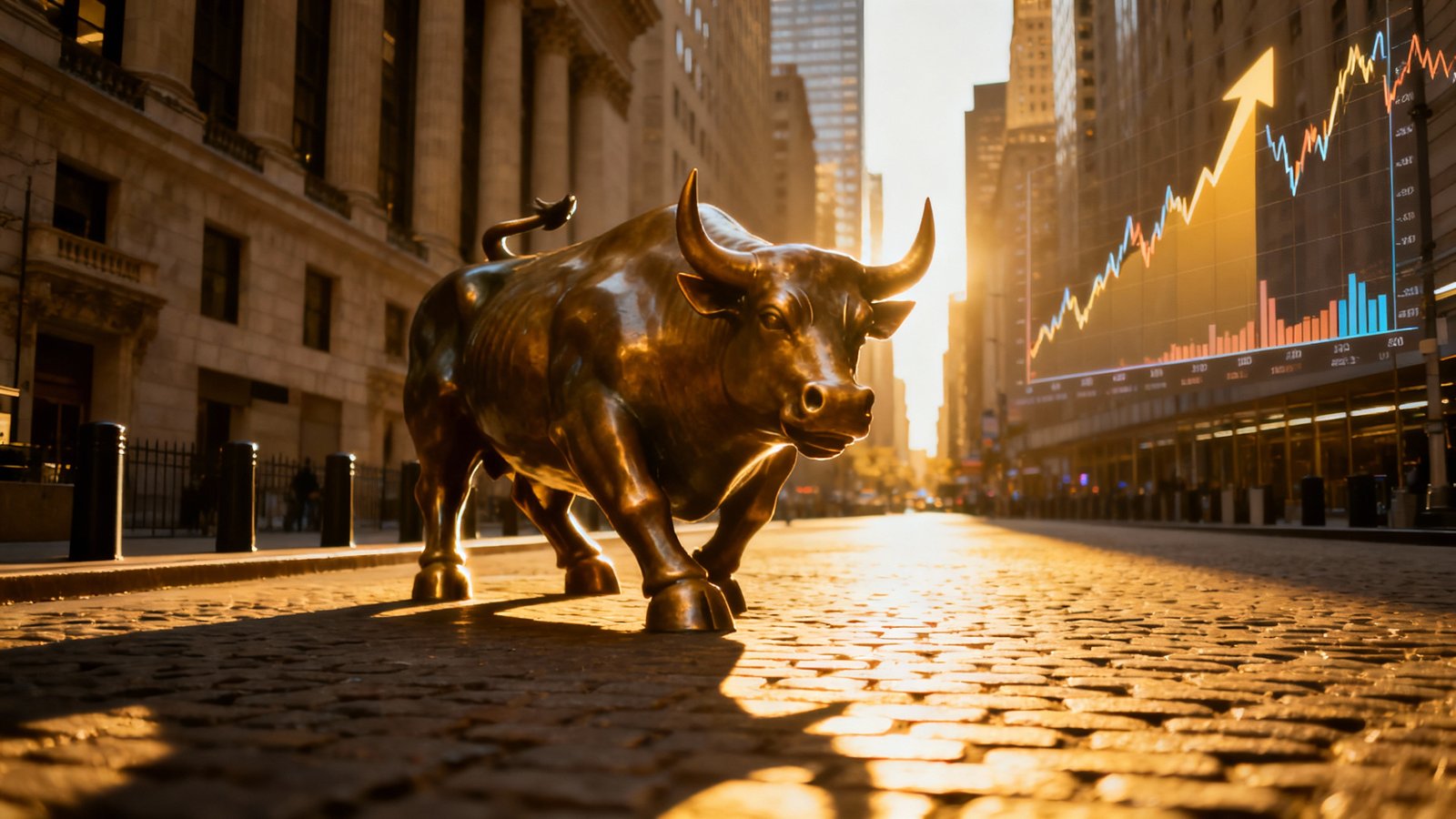
You know, for all the doom and gloom we’ve been hearing-and let’s be honest, sometimes it feels like a constant soundtrack-Wall Street, bless its cotton socks, has a way of finding its sunshine. Even in holiday-thinned trading sessions, when you’d expect things to be quieter than a library on a Sunday, the market keeps this kind of nervous energy, this hum, you can almost feel it. And right now, that hum? It’s all about one thing: rate cuts. That’s the magic phrase everyone’s whispering, shouting, and basically betting their bottom dollar on.
It’s fascinating, really, how a mere whisper of “rate cuts” can turn the entire mood. Suddenly, all those worries about inflation, about a wobbly job market, about geopolitical tensions-they don’t disappear, obviously, but they definitely get pushed to the background, like background noise you’ve learned to tune out. Because for investors, especially the big institutional players, cheaper money-or the prospect of it-is like a green light flashing on a deserted highway. It means growth, it means easier borrowing, it means potentially fatter profits. And boy, are they ready for it.
The Great Rate Cut Anticipation-a Comedy (and Drama) in Several Acts
So, we’re basically in this holding pattern, aren’t we? The Federal Reserve has been pretty clear about its data-dependent approach, but the market, being the impatient beast it is, tends to jump the gun. We’ve seen this play out multiple times over the last year-speculation, correction, re-speculation, it’s a bit of a dance, honestly, like teenagers at a school formal trying to find their rhythm. Right now, though, the vibe is decidedly optimistic. Everyone seems to be betting on significant cuts coming sooner rather than later, which, naturally, fuels the futures market.
Why the Optimism, Anyway?
Well, there are a few things at play. First, there’s a strong perception that inflation is, in fact, cooling. Not crashed-and-burned cooling, but a steady, manageable descent. The Fed’s been doing its job, raising rates, and it seems to be working. Plus, there’s always the hope that they won’t overtighten, pushing us into a deep recession. Nobody wants that. So, the thinking goes, if inflation is behaving, why keep rates so high? It only makes sense to ease up, right?
- Data-Driven Hopes: We’ve seen some recent inflation numbers (CPI, PCE) that, while maybe not perfect, are heading in the right direction. This provides a narrative for rate cuts.
- Fed’s “Pivots”: While the Fed hasn’t explicitly said “we’re cutting next month,” their language has softened. They’re talking about inflation being under control, which investors interpret as a green light.

Then there’s the seasonal effect too. I mean, historically, November and December can be pretty strong for stocks. People are feeling a bit more festive, maybe a bit more generous with their investments. It’s kind of like putting on your favorite holiday sweater-it just feels good. And this feel-good factor, coupled with the rate cut buzz, really gives things a push, even if it’s not entirely rational from a pure economic standpoint.
“The market’s patience is a fickle beast; it expects a resolution, and it prefers a stimulating one.”
The Whisper Network: From Fed Speeches to Your Portfolio
It’s not just the big-picture stuff, though. You’ve got to look at how these tiny shifts in sentiment ripple through everything. We’re talking about futures contracts moving up, signaling that traders are genuinely anticipating higher stock prices down the line. It’s a forward-looking game, stocks, always has been. And right now, that looking forward is pretty rosy. They’re basically pricing in that economic slowdowns might be tempered by easier money, making those future earnings look a little shinier.
What About the Real Economy?
Here’s where it gets interesting, and frankly, a little murky. While Wall Street is doing its happy dance, the real economy-the one where you and I buy groceries and pay electric bills-is still navigating some choppy waters. Inflation hasn’t evaporated, even if it’s cooled. And job markets, while resilient in some sectors, show signs of softening in others. So, you’ve got this kind of disconnect, where the stock market is celebrating what it thinks is coming, not necessarily what’s happening right this very second.
- Consumer Resilience vs. Reality: Consumers have been surprisingly resilient, but how long can that last with higher costs of living? It’s a delicate balance.
- Corporate Earnings: While some companies are doing great, others are feeling the pinch of higher interest rates already. Rate cuts would definitely be a shot in the arm for them.

This is where my journalist’s skepticism kicks in, just a tiny bit. The market is often a fantastic predictor, but sometimes, just sometimes, it gets a little ahead of itself. It’s like planning a massive party for good news that hasn’t quite arrived yet. The enthusiasm is contagious, no doubt, but one little snag-a stronger-than-expected inflation report, a hawkish comment from a Fed official-and the whole mood could shift. Fast. It’s truly a testament to the power of narrative in finance, honestly. We love a good story, don’t we? And “the Fed’s going to save us all with cheaper money” is a pretty compelling tale.
So, what does this all mean for us mere mortals watching from the sidelines, or perhaps dipping a toe in the investing pool? It means staying informed, of course, but also acknowledging the inherent volatility. The market’s excitement for rate cuts is palpable, and it’s certainly giving a boost to current valuations. But remember, sentiment can change on a dime, especially when central bankers are involved. Will the Fed deliver on these high expectations? That, my friends, is the billion-dollar question, and frankly, nobody, not even the smartest analysts on Wall Street, has a crystal-clear answer. We’ll just have to wait and see if this frenzy turns into a lasting upward trend or just another temporary holiday cheer. Keep your eyes peeled, because this story is far from over.