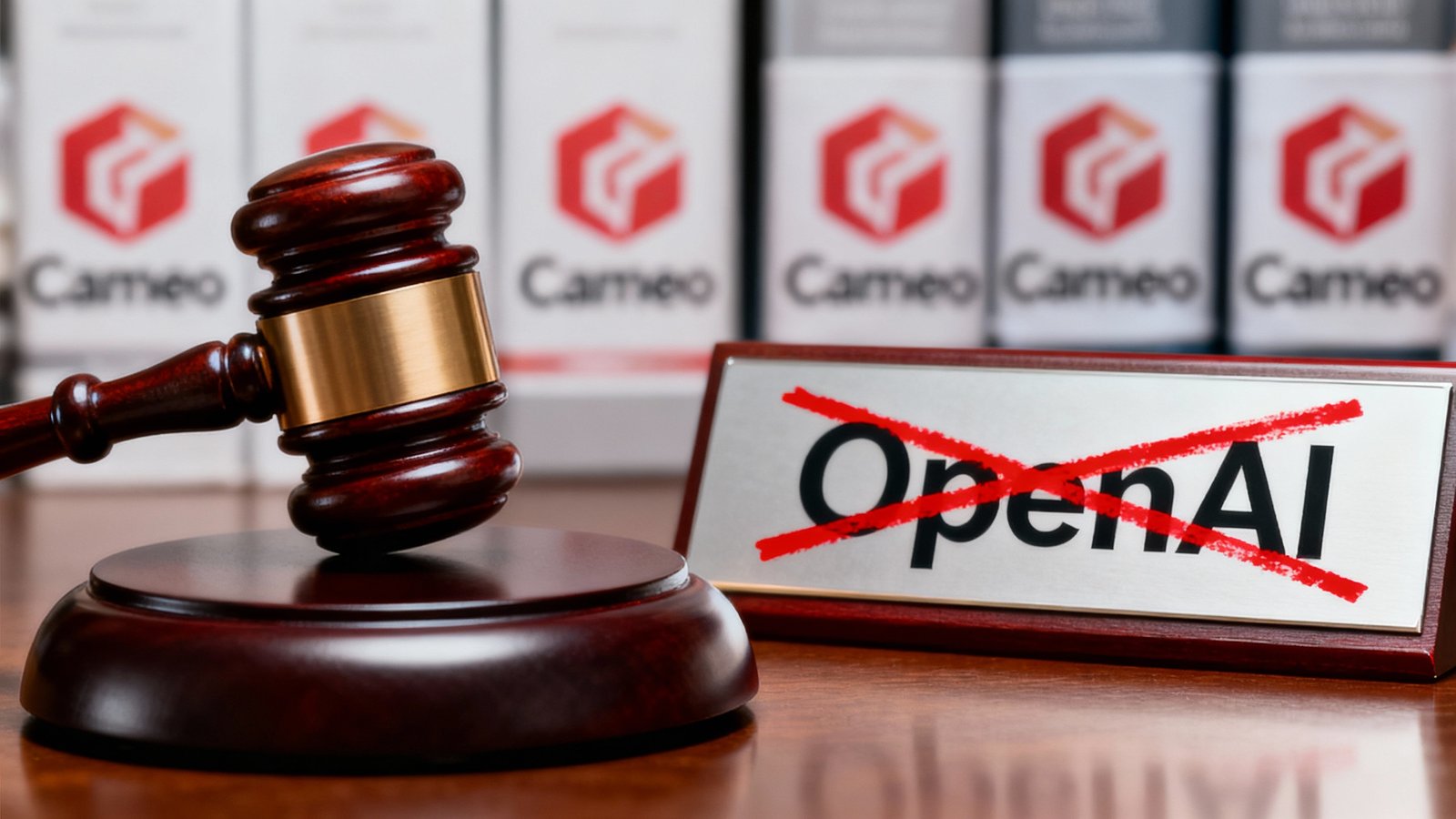
Sometimes the law catches up to tech in the strangest ways. OpenAI just got hit with a temporary injunction that bars them from using the word “Cameo” when talking about their video AI tool, Sora. Yeah, you read that right – they literally can’t say one specific word. And it’s all because of a company you probably know better for letting celebrities sell personalized video messages.
The celebrity video platform Cameo (the one where you can pay Charlie Sheen or Carole Baskin to wish your friend happy birthday) filed a trademark lawsuit against OpenAI back in December. Their beef? OpenAI had been marketing a feature within Sora called “Cameo” that lets users insert AI-generated versions of themselves into videos. A federal judge in Illinois just sided with Cameo – at least temporarily – and now OpenAI is legally prohibited from using that term. Which, honestly, has to be kind of awkward when you’ve already named a feature and started promoting it.
What Exactly Is This Cameo vs. Cameo Drama About?
Here’s where it gets interesting. Cameo, the celebrity video service, has been around since 2017. They’ve built their entire brand on that name – you know, the thing where “cameo” traditionally means a brief appearance by someone famous. It’s actually pretty clever branding when you think about it.
Then OpenAI comes along with Sora, their text-to-video AI generator that’s been making waves (and honestly, freaking people out a bit). One of Sora’s features lets you create videos starring a digital version of yourself. OpenAI called this feature “Cameo.” Same word, different context, but that’s exactly the problem.
The Trademark Tangle
Cameo’s argument is pretty straightforward – they own the trademark for their name in the realm of personalized video content. When OpenAI started using “Cameo” for a feature that also involves personalized videos (even if they’re AI-generated), Cameo said hold up, that’s going to confuse people. Are they wrong? I mean, if someone told you “I just used Cameo to make a video of myself,” would you know which service they meant?

The judge apparently thought the confusion argument had merit. In issuing the preliminary injunction, the court found that Cameo Video Inc. (that’s the official company name) demonstrated a likelihood of success on the merits of their trademark infringement claim. Legal speak for: yeah, they’ve probably got a point here.
For OpenAI, this creates a weird situation. They’ve already launched Sora to the public – well, sort of, it’s still in limited release – and now they have to basically scrub one word from their marketing materials and interface. It’s like being told you can’t use your product’s name. Annoying doesn’t quite cover it.
Why This Actually Matters Beyond One Word
You might think this is just corporate squabbling over semantics. And sure, on one level it is. But there’s something bigger happening here that’s worth paying attention to.
The AI Industry’s Naming Problem
AI companies have been moving so fast that they’ve kind of been playing fast and loose with established brand names and trademarks. OpenAI isn’t the first to run into this issue. Remember when Meta (Facebook) announced their AI assistant and just called it “Meta AI”? Or when everyone started slapping “GPT” onto their products even though OpenAI had trademarked that?
The thing is, when you’re building something genuinely novel, you want a name that feels familiar enough that people understand what it does. “Cameo” makes intuitive sense for a feature that puts you in a video – it’s borrowing from decades of film terminology. But that doesn’t mean you can just take it, especially when another company has spent years building equity in that exact name for video content.
- Speed vs. Due Diligence: Tech companies, particularly in AI, are racing to ship products. Trademark searches and legal clearances take time – time that feels precious when competitors are breathing down your neck.
- The Generic Word Problem: “Cameo” is also just a regular English word. Can you really trademark common terms? (Yes, actually, you can – if you use them in specific commercial contexts. See: Apple, Windows, Amazon.)
- Consumer Confusion Is Real: This isn’t just theoretical. If two companies in adjacent spaces use the same name, people genuinely get mixed up about who does what.
What OpenAI Does Now
So OpenAI needs a new name for this feature. They’ll probably go with something like “Sora Self-Insert” or “Personal Avatar Mode” or some other combination of words that sounds vaguely AI-ish. Whatever they pick, they’ll need to make sure their lawyers actually clear it this time.
The preliminary injunction doesn’t mean OpenAI has lost the case entirely – it’s just a temporary order while the lawsuit proceeds. But these things tend to be pretty good indicators of how a judge is leaning. OpenAI could fight it, settle with Cameo, or just rebrand and move on. Given how much energy and money they’re pouring into Sora itself, my guess is they’ll take option three and save the legal battles for bigger fights.
The Broader Question About AI and Existing Brands
This case highlights something we’re going to see more of: what happens when AI tools intersect with established industries and their trademarks? Cameo built a business on celebrity video messages. OpenAI built a tool that can generate videos. Those circles overlap, even if the underlying technology is completely different.
And it’s not just about names. AI companies are training their models on vast amounts of data – some of which definitely includes copyrighted and trademarked material. The New York Times is suing OpenAI. Getty Images sued Stability AI. Artists are suing everyone. We’re in this weird phase where the technology has outpaced the legal framework, and now the courts are trying to catch up.
“The challenge isn’t just what AI can do – it’s how it fits into a world where intellectual property rights already exist.”
For what it’s worth, I kind of see both sides here. OpenAI probably didn’t think they were stepping on anyone’s toes – “cameo” feels like a generic enough term when you’re describing what the feature does. But Cameo the company has a legitimate claim to protect. They’ve been in business for years, they’ve built brand recognition, and they’ve trademarked their name specifically for personalized video content. When someone else comes along and uses that exact name for personalized video content (even AI-generated), that’s a problem.
What This Means Going Forward
The immediate impact is pretty limited – OpenAI changes a feature name, maybe pays some legal fees, life goes on. But the precedent matters. It’s a signal to other AI companies that they can’t just grab whatever names sound cool or descriptive without checking if someone else got there first.
It also raises questions about how we think about AI features versus traditional products. When you make a physical product or a traditional software service, trademark clearance is part of the launch checklist. But AI features seem to appear so rapidly – new capabilities dropping in updates every few weeks – that companies might be skipping steps they shouldn’t skip.
For users, this is mostly just a curious bit of tech industry drama. Your ability to use Sora (if you have access) won’t change. The feature will just have a different name in the menu. But it’s a reminder that even in the wild west of AI development, old-fashioned trademark law still applies.
The case isn’t over yet. We’ll see if OpenAI and Cameo reach some kind of settlement, or if this heads to a full trial. Either way, it’s a good bet that “Cameo” the feature is getting retired from OpenAI’s vocabulary. And somewhere in their legal department, someone’s probably been assigned to check every single feature name before it ships. Better late than never, I guess.