
Nadella’s Bold Confession: No “Warm Shells” for Microsoft?
Ok, so picture this: you’re one of the most powerful tech CEOs on the planet, leading a company that basically permeates every corner of how we live and work. You’ve got billions, brilliant engineers, and more infrastructure than some small countries. And then, you drop a bombshell, a little admission that makes you sound, well, surprisingly human. That’s exactly what Satya Nadella, Microsoft’s CEO, did recently, telling us all, quite candidly, that he doesn’t have “warm shells to plug into.”
Now, if that phrase sounds a bit enigmatic, you’re not alone. When I first heard it, I had to stop and think for a second. “Warm shells?” Is he talking about sea creatures? Fancy new housing developments? Turns out, in the tech world, that’s a pretty specific-and pretty revealing-piece of jargon, referring to ready-to-go, fully configured datacenters or computational resources that are just waiting to be fired up for new projects. Basically, the equivalent of having an empty, perfectly set up apartment building ready to lease out immediately, no renovations needed.
And Nadella’s point? Microsoft, even with all its might, apparently doesn’t just have these sitting around. This isn’t a small confession, you guys. We’re talking about the company that practically invented the cloud as we know it, the behemoth behind Azure. To hear their head honcho say, “We’re actually struggling to keep up with demand in some areas” kind of shifts your perspective on things, doesn’t it? It suggests a crunch, a bottleneck, a very real, very physical limitation in an industry often seen as infinitely scalable.
The Scramble for Compute Power – It’s Real
You know, for years, the narrative has been about how cloud computing means infinite scale. Need more power? Just click a button! And for most of us, that’s been largely true. But here’s the thing: those buttons aren’t magic. They’re connected to physical servers, racks upon racks of them, humming away in massive, often remote, datacenters. And those servers? They need chips. They need power. They need cooling. And right now, it seems like the demand, particularly for AI workloads, is outstripping the supply in a pretty profound way.
Why the “Shells” Are Cold
So, why is Microsoft, a company with practically bottomless pockets, finding itself in this predicament? It boils down to a few interconnected issues, all kind of converging at once:
- Chip Shortages: This is probably the biggest piece of the puzzle. Specifically, those high-end GPUs-graphics processing units-that are absolutely critical for training and running complex AI models. Nvidia, the big player here, just can’t make them fast enough. Every tech giant, from Google to Amazon to Meta, is scrambling for them.
- Energy Demands: Building and running these datacenters isn’t just about silicon. It’s about electricity. A lot of electricity. And reliable, affordable power isn’t always easy to come by, especially when you’re scaling up at an unprecedented rate. Plus, there’s the whole environmental aspect-a huge conversation in itself.
- Supply Chain Shenanigans: From transformers to fiber optic cables, the global supply chain is still kind of wonky. Getting all the pieces to the right place at the right time to build out new infrastructure is a logistical nightmare even for a company as organized as Microsoft.
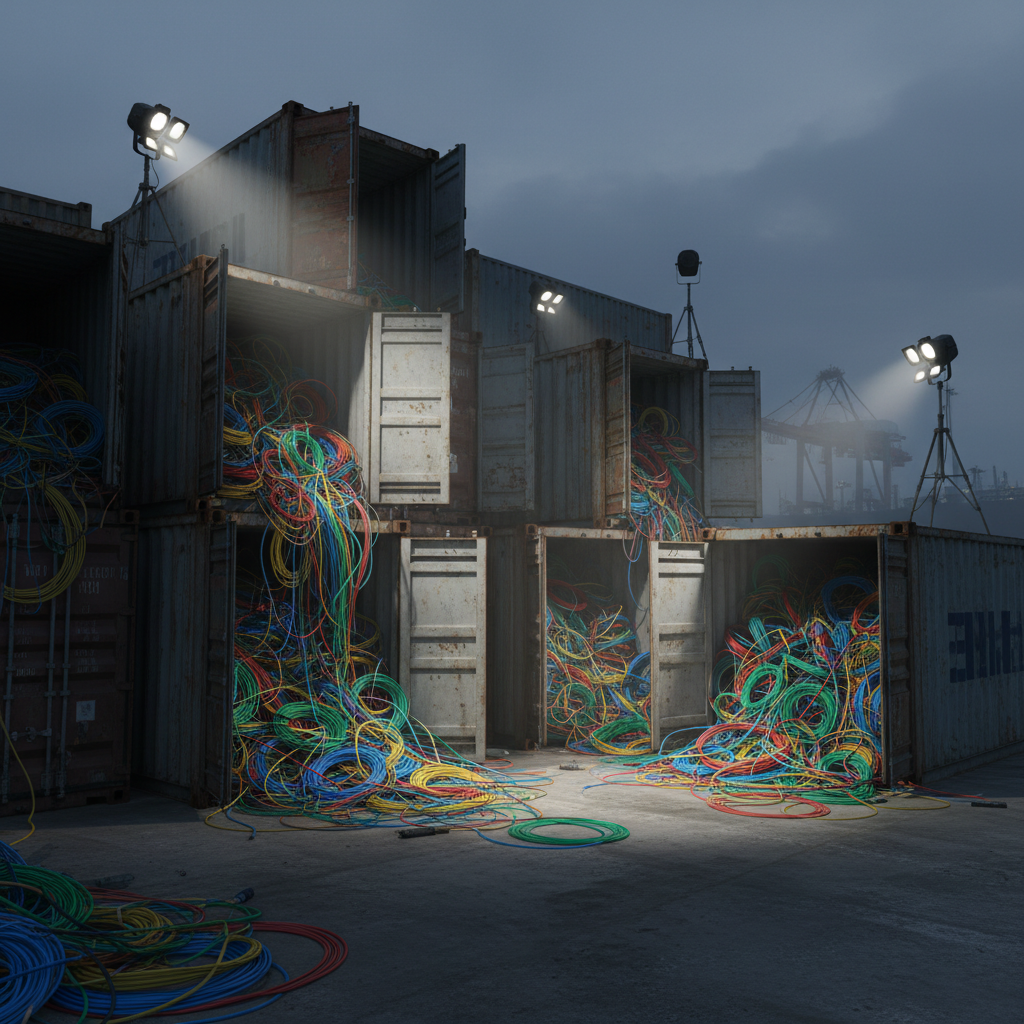
It’s not just about silicon, it’s the sheer scale of everything. Imagine trying to build dozens of new cities at once, all needing their own power grids, water, and infrastructure, but with half the raw materials available. That’s sort of what these tech giants are facing, just on a digital stage.
The AI Gold Rush vs. Physical Reality
This whole “no warm shells” thing really highlights the tension between the seemingly limitless potential of AI and the very tangible, very physical limitations of the real world. We’re in an AI gold rush, right? Everyone wants to build the next ChatGPT, the next killer AI app. Companies are pouring billions into R&D, into hiring AI talent, and into acquiring startups. But all that innovation, all that incredible software, hits a wall if there isn’t enough hardware to actually run it.
“The scale required for these AI models is simply mind-boggling. It’s not just about faster chips; it’s about building entirely new architectures to support them, and doing it yesterday.”
What This Means for Us (and Microsoft’s Rivals)
For Microsoft, this isn’t just a minor headache; it’s a strategic challenge. They want to be the preferred cloud provider for AI, the go-to place for developers and businesses to build and deploy their generative AI solutions. If they can’t provide the compute resources, well, those developers are going to look elsewhere. Or, worse, they’re going to build their own dedicated hardware, which kind of defeats the purpose of the cloud.
- Competition Heats Up: Amazon Web Services (AWS), Google Cloud-they’re all facing similar pressures, but any stumble by Microsoft could be an opportunity for a rival to gain ground. It’s like a high-stakes game of musical chairs, but for GPU clusters.
- Innovation Bottlenecks: If developers can’t get access to the compute they need, it slows down innovation. Small startups, in particular, might find themselves priced out or simply unable to access the resources to train their models effectively. This isn’t just about big tech; it impacts the entire ecosystem, you know?
And speaking of dedicated hardware, this whole situation might just accelerate the trend of companies like Microsoft and Google designing their own custom AI chips (TPUs and AI Accelerators, for instance). If you can’t buy enough of what you need off the shelf, you build it yourself. That’s the classic tech solution, isn’t it? Though, even then, you’re still beholden to foundries like TSMC, which have their own capacity limits.
Looking Ahead: A New Era of Scarcity (Sort Of)
So, what’s the takeaway from Nadella’s candid admission? It’s a sobering reminder that even in the seemingly boundless digital world, there are very real, very physical constraints. The age of abundant, instantly available computing power might be hitting a snag, at least for the specialized, hungry demands of advanced AI. It forces us to reconsider the idea of infinite scalability-it’s infinite in theory, perhaps, but not always in practice, especially when you’re talking about cutting-edge tech.
It also means that resource allocation becomes even more critical. Who gets the chips? Which projects get prioritized? These aren’t just technical questions; they’re business strategy at its most fundamental. Microsoft, for its part, is probably throwing every resource they have at solving this. Building more datacenters, securing more chip orders, optimizing utilization like crazy. It’s a race against time, really, to keep up with the insatiable appetite of AI.
Ultimately, Satya Nadella’s confession, as seemingly small as it was, paints a pretty clear picture. We’re entering a phase where the limits of the physical world are once again shaping the digital frontier. It’s not just about clever algorithms anymore; it’s about the very real, very rare “warm shells” needed to run them. Kind of makes you wonder how long this crunch will last, doesn’t it?