
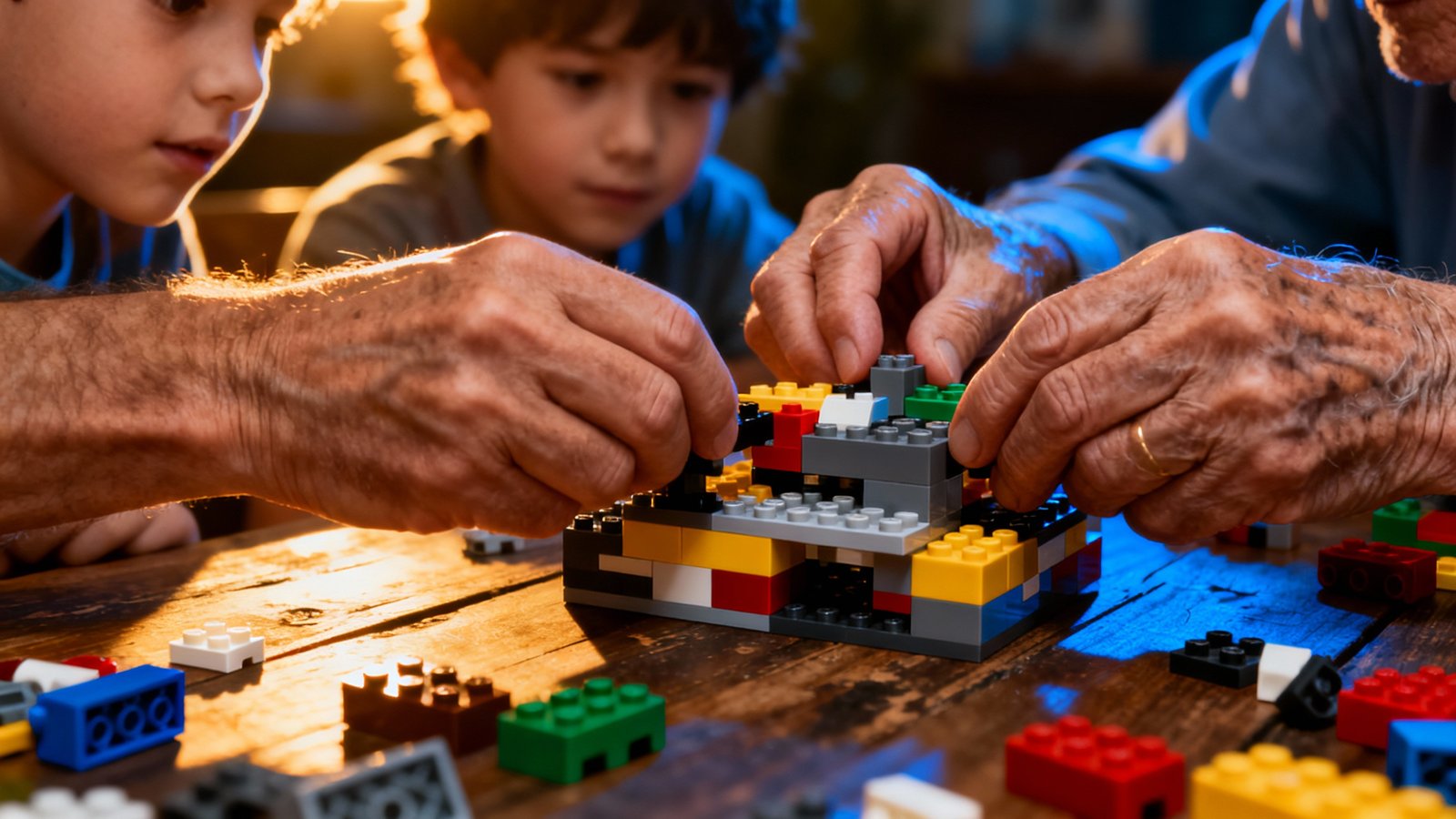
Look, I’m not gonna lie. When I hear “Lego 2026,” my first thought isn’t usually “family obsession.” It’s more like, “Wait, 2026? Are we time traveling now, or did someone just get really, really excited for Christmas two years from now?” But then I saw the bit about sets starting at ten bucks and being, get this, “fun for the whole family,” and I had to pause. Because that? That’s actually pretty interesting. And if I’m being honest, a little bit suspicious.
The Future Is Now… Or Is It Just Really Early Marketing?
So, People.com – yeah, People.com – dropped a bomb, or at least a tiny plastic brick, about new Lego sets coming to Amazon in January 2026. January 2026! Who announces toys that far out? Unless, and this is just my gut talking here, unless they’re trying to plant a seed. A little brick in your brain, you know? Like, “Hey, remember that cool thing we told you about a long, long time ago? Well, it’s almost here!” It’s a psychological play, if you ask me. Get you hyped, keep you waiting, make you feel like you’re in on some exclusive future knowledge. And it probably works, too. I mean, here I am, writing about it.
The reference article, it talks about these sets being “fun for the whole family.” And for a second, I thought, “Yeah, sure, another marketing slogan.” But then I remembered the price point. Ten bucks. That’s not just pocket change, but it’s not a mortgage payment either, which is what some Lego sets feel like these days. We’re talking about a sweet spot, a price point where you don’t have to sell a kidney to get a few bricks. And that, my friends, is a game changer for the “family fun” angle. Because let’s be real, “family fun” usually comes with a hefty price tag attached. Or at least, it often does when Lego is involved.
But this isn’t just about the price, is it? It’s about accessibility. It’s about saying, “Hey, you don’t need to be a hardcore collector or have a dedicated Lego room to enjoy this.” It’s for the casual builder. The parent who wants something quick and easy to do with their kid on a rainy afternoon without breaking the bank. The college student who misses their childhood toys but can’t justify a $200 Star Wars set. And that, I think, is where Lego might actually be onto something big here. Really big.
From Collector’s Item to Casual Fun?
Think about it. For a while now, Lego has been riding this wave of adult collectors. You know the ones. They’ve got the huge, intricate sets, the UCS Millennium Falcon that takes up half the living room, the botanical collections that look so good you almost forget they’re plastic. And don’t get me wrong, those are incredible. But they’re also intimidating. They’re expensive. They’re not exactly “impulse buys” for a Tuesday night. But a $10 set? That’s practically a coffee. You can pick up a few of those without a second thought, maybe one for each kid, or one for yourself and one for your niece. It changes the dynamic entirely. It opens the door to people who might have been priced out, or just plain overwhelmed, by the sheer scale of modern Lego.
Is Ten Bucks Even Real Lego Anymore?
Okay, so here’s my cynical side kicking in. A $10 Lego set. What are we actually talking about here? Is it like, ten pieces? A single minifigure with a tiny accessory? Because I’ve seen those polybags they give out sometimes, and while cute, they’re not exactly a “family obsession.” They’re more like a “five-minute distraction.” But the article specifically says “sets.” Plural. So we’re not talking about just a handful of bricks. We’re talking about something with actual build potential, probably a small model, maybe a mini-vehicle or a creature. And that’s where it gets interesting. Can Lego deliver a genuinely satisfying build experience for ten bucks?
I mean, they’ve done it before, sort of. Those little Creator 3-in-1 sets, some of the smaller City vehicles, even some of the Friends pods. They’re usually pretty clever for their size and price. But the challenge here, I think, is to make it feel substantial enough that it warrants the “family fun” tag. You don’t want to buy a set, spend five minutes building it, and then everyone just looks at each other like, “Okay, now what?” The thing is, for a lot of families, that ten-dollar price point is the sweet spot for a casual gift, a reward, or just a little pick-me-up. And if Lego can nail the “fun” part at that price, they’re golden.
“You spend an hour building this little thing with your kid, and you’re laughing, you’re problem-solving together. That’s not just a toy, that’s a memory, and for ten bucks? That’s a steal.”
The Strategy Behind the Small Stuff
This whole 2026 thing, with the low price point and the family focus, it feels like a very deliberate move. Lego’s been on a roll, don’t get me wrong, but the market’s always changing. And sometimes, you gotta go back to basics. Back to the idea that Lego is, at its heart, about simple, creative building. Not just about collecting licensed characters or recreating movie scenes. It’s about the pure joy of snapping bricks together. And making that joy accessible to everyone, not just those with deep pockets, seems like a pretty smart play.
And it’s not just about the money, really. It’s about engagement. If you can get families building together, even small things, you’re fostering a habit. You’re creating new generations of Lego fans. And those fans, later on, they might just graduate to the bigger, more expensive sets. It’s a funnel, basically. A very clever, very colorful, plastic brick funnel. Plus, let’s be honest, getting a bunch of smaller, cheaper sets means more variety. You can try out different themes, different build styles, without committing to a massive investment. That’s a huge win for consumers who might be a little hesitant to dive headfirst into the Lego rabbit hole.
The fact that it’s on Amazon too, that’s no accident. Prime shipping, easy access, quick decisions. You see it, you click it, it’s on your doorstep tomorrow. Or, you know, in January 2026. This isn’t just about selling toys; it’s about optimizing the entire consumer experience, making it as frictionless as possible. And I have to admit, as a consumer who likes things easy and affordable, that’s pretty appealing.
What This Actually Means
So, what does this all boil down to? My take? Lego, with these 2026 sets starting at ten bucks and being pitched as “family fun,” is making a strategic pivot. Or maybe it’s less of a pivot and more of a broadening of their already massive appeal. They’re not abandoning the adult collectors, no way. Those big, expensive sets are still gonna be there, raking in the cash. But they’re also consciously reaching out to a wider audience, to families who want that shared creative experience without the sticker shock. They’re making Lego less of a luxury item and more of an everyday possibility again.
And you know what? I think it’s brilliant. We live in a world where everything feels like it’s getting more expensive, more complicated. So the idea of a simple, affordable, genuinely fun activity that brings people together? That’s actually pretty refreshing. It’s not about the sheer number of bricks you get for your ten dollars, it’s about the time you spend. The laughter. The little “aha!” moments when a piece clicks into place just right. That’s the real value, isn’t it? So yeah, Lego 2026. Could it be your next family obsession? Honestly? It just might be. And for once, I’m kind of looking forward to it. Even if it is two years away…