A federal judge just told the EPA, in no uncertain terms, that you can’t just kill a $7 billion program because you feel like it. Turns out there’s this pesky thing called the law, and the agency apparently skipped that step. The Solar for All program – money meant to bring rooftop solar to low-income households across the country – got axed earlier this year, and now a court says that cancellation was flat-out illegal.
Not gonna lie, this one’s satisfying to write about. Because for months we’ve watched agency after agency claw back funding that Congress already approved, and it’s felt like there was no real check on that power. Well, here’s a check.
So What Actually Happened Here
Solar for All was part of the Greenhouse Gas Reduction Fund, set up under the Inflation Reduction Act. The idea was pretty simple: take billions of dollars and funnel it into solar projects for low-income and disadvantaged communities – the people who usually get left out when it comes to clean energy incentives because, let’s be honest, not everyone’s got the cash to drop on rooftop panels. Sixty different grant recipients, spread across states, tribes, and nonprofits, were counting on this money.
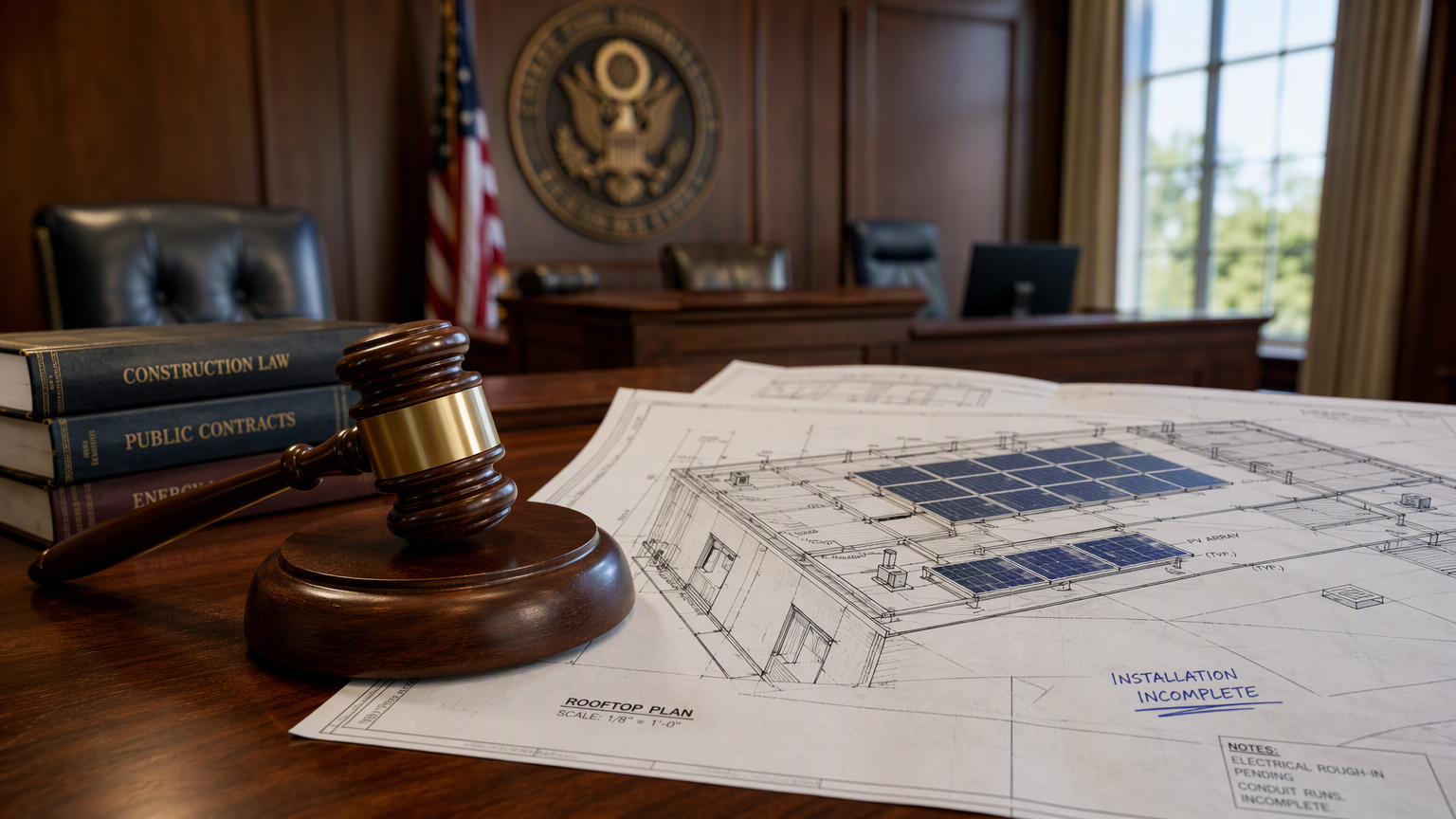
Then the EPA, under new leadership with a very different agenda, decided to terminate the whole thing. Just… pulled the plug. The agency’s justification was thin, and honestly it read more like political posturing than actual legal reasoning. A judge apparently agreed, ruling that the termination violated the law because the EPA didn’t follow proper procedure and didn’t have the authority to just unilaterally cancel grants that had already been awarded and, in many cases, already being spent.
Why This Matters More Than It Sounds
I know “administrative procedure violation” sounds like the most boring phrase in the English language. Stick with me though. This isn’t just a paperwork issue. Grant recipients had already hired staff, signed contracts, started installing panels in some cases. Yanking the funding mid-stream doesn’t just stop future work, it actively breaks promises that were already in motion. Real people, real jobs, real households that were told they’d get solar – all of it left hanging.
Who Actually Gets Hurt When Funding Disappears Overnight?
This is the part that gets buried in the legal jargon. We’re talking about programs specifically designed for lower-income families, people who’ve historically been priced out of the clean energy transition entirely. Solar panels aren’t cheap. The whole point of Solar for All was to make sure the benefits of going green – lower electric bills, more resilient power during outages, whatever – weren’t just a luxury for people who already own their homes and have equity to burn.
When you cancel that kind of program without warning, you’re not hitting some abstract budget line. You’re hitting nonprofits that had staff on payroll expecting this money. You’re hitting states that had already built out implementation plans. You’re hitting families who were maybe weeks away from getting panels installed.
“You can’t just unwind billions in already-obligated federal grants because you don’t like the program anymore – that’s not how any of this works.”
That’s basically the spirit of what the ruling says, even if the actual legal language is way drier. And I think that’s the sentence a lot of people needed to hear out loud.
The Bigger Pattern Nobody’s Talking About Enough
Here’s the thing though – this isn’t an isolated case. We’ve seen this playbook run over and over this year. Agency changes hands, new priorities come in, and suddenly programs that Congress funded and that agencies already committed to just… vanish. No transition period, no negotiation with grantees, just a termination letter and a “good luck.”
And look, I get that administrations change and priorities shift. That’s normal. That’s democracy, whatever. But there’s a difference between shifting priorities going forward and retroactively blowing up commitments that were already legally binding. Contracts exist for a reason. Grant agreements exist for a reason. You don’t get to tear them up just because the political winds changed.
What’s interesting here is how consistently courts have been pushing back on this exact behavior. It’s not really about whether solar power is good or bad, or whether clean energy subsidies are the right policy – reasonable people disagree on that stuff constantly. It’s about whether the executive branch can just override congressional funding decisions on a whim. So far, judges keep saying no, actually, you can’t.
What This Actually Means
I’ll be honest with you: winning in court doesn’t mean the money magically shows back up in bank accounts tomorrow. These rulings usually mean the agency has to go back, follow proper process, maybe issue a new decision that’s actually defensible this time. There could be appeals. There could be more delays. The nonprofits and states that got burned already lost months, maybe longer, and that’s time and momentum you don’t just get back.
But I think this ruling matters beyond just the $7 billion at stake, as huge as that number is. It’s a signal – another one in a growing pile – that courts aren’t going to just rubber-stamp agencies canceling programs because leadership changed and priorities changed with it. There’s a process. There are rules. And apparently, for now at least, somebody’s still enforcing them.
Whether Solar for All actually gets its money back and starts installing panels on real roofs again… that’s still an open question. But the message from the bench feels pretty clear: you don’t get to unilaterally kill programs Congress already funded just because you can. Whether that message actually sticks, or gets appealed into oblivion, is the part we’ll be watching next.