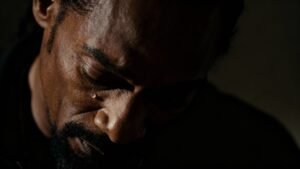
So, John Forte. Fifty years old. Gone. And I gotta be honest with you, when the news trickled out, it didn’t hit the mainstream like some of the others. Not like it should have, anyway. We were all still reeling from a pretty rough start to 2026, weren’t we?
I mean, January felt like a gut punch after gut punch. First, you hear about Bret Hanna-Shuford, just 46, after battling T-Cell Lymphoma. His husband, Stephen, confirmed it, said he “left this world peacefully.” Man, 46. That’s way too young. Then, not even a week later, Elle Simone Scott, a trailblazer, the first Black woman on America’s Test Kitchen, she passed at 49 from ovarian cancer. Another one gone too soon, a real loss for the culinary world, and honestly, for representation, too.
And then there was T.K. Carter, a name you might not immediately place, but you’d know his face – The Thing, Punky Brewster. Found dead at 69. And the same day, Bob Weir, a legend, a Grateful Dead cofounder. Sixty-nine. That’s a lot of talent, a lot of lives, just… extinguished, in a few short days. It was a hell of a start to the year, a real somber tone-setter, you know?
The Echo in the Silence
But amidst all that, there was John Forte. And his story, for me, it just hits different. Maybe it’s because he was right there, in that same tragic cluster, turning 50 and then, poof. Gone. But for some reason, his passing, it felt like an echo in a much larger, louder room. Like his particular tune got a little lost in the cacophony of collective grief. And that, frankly, bugs me. It really does.
Because this wasn’t just some guy. This was John Forte. The guy from the Fugees’ orbit. The lyricist, the producer, the artist who had a legitimate shot at superstardom before life, or rather, his choices, took a sharp, brutal turn. Remember his solo album, Poly Sci? Absolute fire. A classic, if you ask me. Intelligent, gritty, soulful. He was on that precipice, right there, about to break through in a major way.
And then, boom. Ten years. Federal prison. For attempting to move liquid MDMA. Ten years. Think about that. A decade. Gone. He was convicted in 2001, served a good chunk of that, and then, in a twist that felt like something out of a movie, George W. Bush commuted his sentence in 2008. Thanks to some serious advocacy, including from Carly Simon, who was a huge supporter. Can you even imagine that? Being in prison, looking at another seven years, and then… freedom. A second chance. It’s wild, honestly.
The Weight of a Second Chance
But here’s the thing about second chances, especially after something like that – they’re not a clean slate. They come with baggage. With history. With the ghost of what could have been, and the very real memory of what was. Forte, he never stopped making music, even inside. He wrote, he created. And when he got out, he worked. He toured. He released more albums, like StyleFREE and R.I.P. He was trying to rebuild. Trying to redefine. Trying to show the world, and probably himself, that he was more than that one colossal mistake.
And he was. He truly was. I mean, the man was eloquent. Thoughtful. He spoke about his experiences with a kind of raw honesty that you don’t always get from public figures. He became an advocate for criminal justice reform, too. He wasn’t just a musician who messed up; he was a man who learned, who evolved, who tried to use his story for good. That takes guts. Real guts.
So, Why Didn’t We Talk About Him More?
That’s the question, isn’t it? Why, when we rattled off the names of the lost in early 2026, did John Forte’s name feel like an asterisk? Like a footnote in the grand obituary of Hollywood and entertainment? Was it because his biggest moments of mainstream visibility were decades ago? Was it because his story, while redemptive, also carried the shadow of a federal conviction? Or was it something else entirely? A kind of collective amnesia for those who fell from grace, even if they clawed their way back?
“It’s like we want our artists to be perfect, or perfectly tragic. Forte was neither. He was messy, he was flawed, and he fought for every single step of his comeback. Maybe that’s why his story is harder to neatly package.”
I think about it, and I wonder. We love a good comeback story, sure. But do we really? Or do we just love the idea of one, as long as it doesn’t make us uncomfortable? John Forte’s story, it forces you to confront some uncomfortable truths about justice, about second chances, about how we define success and failure. He wasn’t a victim of illness in the same way Bret or Elle were, God rest their souls. He made choices. Big ones. And he paid a heavy price. But he also earned his redemption. He earned his way back. And that’s a story that deserves to be shouted from the rooftops, not whispered.
The Unseen Scars of the Comeback
You know, for someone who spent a decade in the system, coming back to a world that’s moved on, a music industry that’s completely transformed- that’s a whole other kind of battle. He wasn’t just fighting for record deals; he was fighting for relevance, for an audience, for his voice to be heard again in a crowded, noisy space. And he did it. He put out great music. He collaborated. He connected with people. He hustled, man. He really hustled.
And now, he’s gone at 50. Fifty. That’s no age. That’s just… not right. It makes you think about all the music he still had in him, all the stories he still had to tell. The wisdom he’d gained. The insights. Imagine what he could have done in the next 20, 30 years. It’s a tragedy, plain and simple. Not just because a life was lost, but because a unique, powerful voice was silenced too soon, a voice that had so much more to offer.
What This Actually Means
Look, I’m not here to rank tragedies. Every loss is a loss, and every family’s grief is profound. But I do think it’s worth taking a moment to reflect on who we remember, and how, and why. John Forte’s story is a reminder that some of the most compelling narratives, the ones that teach us the most about resilience and the human spirit, aren’t always the ones plastered across every headline. Sometimes, they’re the ones we have to dig a little deeper for, the ones that demand a bit more of our attention, a bit more of our empathy. Because the “untold story” isn’t just about what happened to him; it’s about what we, as a culture, sometimes choose not to see, not to celebrate, not to fully acknowledge.
He was a brilliant artist. A complicated man. A survivor. And a loss, just like all the others. Maybe even more so, because his journey felt like a battle fought on so many fronts, for so many years. So, yeah. John Forte. Fifty & Gone. Let’s not let his story stay untold anymore. Let’s actually remember him. Really remember him.