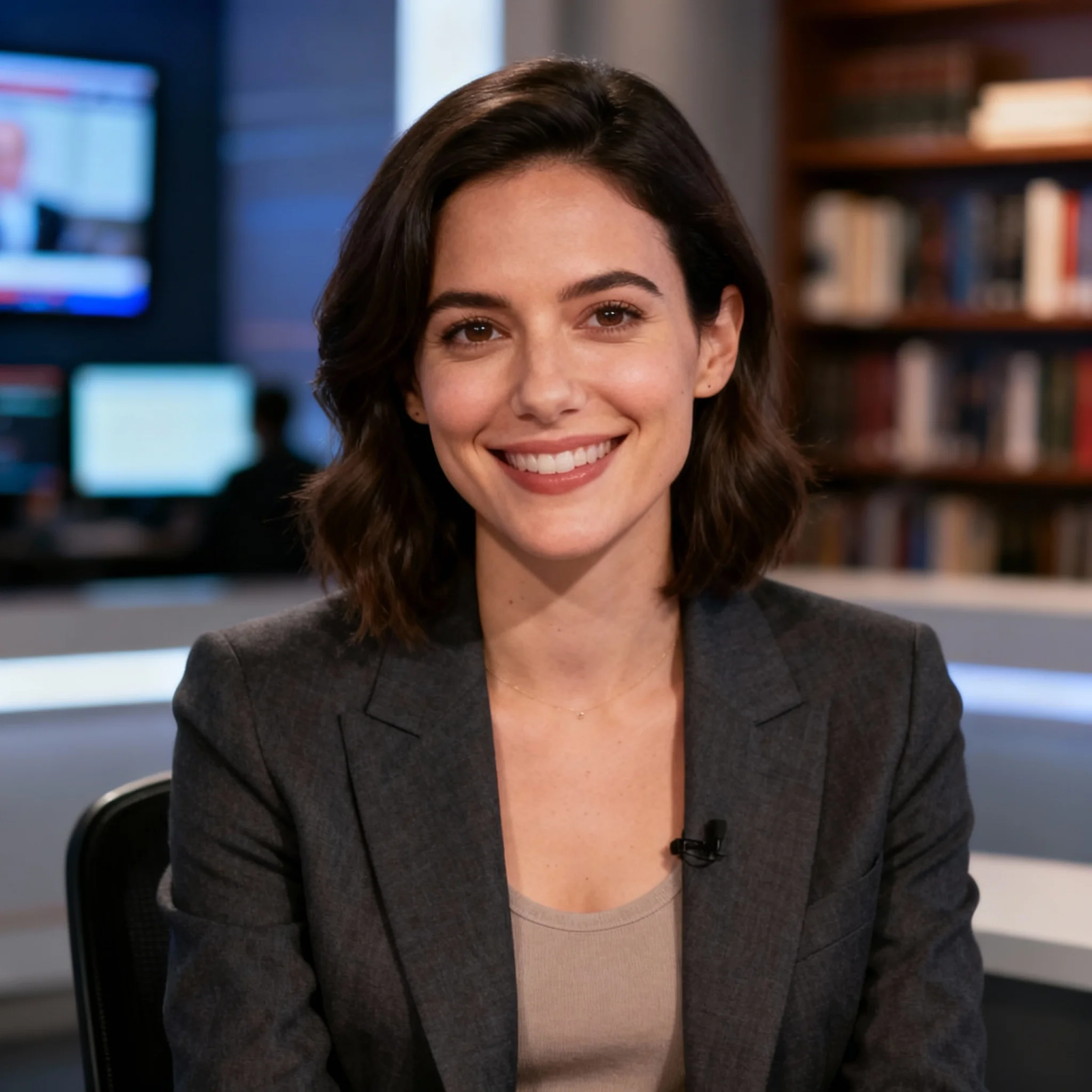

Jenna Ortega: AI’s Pandora’s Box?
Jenna Ortega, the actress who’s basically become synonymous with Wednesday Addams’ death glare and a certain viral dance, recently dropped a thought that’s been rattling around in my head ever since. She said it’s “very easy to be terrified” of AI, and “it feels like we’ve opened Pandora’s Box.” Now, Ortega isn’t just an actor-she’s also a creative, a writer for her own projects-so her take, you know, it carries a little more weight than just a casual celebrity comment. Because really, who isn’t a little unnerved by the rapid, almost unsettling pace of AI these days? It’s like watching a sci-fi movie unfold in real time, and we’re all just extras on set.
But here’s the kicker: she also believes “there’s certain things it’s just not able to replicate.” And that’s where I think the real conversation lies, isn’t it? It’s not just about the fear, but about what, if anything, remains uniquely, stubbornly, beautifully human in the face of this increasingly intelligent technology. We’re staring down the barrel of a revolution, and frankly, I’m right there with Ortega-a little terrified, but also morbidly curious. What gets lost? More importantly, what can’t be lost?
The Uncanny Valley of Creative Duplication
You’ve probably seen it-the AI-generated art, the eerily accurate voice clones, maybe even the short stories written by algorithms. On the surface, some of it is incredibly impressive. There are tools now that can take a handful of photos of you and spit out a hundred different avatars, or take your voice and make it sing an opera. It’s wild, frankly. But is it, you know, art? Or is it just a very sophisticated form of mimicry?
The Ghost in the Machine-and in the Art
This is where Ortega’s point about replication really hits home for me. An AI can learn patterns, analyze millions of images, and churn out something that looks, structurally, like a masterpiece. It can even mimic an artist’s style with surprising fidelity. But does it understand the ache in a piece of music, the societal commentary in a painting, or the deeply personal experience poured into a novel? I don’t think so. That’s the ghost in the machine, or rather, the absence of one.
- Point: AI excels at pattern recognition and synthesis. It’s a master mimic.
- Insight: True creativity, the kind that moves us, often stems from unique human experiences-pain, joy, longing, confusion. These aren’t data points for an algorithm; they’re the fabric of our being.

The entertainment industry, especially things like video game development and film, are already feeling the tremors. Think about actors’ likenesses, voice actors’ unique inflections, even writers’ entire portfolios. The potential for AI to just… ingest all that and then spit out a cheap imitation is, let’s be honest, terrifying for those whose livelihoods depend on their unique human contribution. It’s not just a technological shift; it’s a profound ethical and existential one for creatives. Can you really copyright emotions? Or the subtle nuances of a performance? It’s a thorny question.
“It’s about the soul of the creation, not just the mechanics of it.”
The irreplaceable Human Spark
This brings us back to Ortega’s optimistic counterpoint-that there are things AI just can’t replicate. And it’s true, isn’t it? Things like genuine empathy, real-time improvisation born of lived experience, that spark of intuition that defies logic-these are still firmly in the human camp. For now, anyway.

The Raw, Unfiltered ‘Messiness’ of Genius
Think about a truly electric live performance-say, a stand-up comedian going off-script, or a musician hitting a wrong note in just the right way. It’s those imperfections, those spontaneous detours, that make it feel alive. An AI, no matter how advanced, is built on algorithms and vast datasets. It can simulate spontaneity, but can it truly feel the impulse to create something entirely new, something messy, something that perhaps even surprises its own creator? I’m not convinced. The beauty of human creativity often lies in its flawed, unexpected nature.

- Point: AI’s strength is in predictable patterns and optimized outcomes.
- Insight: Human genius often thrives in the unpredictable, the imperfect, the utterly irrational-elements that are difficult, if not impossible, to program.
It’s a double-edged sword, this “Pandora’s Box.” On one hand, the efficiency, the possibilities for automating tedious tasks, the potential for new discoveries in science and medicine-it’s all incredibly exciting. But on the other hand, it forces us to confront fundamental questions about what makes us human. If a machine can write a compelling news article (like this one, hypothetically, if an AI were to mimic my very human style… cue dramatic music), paint a portrait, or even compose a symphony, what’s left for us? Do we become obsolete?
Protecting the ‘Human’ in Humanity
The conversation, then, isn’t about stopping AI-that horse, as they say, has bolted. It’s about drawing lines. It’s about establishing ethical guidelines, frameworks, and perhaps most importantly, about valuing the irreplaceable human element.
The Craft, the Connection, the Quirks
Think about the recent WGA and SAG-AFTRA strikes. A huge part of those negotiations revolved around AI and the protection of creative labor. It’s not just about fair pay; it’s about preserving the dignity of human work, the very essence of what makes a story resonate. Because when you strip away the messiness of human effort, the struggle, the personal vision-you lose the je ne sais quoi that connects us.

We’re in this fascinating, terrifying era. Jenna Ortega’s insight-that gut feeling of having opened something profound, yet knowing there are boundaries AI can’t cross-is a powerful one. It reminds us that while AI can replicate, it can’t (yet, at least) truly understand why a character cries, or why a melody invokes a memory. It can’t feel the sting of rejection or the euphoria of success. Those messy, complicated, utterly human emotions are still our exclusive domain. And maybe, just maybe, recognizing that is our best bet for navigating this brave new world, and keeping the ‘human’ in humanity-a concept that’s becoming more precious with every AI advancement.