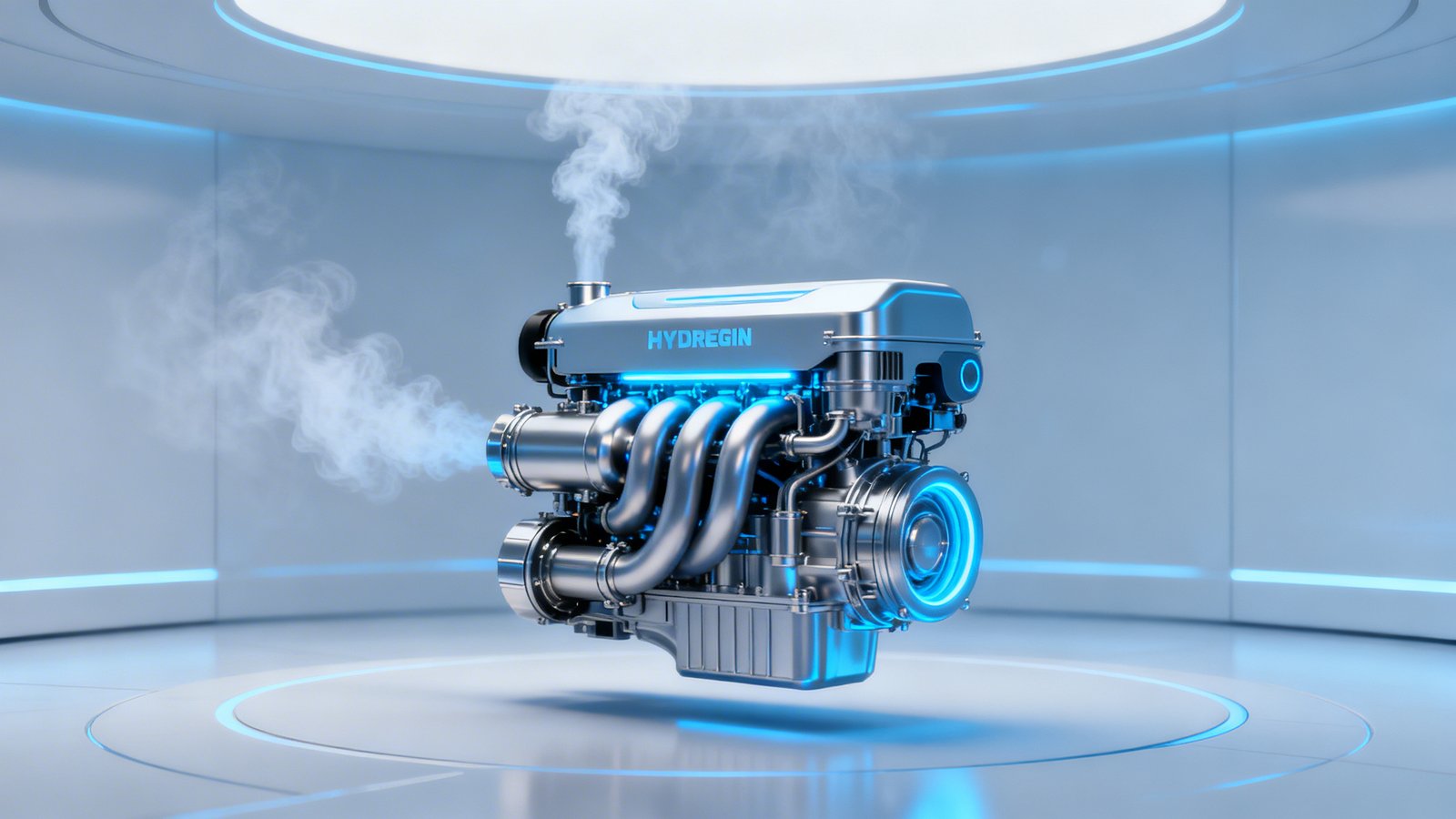
So, you scroll through Reddit, right? Probably like me, late at night, a little too much coffee in the system. And then you see it: “Japan Has Created the World’s First Engine That Generates Electricity on 30% Hydrogen.” Your first thought, if you’re anything like me, is probably, “Wait, 30%? That’s it?”
The Half-Full Hydrogen Tank, Or Is It Half-Empty?
Look, I get it. The headline itself – the one you probably clicked on to get here – asks if this is the “End of Fossil Fuels?” And I gotta be honest, my immediate, gut reaction is a hard, emphatic, “Not quite, pal. Not quite.” But then you stop and think about it, really think, and you realize something pretty important is actually happening here. It’s not the silver bullet everyone dreams of, not yet anyway. But it’s not nothing. It’s… something.
For years, decades even, the idea of a hydrogen economy has been this tantalizing, futuristic dream. Clean burning, abundant (if you know how to extract it), basically a climate change superhero. Except, you know, it’s also a pain in the butt to produce without using fossil fuels, and it’s a pain in the butt to store. It’s like having a superpower that gives you super strength but also makes you incredibly clumsy and allergic to sunlight. So, a lot of promises, a lot of hype, and a lot of very expensive, very niche projects.
But here’s Japan, a country that’s always been kind of quietly brilliant when it comes to engineering, and they’re like, “Hey, what if we just… eased into it?” That’s what 30% hydrogen sounds like to me. It’s not ripping off the fossil fuel band-aid; it’s gently peeling a corner. And frankly, that might be the smartest move anyone’s made in this whole hydrogen saga in a long, long time.
The Incremental Revolution
Think about it. We’re so obsessed with revolutionary tech that completely upends everything overnight. We want the iPhone moment for energy, the sudden shift where everything that came before is instantly obsolete. But that’s not how the real world works, is it? Not usually. The real world is messy. It’s incremental. It’s about taking what you have, making it a little bit better, and then a little bit better again. And that, my friends, is what a 30% hydrogen engine feels like. It’s an internal combustion engine, something we already understand, just running on a new, greener mix. It’s like getting a new flavor of soda that’s 30% less sugary but still tastes like the original. You can actually drink it without feeling like you’re sacrificing everything.
So, Is This Just Another False Dawn?
That’s the big question, isn’t it? Because we’ve seen this movie before. So many times. Remember algae fuel? Cold fusion (hah!)? Hydrogen cars that cost more than a small island and had nowhere to fill up? Every few years, there’s a new “breakthrough” that promises to solve all our energy woes, and then it just… doesn’t. It gets stuck in pilot programs, or it’s too expensive, or the infrastructure isn’t there, or it just never scales. It’s enough to make a seasoned journalist like me roll my eyes so hard they might just get stuck looking at my brain.
“The hype cycle for ‘next big energy thing’ is exhausting. We’ve been promised the moon, and we usually end up with a slightly shinier rock. But sometimes, just sometimes, a slightly shinier rock is actually the first step to the moon.”
The thing is, this 30% solution? It feels different. It’s not trying to reinvent the wheel. It’s saying, “Okay, we have a gazillion internal combustion engines out there, doing everything from powering factories to keeping the lights on in rural towns. What if we could make them less bad right now, instead of waiting for a mythical 100% solution that might be decades away?” That’s a pragmatic approach. A very Japanese approach, if I’m being honest – precision, efficiency, and making the existing system better.
The Meat of It: Why 30% Matters
Here’s what I think is really important. This isn’t just some lab experiment. This is about making existing infrastructure, existing technology, work for a cleaner future today. Think about power plants, industrial engines, even some heavy transport. These aren’t going to switch to pure electric overnight, or even in ten years. The capital investment is astronomical. The logistics are a nightmare. But if you can tweak existing engines to run on a blend, even a relatively small blend, that’s a massive win.
- Reduced Emissions: Duh. Less fossil fuel burned means less CO2.
- Bridging Technology: This is the big one. It gives us a real, tangible bridge from our fossil-fueled present to a hydrogen-fueled future. It allows the hydrogen production and distribution infrastructure to grow organically, without requiring a complete overhaul from day one.
- Economic Viability: You’re not asking companies to scrap billions of dollars worth of equipment. You’re asking them to adapt it. That’s a much easier sell to a CFO.
- Learning Curve: Every engine running on a hydrogen blend gives engineers more data, more experience. It helps them figure out the kinks, improve efficiency, and eventually, maybe, just maybe, get to that 100% dream.
And let’s not forget the “generating electricity” part of the original headline. This isn’t just about cars. This is about grid stability, about industrial power, about all the places where big, continuous power generation is needed. If you can inject a significant chunk of clean hydrogen into that mix, even if it’s not the whole pie, that’s still a massive bite out of our carbon footprint.
What This Actually Means
So, the end of fossil fuels? Nah. Not yet. We’re talking 30%, not 100%. And let’s be real, producing green hydrogen (the truly clean stuff, not the kind made with natural gas) is still a challenge. We need more renewable energy to split water, and that’s its own whole thing. Storage is still tricky, distribution is still tricky. There are a lot of “still trickys” here. But this isn’t about magic. This is about practicality.
What Japan’s done here, from what I can tell, is give us a realistic, achievable step forward. It’s not a silver bullet, it’s more like a really good, really sturdy pair of hiking boots for a long, arduous journey. It’s not the final destination, but it makes the path a whole lot less daunting. And sometimes, in this crazy world of ours, a good, practical step is worth a thousand pie-in-the-sky promises. It gives me a little bit of hope, actually. A genuine, non-cynical, “hey, maybe we can actually do this” kind of hope. It’s a start. And sometimes, a good start is all you really need.