
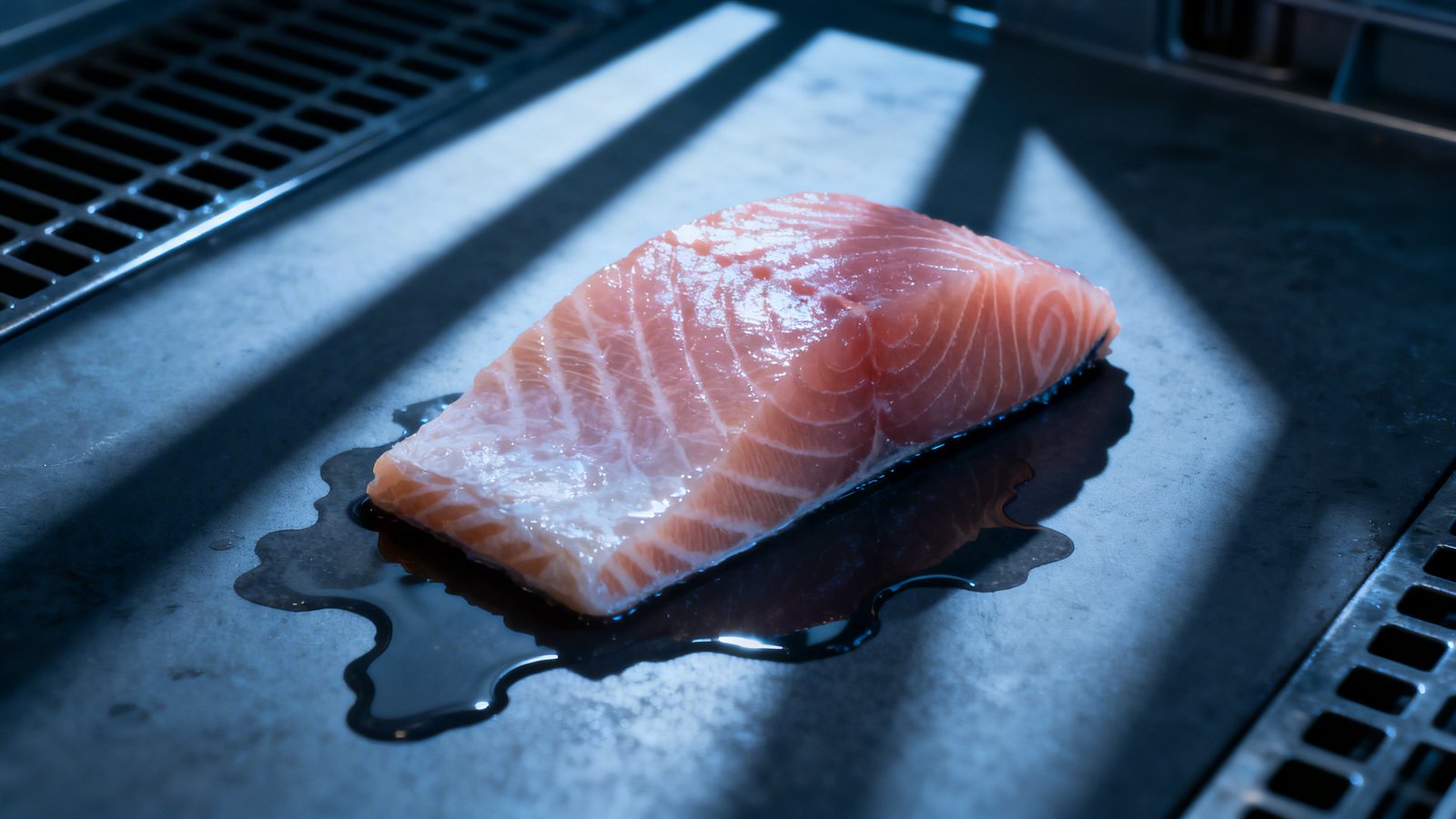
Another day, another recall. You’d think by now, with all our fancy tech and “rigorous” safety protocols, we wouldn’t be pulling food off shelves because of, you know, deadly bacteria. But here we are. Again. This time it’s frozen salmon – that super healthy, omega-3 packed stuff we’re all supposed to be eating more of. And surprise, surprise, it’s got potential listeria. Because of course it does.
Your Dinner Might Be Out to Get You
So, here’s the skinny: Wellsley Farms Farm-Raised Atlantic Salmon. That’s the culprit. And it’s not just a little hiccup in one grocery store. We’re talking a seven-state recall. SEVEN. Delaware, Maryland, New Jersey, New York, North Carolina, Pennsylvania, and Virginia. Basically, a big chunk of the mid-Atlantic and Northeast is now wondering if their last salmon dinner was a ticking time bomb. It’s a real head-scratcher, isn’t it? How does this keep happening?
I mean, you buy frozen fish. You assume it’s, well, safe. You’re not expecting to get hit with listeria monocytogenes, which, by the way, isn’t just a tummy ache. For some people – pregnant women, the elderly, folks with weakened immune systems – it can be really, really bad. We’re talking hospitalization, even death. It’s not a joke. And honestly, it makes you look at every single thing in your freezer with a whole new level of suspicion.
Who’s Watching the Store?
The thing is, Wellsley Farms is a pretty big name, right? It’s often associated with those warehouse clubs, where you buy in bulk, expecting a certain level of quality and, crucially, safety. You’re trusting these big operations to have their stuff together. And then something like this drops, and you just kinda go, “Huh.” You just do. It undermines that trust, piece by piece, every single time.
Why Is This Still a Problem?
I ask this every time there’s a recall, and I swear, I never get a good answer. We’ve got regulations. We’ve got inspections. We’ve got all sorts of fancy tech in food processing plants. But here we are, still battling bacteria that should, frankly, be a relic of a bygone era. Listeria isn’t new. It’s been around. We know what it does. So why is it still finding its way into our food supply, especially something as widely consumed as salmon?
“It feels like we’re constantly playing whack-a-mole with food safety, instead of actually fixing the root causes.”
It’s not just about the immediate danger, either. It’s the constant low-level anxiety that comes with every grocery trip. You try to eat healthy, you try to make good choices, and then you’re faced with the idea that even those choices might be compromised. It’s exhausting, to be honest. And it makes you wonder about all the stuff that doesn’t get recalled. Yikes.
The Blame Game, Or Just Business As Usual?
Look, I’m not saying anyone wants to poison their customers. That’s ridiculous. But at some point, you have to ask about the systemic failures. Is it pressure to produce more, faster? Is it cutting corners in hygiene? Is it a lack of oversight from the top? Because when a recall spans seven states, that’s not just a small, isolated incident. That’s a pretty widespread issue, and it points to something deeper than just a single bad batch. This was big. Really big, for the people affected.
And what about the consumers? Most people probably don’t even hear about these recalls. They just eat their salmon, maybe get a little sick, think it’s a bug, and move on. The folks who are actually at serious risk? They might not even connect the dots until it’s too late. It’s a messy, imperfect system, and it often feels like the burden of staying safe falls squarely on the individual, not the companies or the regulators.
What This Actually Means
For you, if you’re in one of those seven states and you’ve got Wellsley Farms Farm-Raised Atlantic Salmon in your freezer, here’s the deal: don’t eat it. Seriously. Check your freezer. Check the brand. If it matches, toss it. Or take it back to the store for a refund, which honestly, feels like a pretty small consolation for the potential health risk. And for the rest of us, it’s just another reminder to be vigilant. Read labels. Pay attention to recalls (even though they feel like they’re coming every other day now). And maybe, just maybe, start wondering if that local fishmonger isn’t such a bad idea after all, even if it costs a bit more. Because when it comes to food safety, sometimes “convenience” comes with a price we just shouldn’t have to pay.