
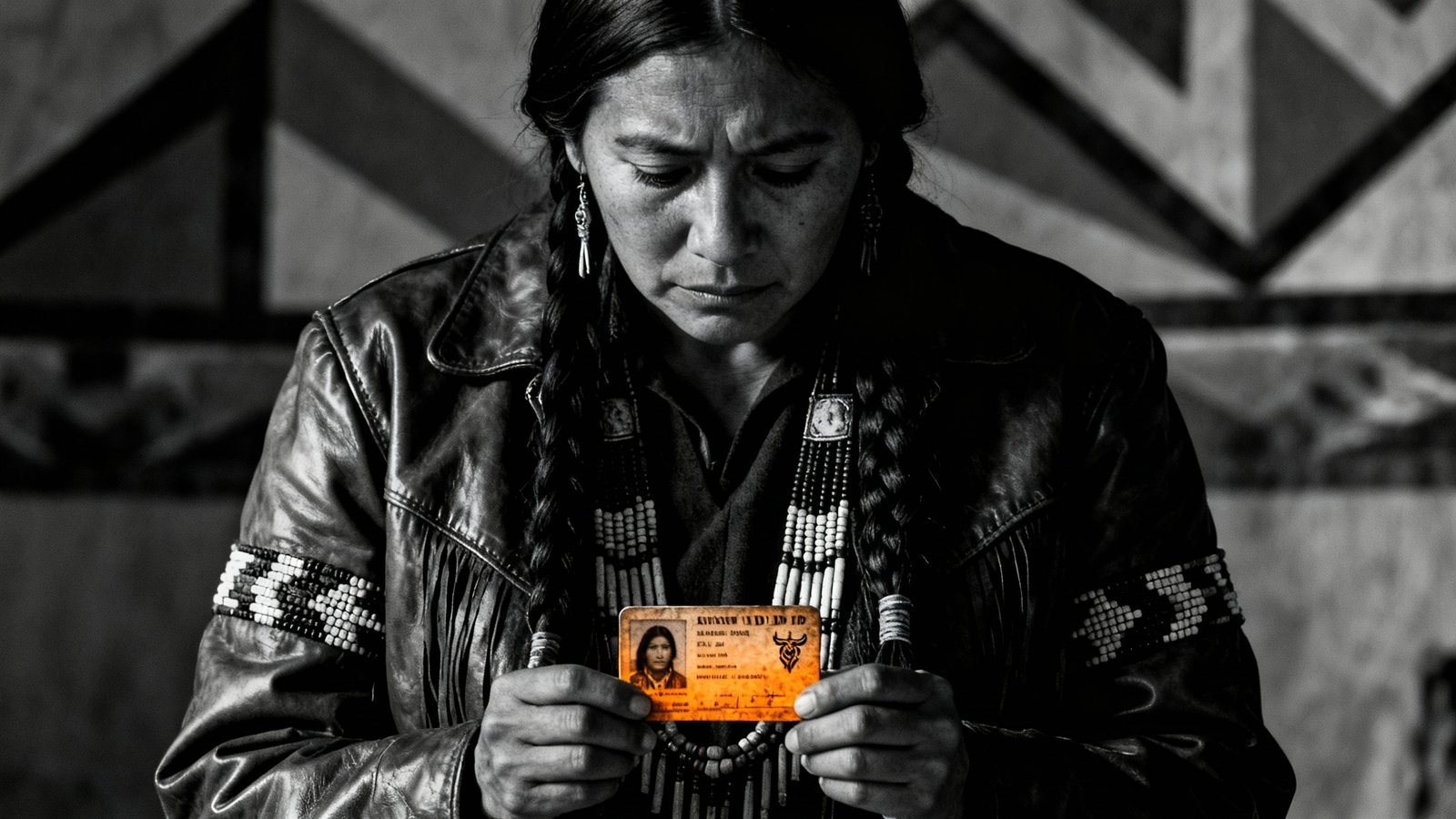
Imagine this: you’re just trying to go about your day, travel, maybe even perform, and suddenly someone challenges your very identity, your heritage, everything that makes you, you. Not with a polite question, but with a flat-out accusation. “Your tribal ID is fake!” That’s exactly what happened to actress and comedian Jana Schmieding, a citizen of the Cheyenne River Sioux Tribe, when she encountered ICE. Talk about a gut punch, right?
She was just trying to cross back into the U.S. from Canada, a routine travel arrangement for many, especially those who live near the border or, you know, have family and ancestral lands spanning both sides. But for Schmieding, it turned into something much more personal and, frankly, infuriating. The border agent, clearly not recognizing her Cheyenne River Sioux Tribe ID card as a legitimate travel document, decided to make things… difficult. It wasn’t just about a simple misunderstanding; it was a deeply disrespectful act that questioned her existence as an Indigenous person. And that’s really what struck a chord with me- it’s not just about a piece of plastic, it’s about recognition, sovereignty, and respect. Or a severe lack thereof.
When Official Papers Aren’t “Official” Enough
You’d think in this day and age, with all the information out there, that border agents- tasked with knowing about various forms of identification- would be, oh, I don’t know, educated on tribal IDs. Especially given the U.S. government’s centuries-long relationship (often contentious, always complicated) with Indigenous nations. Tribal IDs are, in fact, federally recognized documents. They’re issued by sovereign nations within the U.S. and often serve as valid identification for everything from voting to travel, especially under things like the Jay Treaty, which, for those unfamiliar, is a foundational agreement allowing Native Americans to cross the U.S.-Canadian border freely. It’s not some novelty item a small community printed up in a garage.
The Invisible Barriers
Schmieding’s ordeal isn’t an isolated incident, either. It’s something many Indigenous people encounter, and it speaks to a much larger issue of systemic ignorance and, let’s be honest, often outright prejudice. When someone in authority, like a border agent, dismisses a legitimate tribal ID, they’re not just questioning the document; they’re questioning the very legitimacy of the tribe as a sovereign entity and the individual’s connection to it. That’s pretty heavy stuff for a routine border crossing.
- The Jay Treaty: This 1794 treaty grants Indigenous people unique cross-border rights. Yet, many agents seem unaware, leading to situations like Schmieding’s.
- Sovereignty vs. State: Tribal nations are recognized as sovereign by the U.S. government. Their IDs are extensions of that sovereignty, but it seems that recognition doesn’t always trickle down to the front lines.

You can imagine the frustration. You present a document, valid in every sense, and you’re met with suspicion, skepticism, and even outright denial. It’s like being told your driver’s license is fake- only imagine that challenge came with a side of historical oppression and cultural erasure. It’s not just an inconvenience; it’s a painful reminder that even with official documents, your identity can be called into question by those who simply don’t understand, or worse, don’t care to understand.
“When you’re trying to perform on an international stage, or simply visit family, and you’re told your very identity document is invalid, it’s more than an inconvenience- it’s a profound disrespect.”
The “Invisible” Identity in Plain Sight
One of the most insidious aspects of this whole situation is how it highlights the ongoing struggle for Indigenous visibility and understanding in mainstream society. Schmieding is a public figure, an actress, and even she faces this kind of ignorance. What about folks who aren’t in the public eye? The elderly, children, people for whom English isn’t a first language? The potential for abuse and discriminatory treatment really skyrockets.

Why Are We Still Here?
It’s 2023. We’re talking about AI and space travel, smart cities and genomics. Yet, we still have federal agents seemingly unaware of the legal validity of tribal identification cards. It begs the question: what kind of training are these agents receiving? Is there a deliberate lack of education, or is it just systemic oversight? Whatever the reason, the outcome is the same- a perpetuation of harm and injustice for Indigenous communities. It’s a failure at multiple levels, from policy implementation to basic cultural competency. And it really makes you wonder, doesn’t it?
- Training Gaps: Clearly, there’s a serious deficit in training for agents regarding Indigenous rights and documentation. This isn’t rocket science; it’s basic civics.
- Cultural Competency: Beyond just recognizing documents, there’s a need for a deeper understanding of Indigenous cultures and histories, something that seems largely absent in these interactions.

This isn’t just about an actress having a bad day. This incident, while specific to Schmieding, is a powerful microcosm of the larger struggles faced by Indigenous peoples. It’s about being constantly asked to prove your identity, your history, your very right to exist, in spaces that should, by law and by decency, recognize you. It’s an exhausting, demeaning cycle, and it needs to stop. It just simply does. How many times do people have to explain who they are, simply because someone in power hasn’t done their homework?
The Path Forward- Or Not?
So, what’s to be done? Well, a good starting point would be better, more comprehensive training for all federal agents, especially those at border crossings, on tribal sovereignty, Indigenous rights, and the recognition of tribal identification. It’s not optional; it’s essential. This isn’t just about avoiding awkward situations; it’s about upholding treaty obligations and respecting the inherent rights of sovereign nations and their citizens.
Beyond the Border
But it’s bigger than just ICE. This incident is a symptom of a broader societal blind spot when it comes to Indigenous issues. We, as a society, need to actively learn and respect the history, culture, and sovereignty of Native American tribes. This means more than just a passing nod in history books; it means recognizing and validating Indigenous identities in every facet of public life. From schools to government agencies to everyday interactions, that understanding needs to be there. And it’s not the job of Indigenous people to constantly educate everyone else; it’s everyone else’s responsibility to learn.

Jana Schmieding’s experience is a stark reminder that even in the 21st century, the fight for recognition and basic human dignity is very much ongoing for Indigenous communities. It’s not just about an ID card; it’s about acknowledging sovereignty, history, and the lived reality of millions. When someone says, “Your tribal ID is fake,” what they’re really saying is, “I don’t recognize who you are.” And that, my friends, is a message we should all be working to shut down, loudly and clearly. Because everyone deserves to have their identity, and their humanity, respected.