





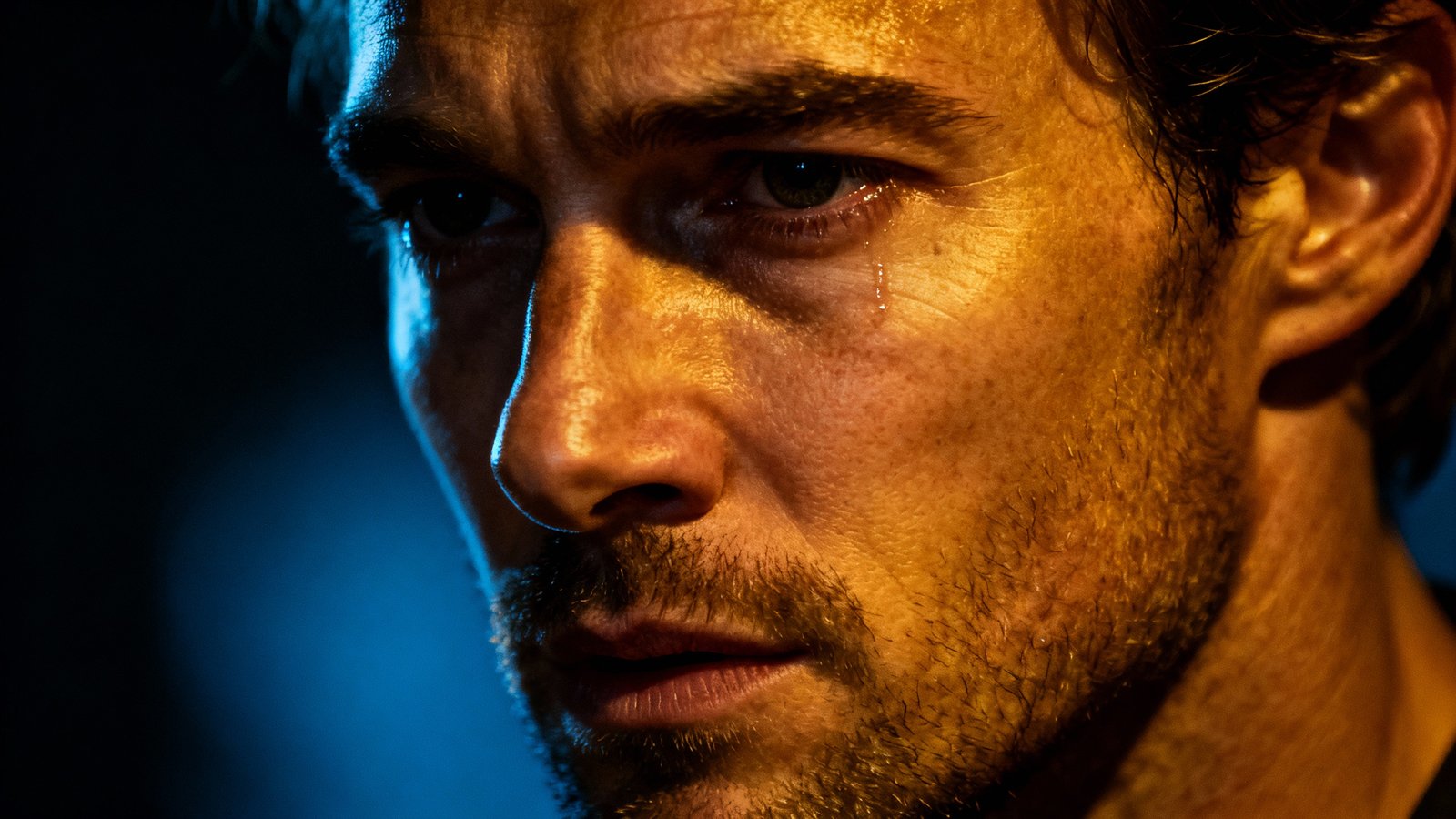
When The Mask Comes Off – And It’s Not For A Role
That’s what happened with Steven W. Bailey, the guy you probably remember as Dr. Richard Webber’s patient, the guy who played the piano so beautifully on Grey’s Anatomy. (He was also in My Name Is Earl and a bunch of other stuff, but Grey’s is the big one for pop culture memory, let’s be real.) Anyway, Bailey, who’s 54, just put out this open letter on X, and man, it’s a gut punch. A quiet, dignified, but totally devastating gut punch.
He’s been diagnosed with something called Congenital Myasthenia Syndrome – CMS. Now, if you’re like me, your first thought is probably, “What the heck is that?” And then your second thought is, “Wait, congenital? Meaning he’s had this thing his whole life?” Yeah. Pretty much.
Bailey explained he’s “spent years being cautious, private, and quiet” about something that’s been “shaping [his] life and [his] work.” Can you even imagine that kind of burden? Carrying around this massive, life-altering secret while trying to, you know, act for a living. To pretend to be someone else, while inside, your own body is doing its own complicated, scary thing. It’s wild. Really wild.
The “Weird, Right?” Of It All
He started his letter pretty casually, almost deceptively so, hoping his industry peers were “well and not too overburdened with life’s troubles.” And then, BAM. “Say, speaking of troubles, it’s the darndest thing, but it turns out I have a rather rare genetic neuromuscular disorder. Weird, right?”
“Weird, right?” I mean, come on. That’s a classic human coping mechanism, isn’t it? Understating something absolutely massive because it’s just… too big to fully articulate. Like saying, “Oh, just a little fender bender,” when your car is basically a crumpled tin can. It’s not “weird.” It’s terrifying. It’s life-altering. And it’s been his quiet reality for decades.
What Do You Do With A Secret That Big?
This whole thing just makes you think about what people are carrying around, doesn’t it? Especially in an industry like Hollywood, where image is, well, everything. You gotta be vibrant, gotta be available, gotta be, for lack of a better word, perfect. Or at least, perfectly castable. And a rare, chronic illness? That doesn’t exactly scream “perfectly castable,” does it?
“He’s been carrying this quiet battle, this invisible weight, while we watched him on our screens, never knowing.”
It makes me kind of angry, actually. Angry for him, and for every other person who feels they have to hide their truth to keep living their lives, to keep doing their jobs. Who cares if an actor has a rare condition? If they can do the work, if they bring something to the role, who cares? But the industry, and frankly, society, often sends a different message. “Hide your vulnerabilities.” “Don’t show weakness.” And that’s just… wrong.
The “Time Is Over” Moment – And Why It Matters
But here’s the kicker: Bailey says, “That time is over.” He’s not being quiet anymore. And honestly, that’s pretty damn powerful. To finally, after years, decades even, say, “This is me. This is what I’m dealing with. And you know what? I’m not going to pretend it’s not happening anymore.”
This isn’t just some celeb gossip. This is a real person, a real actor, laying bare a part of himself that he felt he had to keep under wraps for his entire career. It’s a testament to the incredible strength it takes to live with a chronic illness, especially one that’s “rare.” Because “rare” often means misunderstood, means doctors scrambling for answers, means a lack of public awareness. And it means feeling incredibly, profoundly alone sometimes.
What This Actually Means
Look, I’ve seen this pattern before. Someone bravely steps forward, shares their struggle, and suddenly, a whole community of people who were also suffering in silence feels a little less alone. A little more seen. Steven W. Bailey isn’t just revealing his diagnosis; he’s probably opening a door for others who are also living with CMS, or any other invisible illness, to feel a bit more comfortable in their own skin.
It’s not about pity, not really. It’s about understanding. It’s about empathy. And it’s about acknowledging that the people we see on screen, the people we admire or just casually watch, are just that: people. Flawed, struggling, amazing, complicated people. Just like us. And sometimes, just sometimes, they’re carrying a secret so heavy, it’s a miracle they can stand up straight, let alone deliver a compelling performance.
So, yeah. This one hit different. And I’m glad he’s finally talking. We all need to be a little more open, a little more human, with each other. Don’t you think?


