

Okay, so Forvia-Faurecia, you know, the automotive supplier giant, has been kind of in the news lately, and not just for their usual car seat wizardry or interior bits. No, this time it’s about a potential sale that’s got everyone-myself included-raising an eyebrow, and honestly, a little intrigued. We’re talking about their Interiors division, a chunky piece of their business, and the whispers, well, they’re getting pretty loud: a sale could be happening at a much higher valuation than anyone really expected. Like, shockingly higher. It’s almost like finding out your old, beat-up hatchback is secretly a pristine classic. What gives?
For context, if you’re not knee-deep in the automotive supply chain like some of us are (guilty pleasure, I guess), Forvia is huge. They’re everywhere-cockpits, seats, exhaust systems. The Interiors part, specifically, designs and manufactures-you guessed it-car interiors: dashboards, door panels, center consoles. Essential stuff, but maybe not the kind of division you’d think would command a premium, especially in a market that’s, let’s be real, been a roller coaster these past few years. Supply chain headaches, chip shortages, inflation-it’s been a ride.
So, the idea that someone is willing to pay what appears to be top dollar for this division-a reported 1.5 billion euros, which is well above analyst estimates-is pretty jaw-dropping. It just doesn’t quite add up on the surface, you know? But then, rarely does anything in high finance, does it? There’s always a story behind the numbers, a subtle shift, a hidden treasure.
The Great Unpacking: What’s Driving This Premium?
Now, you might think, “Well, it’s just a sale, companies sell divisions all the time.” True, but the valuation here, that’s the kicker. Analysts were, initially anyway, pegging it closer to, say, 1 billion euros, maybe a tad more. So, that extra 500 million euros-that’s not chump change. It’s a substantial premium. And it makes me wonder, what are these buyers seeing that wasn’t immediately obvious to everyone else? What’s the secret sauce?
Beyond the Dashboard: The Tech Angle
My first thought, honestly, goes straight to technology. We’re not just talking about plastic moldings and fabric trims anymore, are we? Modern car interiors are basically giant tech hubs. Think about it: massive infotainment screens, digital gauge clusters, haptic feedback controls, ambient lighting that responds to your mood (or, you know, just looks cool). These aren’t simple components; they’re integrated, software-driven systems. And Forvia’s Interiors division, let’s not forget, has been a player in this for a while. They’ve been innovating, probably quietly building up some really valuable IP-intellectual property-in these areas.
- Insight: Could it be that the potential acquirer isn’t just buying dashboards, but a fully-fledged, ready-to-deploy digital cockpit ecosystem, patents and all? That alone could justify a hefty price tag. We’re moving from “parts supplier” to “tech solutions provider” in the automotive world, and that’s a whole different ballgame for valuation.
- Point: Consider the shift towards software-defined vehicles. OEMs want partners who can deliver not just the physical space but the digital experience within it. Forvia’s got existing relationships, established manufacturing, and crucially, the know-how to integrate hardware and software. That’s a combo that’s incredibly difficult-and expensive-to build from scratch.
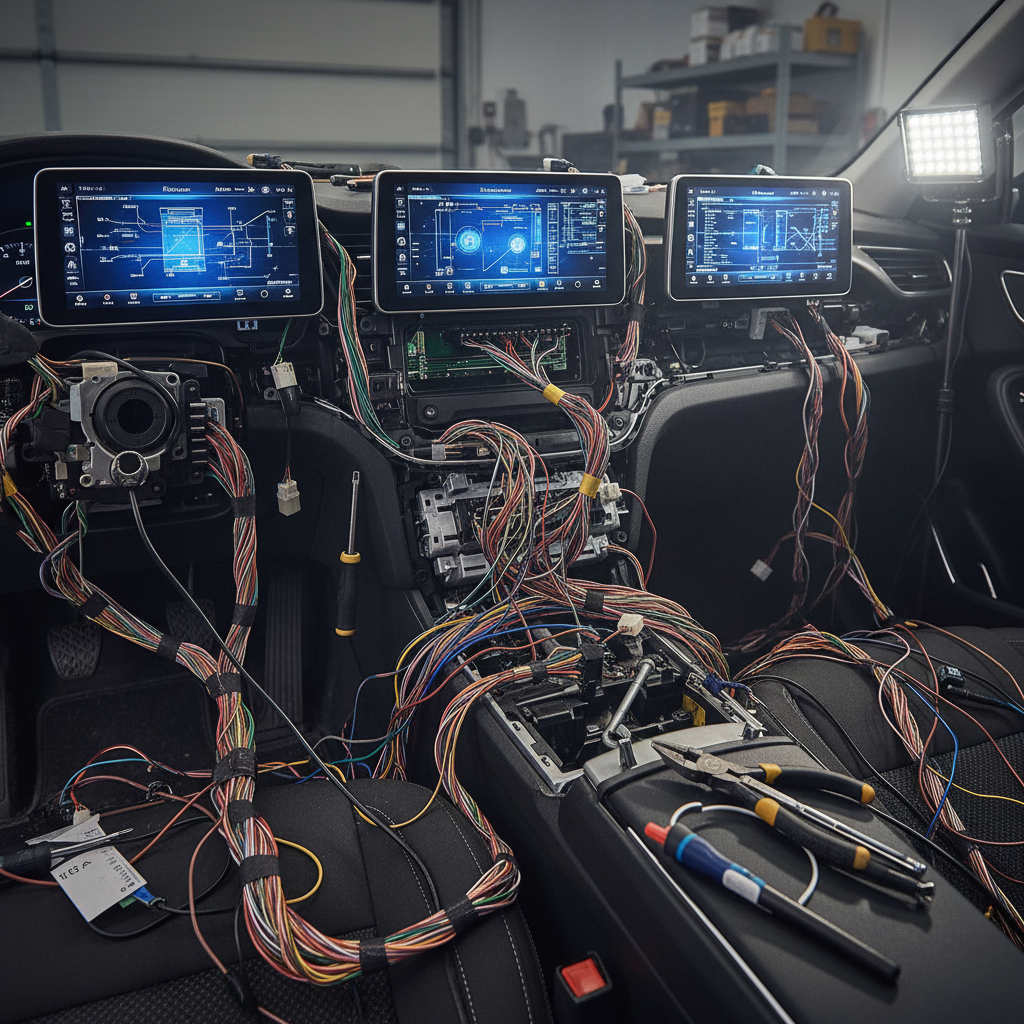
It’s like buying a house. You’re not just paying for bricks and mortar; you’re paying for the land, the location, the school district, and maybe the smart home system that’s already integrated. Forvia’s Interiors could be the fully smart-home-equipped version in the automotive world. And in an era where everyone’s chasing the “next big thing” in EV and autonomous tech, having a division that’s already ahead on the interior tech curve is a huge advantage. It’s basically a shortcut to market leadership for someone.
“The automotive sector is less about manufacturing physical components and more about delivering integrated, digital experiences. Forvia’s Interiors division, if positioned correctly, becomes a gateway to exactly that.”
Strategic Re-alignment: Forvia’s Bigger Picture
Then there’s Forvia’s perspective. Why sell off a profitable, apparently high-value division? It comes down to strategic focus, doesn’t it? Companies can’t be everything to everyone. Forvia, post-Faurecia acquisition, is a behemoth. They’re looking to simplify, to focus their capital and R&D efforts on areas where they see the most growth potential and competitive advantage. De-leveraging, reducing debt-these are also real practical considerations for such a large entity, especially after big mergers.
Unlocking Hidden Value for Future Growth
Selling Interiors, even at a high price, allows Forvia to double down on other segments. Maybe seating, maybe their clean mobility solutions, or lighting. The proceeds from this sale could fuel investments in areas where they believe they can truly dominate the next generation of automotive tech. It’s a classic portfolio optimization move. Instead of just holding onto something because it’s good, you let it go for a premium so you can invest in something that’s potentially great-or at least, strategically more aligned with your long-term vision.
- Insight: This implies Forvia has a very clear, perhaps even aggressive, plan for their remaining divisions. They’re not just selling; they’re re-investing. This kind of calculated move usually signals confidence in future growth engines.
- Point: The market’s reaction, with Forvia’s stock spiking, suggests investors are on board with this strategy. They see the potential for a leaner, more focused company that can capitalize better on future trends. It’s a brave new world for auto suppliers, and agility is key.

It’s almost like a chess move. You sacrifice a strong piece now to gain a stronger position later in the game. That 1.5 billion euros isn’t just cash in the bank; it’s significant strategic capital that can be deployed to strengthen other parts of their business, allowing them to compete more effectively at a time when the automotive industry is undergoing radical transformation. Electrification, autonomous driving-these aren’t just buzzwords; they require massive investment and laser-sharp focus.
The Echoes of a Changing Industry
So, what does this all mean for the wider automotive supply chain? It tells us a few things, I think. First, that “interior” is no longer just about comfort and aesthetics; it’s a critical battleground for technology and user experience. Who controls the in-car experience arguably controls a huge chunk of the perceived value of a vehicle. Second, companies aren’t afraid to make bold moves-selling off established, profitable segments-if it means unlocking future growth and managing debt effectively. It’s a sign of a dynamic, albeit sometimes brutal, market.
This Forvia deal, if it goes through at this elevated valuation, isn’t just about one transaction. It’s a valuation shockwave, a signal to the entire industry that sometimes, the value isn’t just on the books or in the obvious places. It’s in the unseen tech, the strategic fit, the potential for future integration. It forces us all to reconsider what we think we know about traditional automotive components. Maybe the most mundane parts of a car are about to become the most exciting. And that, truly, is food for thought.