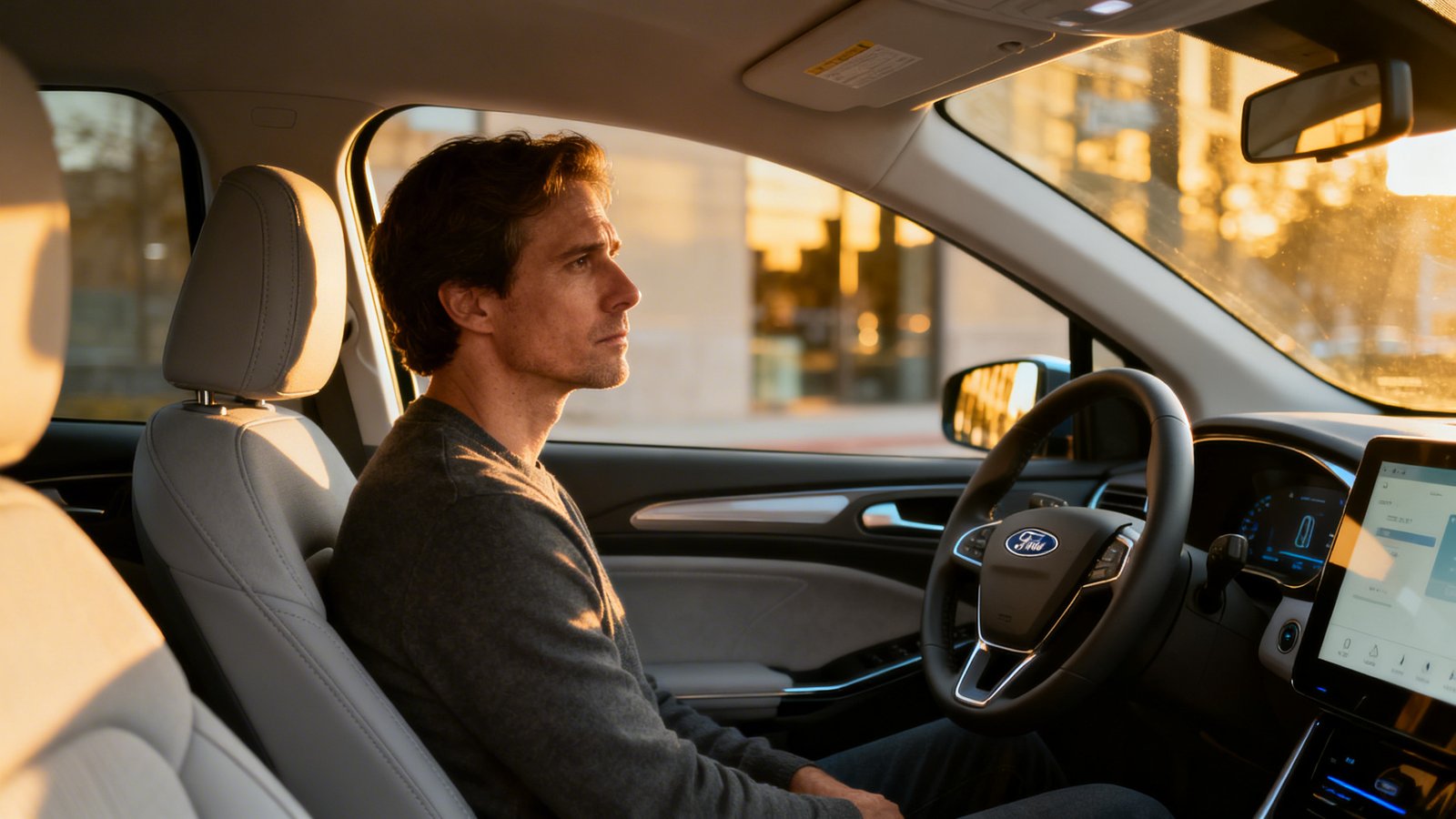
When the Customer Yells “No Thanks!”
Look, I’ve been doing this gig for fifteen years, seen a lot of corporate spin and market shifts. But when Ford CEO Jim Farley comes out and says, straight up, “the customer has spoken,” well, you gotta listen. Because usually, when a CEO says that, it’s after some massive success, right? Like, “The customer has spoken, and they want more widgets!” Not “The customer has spoken, and they basically told us our $5 billion investment is… not quite hitting the mark.”
It’s not just Ford, by the way. You see these headlines everywhere about EV sales slowing down. Rental car companies are ditching them. Dealerships are stacked with them. And people? They’re just not lining up like the industry titans thought they would. I mean, remember all those projections? “EVs will take over the world by Tuesday!” or something similar. Turns out, the real world is a bit more complicated than a spreadsheet.
Reality Bites, Hard
The thing is, the “customer has spoken” isn’t just about the number of sales. It’s about why they’re not selling. And that’s where Ford (and frankly, a lot of the traditional automakers trying to play catch-up to Tesla) seems to have missed the memo. Or, like, half the memos. Maybe they just skimmed the executive summary and moved on.
So, What’s the Actual Problem Here?
You’d think after years of development, billions spent, and countless focus groups, they’d have a pretty good handle on what people want. But wait, doesn’t it seem like they went all-in on “we must have EVs” without really asking “what kind of EVs do people actually want to buy and live with?”
I mean, if I’m being honest, I’ve heard so many gripes from folks who tried to go electric.
“The range anxiety is real, man. I drive an hour to my folks’ place, and suddenly I’m sweating bullets about finding a charger that isn’t broken or occupied for the next two hours.” – My cousin, after trying an EV for a month.
And that’s just the start.
Price Tag Shock: EVs are expensive. Like, seriously expensive for the average Joe or Jane trying to buy a new car. The incentives help, sure, but they don’t erase the sticker shock. And if you’re gonna drop fifty grand, you want it to work for you.
Charging Infrastructure is… Uneven: This is a big one. It’s great if you have a garage and can install a Level 2 charger. But what about apartment dwellers? What about road trips? The charging network is still a patchwork quilt, and frankly, some of the patches are kinda threadbare. It’s a pain. It really is.
The “EV Premium” isn’t always Premium: Some of these first-gen mainstream EVs, while technologically impressive in some ways, don’t always feel like they justify the price point in terms of interior quality, features, or even just general usability compared to their gas counterparts. Ford’s F-150 Lightning is cool, yeah, but it’s still an F-150. A very expensive F-150.
Cold Weather Woes: Ask anyone in a colder climate about EV range in winter. It’s a whole thing. And not a good thing.
Third Section – The “Me Too” Trap
What I think happened, and this is just my take from watching these cycles for a while, is that legacy automakers saw Tesla absolutely crush it, and then thought, “Okay, we just need to make our version of an EV, and people will flock to it!” They basically got caught in the “me too” trap.
But here’s the kicker: Tesla built its brand and infrastructure from the ground up. They were electric from day one. Ford, GM, all these guys, they’re trying to pivot a massive, century-old machinery. And that’s hard. Really hard. It’s like trying to turn an oil tanker on a dime. It just doesn’t work that way.
They poured billions into dedicated EV platforms, new battery plants, software development… and yeah, the tech is there, mostly. But the overall experience? That’s what people are buying. The experience of owning a car. And if that experience involves anxiety, inconvenience, and a hefty price tag, well, the customer has spoken. They’re saying “hold up a minute.”
It’s not that people don’t want to be green. Most people I talk to get the idea of EVs. They understand the environmental benefits, the potential for lower fuel costs (eventually). But they’re not going to sacrifice convenience, reliability, or their entire savings account for it. Not yet, anyway. Especially when the traditional options are still so damn good and so much more familiar.
What This Actually Means
So, what’s next for Ford, and for the whole EV push, after a $5 billion hit? Well, I don’t think they’re throwing in the towel. No way. Too much invested. But I think they’re going to have to slow down, reassess, and actually, genuinely listen to what “the customer has spoken” really means.
It means they need to figure out how to make EVs cheaper. And not just “cheaper with incentives” but truly, fundamentally cheaper to build and buy. It means getting real about charging infrastructure and pushing governments and utility companies to step up. And it means making EVs that don’t feel like a compromise, but an upgrade. An actual, no-brainer upgrade.
We’re probably going to see a lot more hybrid options, a lot more focus on smaller, more affordable EVs. Less “futuristic luxury rocket” and more “practical, everyday car that happens to be electric.” Because right now, the market is telling them: the big, expensive, slightly inconvenient EV isn’t the slam dunk they thought it was. And sometimes, losing five billion bucks is exactly what it takes for a company to finally get the message. It’s a tough lesson, but hopefully, it’s one they actually learn…