
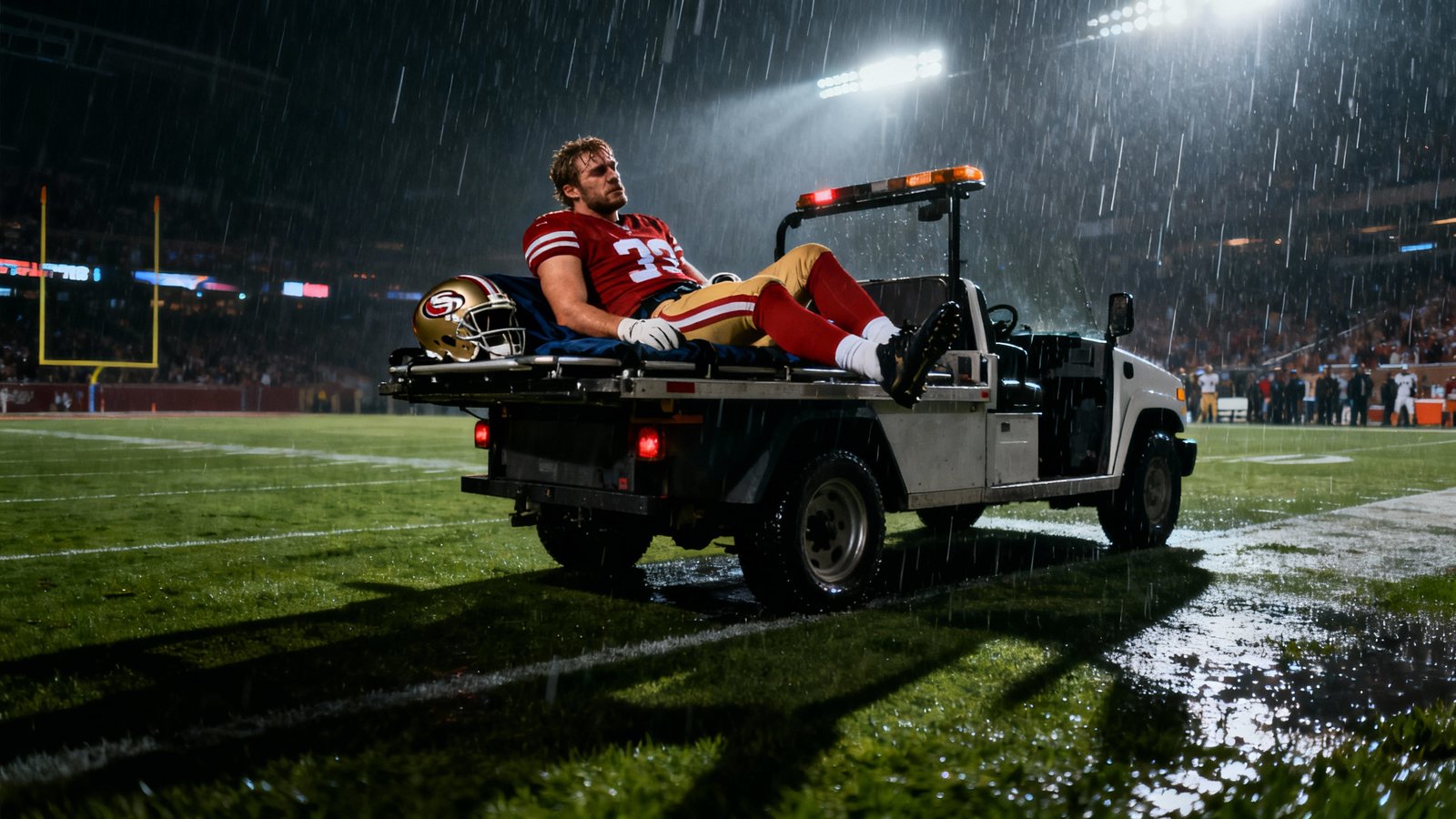
Okay, so picture this: You’re watching the Wild Card round, 49ers vs. Eagles. Big game, right? Tense. Gritty. And then, there it is. George Kittle, one of the toughest, most joy-filled dudes in the league, gets rolled up on. And he’s down. Like, really down. They roll out the cart. You know the drill. That sinking feeling. He’s gripping his ankle, trying to stay tough, but you can see it in his eyes. The pain. The frustration. The oh crap, not again feeling that every single player dreads.
Football Sucks. Sometimes.
And then, the day after, it comes out. Achilles tear. A full one. Season over. Career-altering. The whole nine yards of awful. And Kittle, bless his heart, he just says it: “Football sucks sometimes.”
Look, if I’m being honest, when I heard that, a little part of me cheered. Not because Kittle was hurt, obviously. That’s just gut-wrenching. But because someone finally said the quiet part out loud. In public. And not in some carefully PR-vetted statement. Just a raw, honest truth from a guy who lives and breathes the game.
Because it does suck sometimes. This sport, this glorious, brutal, beautiful beast of a game we all obsess over? It chews players up and spits them out. It asks for everything – your body, your time, your future health – and then, just like that, it can take it all away. One wrong step. One awkward tackle. One unseen defender.
And Kittle, man, he’s like the poster child for relentless effort and pure love of the game. He plays with a joy that’s infectious. He blocks like a lineman, runs routes like a receiver, and celebrates like he just won the lottery every single time. So for him to say “football sucks sometimes”… that hits different. That’s not some jaded veteran on his way out. That’s a guy still in his prime, still giving everything, acknowledging the dark side of the dream.
The Invisible Cost of Glory
We see the touchdowns. We see the highlights. The roaring crowds, the big contracts, the Super Bowl rings. And yeah, that’s all part of it. It’s the shiny, marketable part. But what we don’t always see, or maybe what we conveniently forget to think about, is the constant, grinding toll. The daily pain. The endless rehab. The surgeries. The injections. The sheer mental gymnastics it takes to strap on pads knowing that every single snap could be the one that changes everything.
This isn’t some rare occurrence, either. It’s not an anomaly. It’s built into the fabric of the sport. Every single season, stars go down. Guys play through torn ligaments, fractured bones, concussions. They do it because they’re wired that way, because they’re competitors, because there’s a team counting on them, and frankly, because there’s a hell of a lot of money and glory on the line. But man, the cost. The actual human cost.
But Wait, Isn’t That the Deal?
You hear it all the time, right? “They know what they signed up for.” “It’s a violent sport.” And yeah, to a point, that’s true. Nobody gets into the NFL thinking it’s a walk in the park. They understand the risks. They understand the physical demands. But understanding it intellectually and living through it, feeling your body betray you, seeing years of hard work evaporate in a second – that’s a whole different ballgame. It’s easy for us, the fans, to sit on our couches and be detached. We get the entertainment. They get the wrecked knees, the bad backs, the head trauma. Who cares about their pain when the game is on the line, right?
“Football sucks sometimes.” – George Kittle, after tearing his Achilles.
And that’s the thing. We, as fans, we’re complicit. We demand the spectacle. We want the huge hits, the acrobatic catches, the gritty goal-line stands. We want players to sacrifice their bodies for our enjoyment. And when they do, when someone like Kittle gets hurt, we offer a moment of sympathy, maybe a prayer emoji on Twitter, and then we move on to the next play, the next game, the next season. The machine keeps churning.
The Ugly Truth Behind the Game
This isn’t just about Kittle, though his situation is a perfect, painful example. This is about every player who sacrifices his body for our entertainment. It’s about the short careers, the lack of guaranteed money for most of the league, and the constant pressure to perform or be replaced. It’s a brutal business, disguised as a sport. And sometimes, it’s just plain unfair. Kittle’s comment isn’t a complaint; it’s an observation. A gut-punch of reality.
I’ve seen this pattern over and over again. A player is playing at an elite level, pushing their body to the absolute limit, making incredible plays, being the heart and soul of their team. And then, snap. It’s gone. And the recovery is grueling, uncertain, and often, not fully successful. It’s a testament to their incredible will that so many even attempt to come back.
The league talks about player safety, and sure, they make rule changes. But at its core, football is still football. It’s a collision sport. And as long as we want to see bodies clash, as long as we want to witness feats of superhuman athleticism born from insane physical demands, this is gonna keep happening. It’s the price of admission, not for us, but for them.
What This Actually Means
Kittle saying “football sucks sometimes” isn’t a sign of weakness. It’s a moment of profound, painful honesty. It’s a reminder that beneath the helmets and the hype, these are human beings. With bodies that break. With dreams that get shattered. It’s a wake-up call, if you want to hear it, that for all the glory and the millions, there’s a dark, relentless cost. And sometimes, yeah, sometimes football really does suck.
So next time you’re cheering a big hit, or agonizing over a dropped pass, maybe just take a second. Remember Kittle. Remember that for every moment of triumph, there’s a mountain of sacrifice, and sometimes, a whole lot of heartbreak, too.