





Seriously, What Did We Expect?
Look, Flock Safety cameras. You’ve seen ’em, right? Little black boxes, usually mounted on a pole, sometimes with a solar panel sticking out. They’re supposed to be for “public safety.” They read license plates. All of ’em. Every single car that drives by. They log it, timestamp it, and send it straight to the cops. Great for catching bad guys, they say. And sure, I get it. Nobody wants crime. Nobody. But there’s a line, isn’t there? A really thin, squiggly line that we keep moving further and further into “Big Brother is watching” territory.
And the thing is, people are noticing. They’re not just shrugging their shoulders anymore. The internet, bless its messy, chaotic heart, is buzzing with stories, with instructions, with sheer, unadulterated frustration. Communities are pushing back. They’re saying, “Nah, actually, we’re good on the 24/7 surveillance grid, thanks.” And when the official channels don’t listen, when the city councils rubber-stamp these things without a second thought for privacy, well, what’s left? Sometimes, you gotta get your hands dirty.
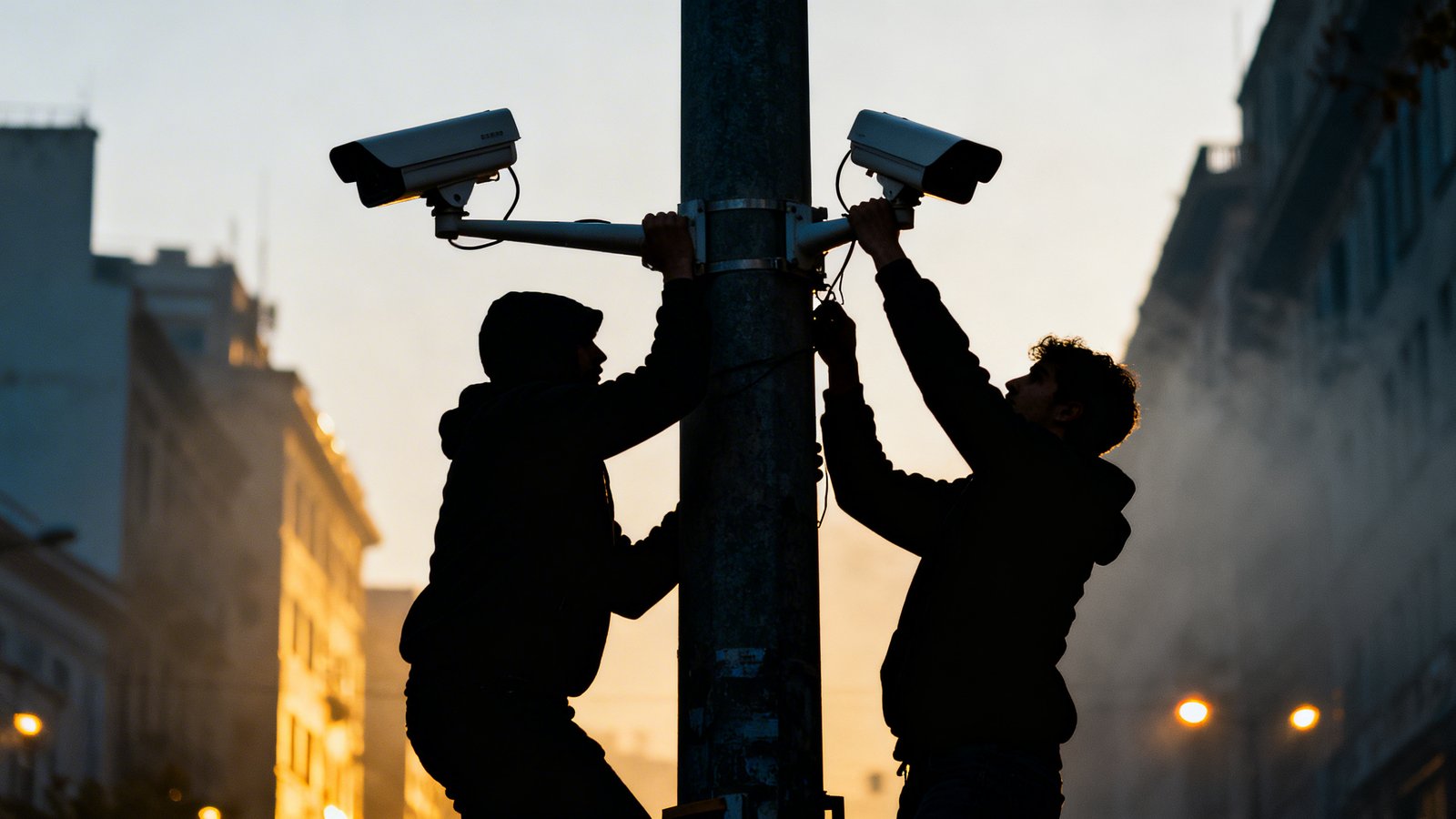
You’ve got folks posting pictures, talking about how they’re cutting the wires, taking the cameras down, sometimes even just plain smashing ’em. Is it legal? Probably not. Am I endorsing it? I’m a journalist, man, I just report what’s happening. But am I surprised it’s happening? Not one bit. Because for years now, we’ve watched our public spaces get colonized by these digital eyes, all in the name of safety, but with very little oversight, very little transparency, and basically zero public input.
The Creep, The Data, And Your Daily Drive
Here’s the deal with these Flock cameras. They’re not just for, like, catching the guy who stole your Amazon package. They’re building a massive database. A real-time, historical record of where you, your car, and by extension, your life, have been. Every doctor’s appointment, every trip to the grocery store, every visit to your friend’s house, every time you drive through that neighborhood. It’s all logged. And it’s shared. Police departments buy into the system, and suddenly, they’ve got access to data from other towns, too. It’s a network, see? A sprawling, ever-growing web.
And who controls that data? Who can access it? How long do they keep it? What happens if there’s a data breach? What if a rogue cop decides to track an ex? These aren’t hypothetical “what-ifs” anymore. These are very real concerns that nobody seems to have good answers for. And yet, the cameras just keep going up. It’s like they think we won’t notice, or we won’t care.
But Wait, Isn’t This Just Vandalism?
Yeah, sure, you could call it vandalism. And the police definitely will. They’ll probably charge people. But let’s be real, sometimes “vandalism” is the only way people feel like they can be heard. It’s a protest. It’s a cry for agency in a world that feels increasingly out of control, where every move we make is tracked and logged by someone, somewhere.
Think about it. We’ve got Ring doorbells everywhere, constantly recording. We’ve got public CCTV. We’ve got our phones tracking our location. And now these license plate readers, just quietly sitting there, sucking up data about our daily lives. At some point, people are going to say, “Enough.”
“When the tools of surveillance become so pervasive that they fundamentally change the nature of public space, people will inevitably push back. This isn’t just about privacy; it’s about dignity.”
That’s the quote, right there. It’s not just about some abstract idea of privacy. It’s about feeling like you’re constantly being watched, judged, and recorded, even when you’re just driving to work. It chips away at your sense of freedom, at your ability to just exist without being part of some data point.
The Elephant in the Room
Here’s the thing that really gets me: the companies selling these cameras, and the cities buying them, they bank on apathy. They bank on people being too busy, too tired, or too scared to speak up. They present it as a done deal, a necessary evil for a safer society. But a truly safe society is one where people feel secure, not one where they feel constantly observed by an impersonal, unblinking eye.
What’s really interesting here is the sheer audacity of it. The idea that we’d just accept this blanket surveillance without question. And the pushback, while it might be messy, might be illegal in some instances, it’s also a deeply human response. It’s a visceral, “get off my lawn” kind of reaction to tech that feels invasive and overreaching. It’s not some coordinated, top-down movement. It’s organic. It’s individuals, or small groups, deciding they’ve had enough. And that, frankly, is pretty powerful. It shows that even in an age where everything feels digital and abstract, physical action still has a place.
What This Actually Means
This isn’t going to stop the march of surveillance tech, not entirely. But it’s a huge, flashing neon sign that people are paying attention. It tells Flock Safety, and every other company selling these systems, that there’s a cost beyond the purchase price. There’s a social cost. There’s a resistance cost. And it’s going to make cities think twice, or at least they should think twice, before installing these things without real, honest-to-god public discourse.
Because here’s my honest take: if you put up surveillance everywhere, without consent, without proper democratic process, without robust oversight, you’re going to get a reaction. It might be quiet at first, a grumble, a forum post. But eventually, if people feel ignored, if they feel their basic rights are being eroded for convenience or for a false sense of security, they’re going to take matters into their own hands. And sometimes, those hands are going to be holding a pair of wire cutters.
This isn’t just a story about cameras coming down. It’s a story about people reclaiming a tiny bit of their autonomy in a world that’s trying really hard to track every single one of us. And that, my friends, is something worth watching. Or, you know, maybe not.
