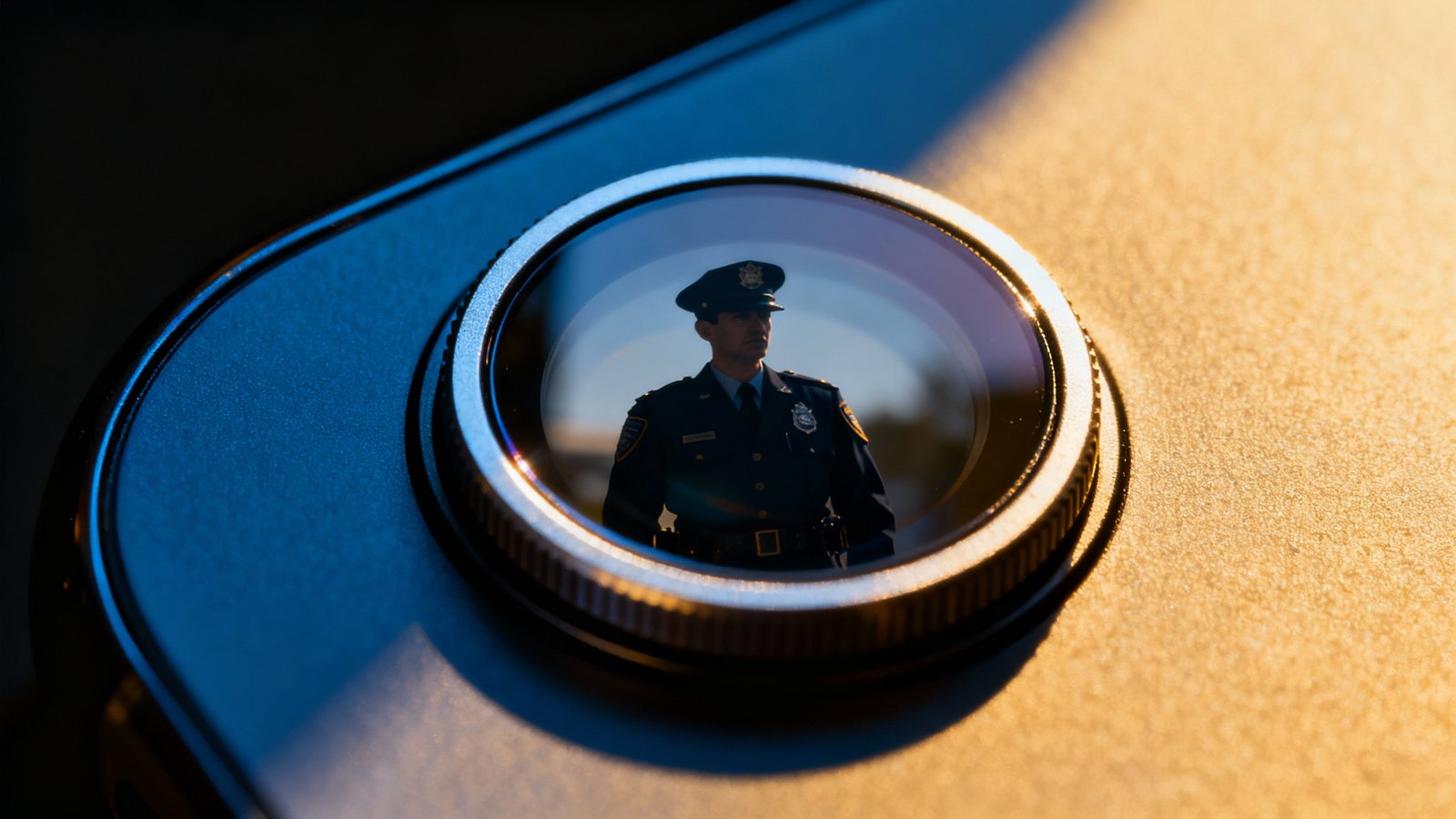
So, you thought filming a government agent doing their job in public was, you know, a basic right? A way to hold power accountable? Ha. That’s adorable. Because if you’ve ever pointed your phone at an ICE agent, congrats, you might just be on a list. A terror list. Not kidding.
Your Phone, Their Database, Your Terrorist Label
Here’s the thing, and this kinda drives me nuts: a report surfaced not too long ago about how Immigration and Customs Enforcement (ICE) is reportedly building a database of people who film their agents. And get this – an actual ICE agent was quoted, saying something along the lines of, “We have a nice little database and now you’re considered a domestic terrorist.”
Let that sink in. Just for pulling out your iPhone, maybe because you saw something that looked wrong, or maybe you just wanted to document an interaction for transparency’s sake, you’re now apparently lumped in with, what, actual bomb-throwers and homegrown extremists? I mean, who exactly are we kidding here? It’s a pretty aggressive leap, if you ask me.
Look, we live in a country where, last I checked, filming public officials in public spaces is a constitutionally protected activity. It’s not just some fringe idea; it’s a cornerstone of transparency and accountability. Police departments, federal agencies, they’re supposed to operate in the open, especially when they’re interacting with the public. But ICE? They’re apparently taking a different playbook, one that seems to say, “You watch us, we watch you. And then we label you a threat.” It’s got a real chilling effect, doesn’t it? Like, who’s gonna step up and film next time if they think they’re gonna end up on some shadowy government list?
The Slippery Slope of “Domestic Terrorist”
The whole “domestic terrorist” thing is a label that gets thrown around way too easily these days. It used to mean something very specific, something genuinely dangerous. Now? It feels like it’s being weaponized against anyone who dares to question authority, or even just observe it. If filming an agent is enough to get you that label, what’s next? Asking a tough question? Holding a sign at a protest? Where does this stop?
Are We Just Accepting This? Seriously?
This isn’t just about ICE, actually. It’s about a broader pattern we’ve been seeing, this creep of surveillance and intimidation tactics from government agencies. It’s a fundamental challenge to the idea of citizen oversight. You know, the whole checks and balances thing? It’s not just for Congress and the President; it’s for us, the people, too. We’re supposed to be able to keep an eye on what our government is doing, especially when it involves enforcement and potentially infringing on people’s rights. But when the consequence of that oversight is being branded a domestic terrorist? That’s a whole different ballgame. And not a fun one.
“The price of freedom is eternal vigilance. But apparently, the price of vigilance is a spot on a government watchlist.”
I mean, what kind of message does that send? It tells people, loud and clear, that transparency is a threat. That accountability is a risk. It tells you to mind your own business, to look away, to not ask questions. And if that’s the message our government wants to send, then we’ve got bigger problems than who’s getting filmed.
The Real Implications of Their “Nice Little Database”
Let’s unpack this “nice little database.” It’s not just some scrap of paper in a desk drawer. This is almost certainly digital, linked, and probably shared. It means your name, your face, maybe even your associated social media accounts or other personal data could be cross-referenced, flagged, and stored indefinitely. And for what? For exercising a right. For being a concerned citizen. It’s infuriating, really.
And let’s be brutally honest: this isn’t just about security. This is about control. It’s about discouraging scrutiny. If you make it risky enough, if you slap a scary-sounding label on people who document what’s happening, then fewer people will do it. It’s a classic intimidation tactic. And frankly, it’s pretty un-American, if you ask me. It reminds me of the kind of stuff you hear about in countries that don’t exactly prioritize civil liberties. We’re supposed to be better than that, aren’t we?
Who decides who goes on this list? What’s the criteria? Is it just any old filming? Or does it have to be “disruptive” filming? (And who defines “disruptive”?) We don’t know. And that lack of transparency around their database is ironically the very thing people are trying to combat by filming them. It’s a vicious, self-serving circle.
What This Actually Means
This whole situation is a flashing red light. It tells us that some parts of our government are getting increasingly comfortable with labeling dissent, or even just observation, as a form of extremism. It’s a direct attack on the First Amendment, plain and simple. It’s a way to silence critics without actually having to arrest them for anything. Just put ’em on a list. Scare ’em into submission.
My honest take? We can’t just shrug this off. If we let this stand, if we allow government agencies to unilaterally decide that filming them makes you a “domestic terrorist” and worthy of a database entry, then we’ve basically given up a huge piece of our democratic oversight. It sets a precedent that will absolutely, 100%, be expanded and abused. You think it’ll stop at ICE? Nah. It never does. So next time you see someone filming, or if you’re the one doing the filming, just remember: you’re not just documenting. You might be making history… or at least, making it onto a list you definitely didn’t sign up for. And that, my friends, is a terrifying thought.