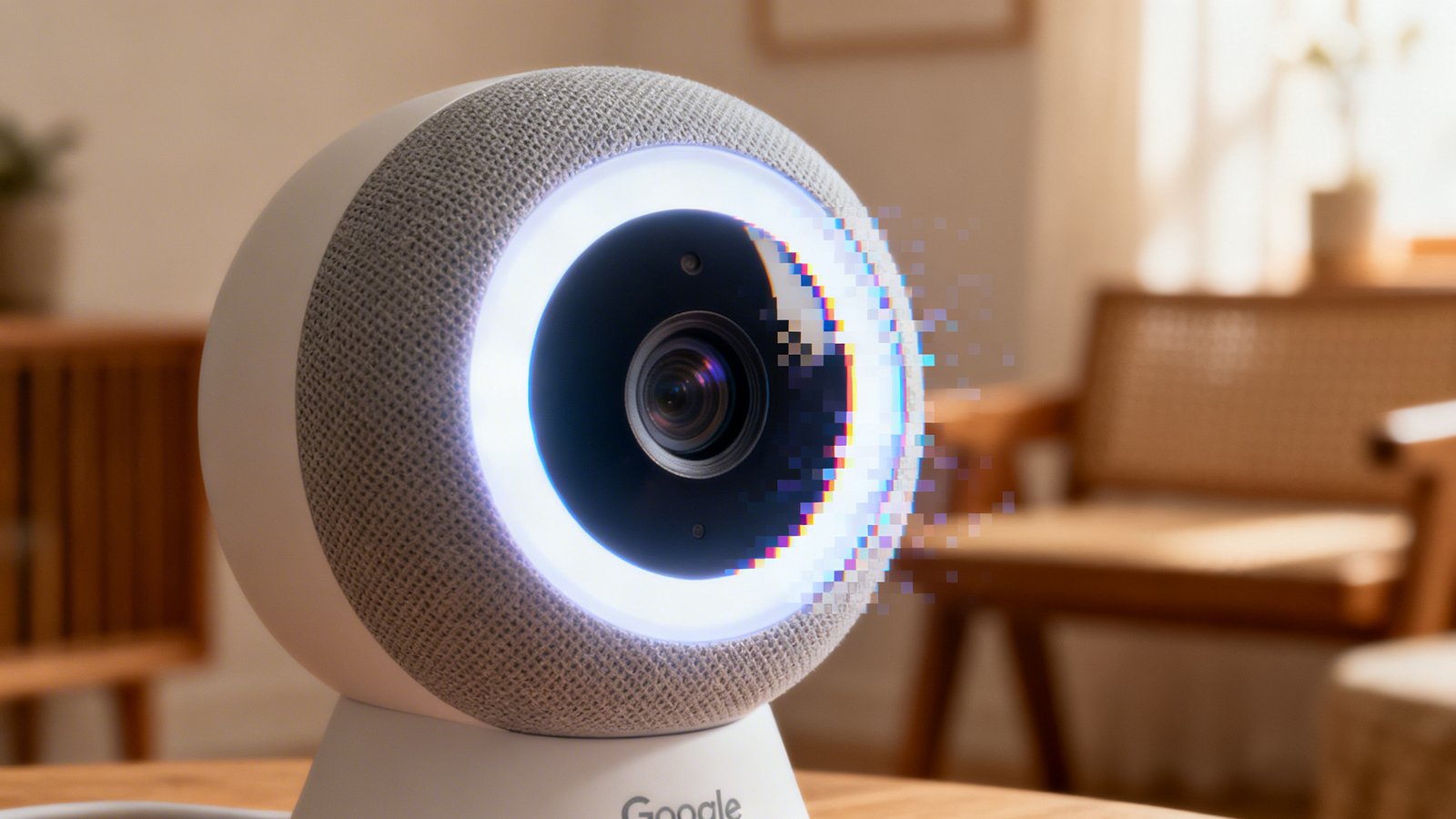
So, here’s a story that ought to make the hair on your arms stand up, especially if you’ve got any kind of smart home gadget plugged in. We’re talking about Nancy Guthrie. Sweet woman, disabled, just trying to live her life. And the FBI, bless their little hearts, somehow got footage from her Google Nest camera. Now, you might be thinking, “Okay, so she had a camera, probably a warrant, whatever.” But here’s the kicker, the part that really grinds my gears: that camera? It was DISABLED. As in, turned off. Offline. Not supposed to be recording squat. And yet, the Feds got the goods. What the actual hell?
Your Disabled Camera Is Watching, Apparently
I mean, think about that for a second. You go through the motions, you hit the “off” switch, you unplug the thing, you maybe even throw a towel over it because you’re paranoid (and frankly, good for you). You think you’re safe. You think you have privacy. Nancy Guthrie thought that too. From what I understand, she’s got some health issues, and she uses these cameras for, well, safety. To keep an eye on things, like a lot of us do. But when the FBI came knocking, they didn’t just ask nicely for footage she might have saved. Oh no. They showed up with evidence from a camera she had explicitly, unequivocally, disabled. That’s not just a breach of trust, it’s like a digital ghost reaching out and grabbing you. It’s unsettling. Really unsettling.
The whole point of disabling a device, right, is to stop it from working. To stop it from recording. To stop it from sending data. It’s like turning off your car. You don’t expect it to suddenly drive itself down the road. But this Nest camera? It apparently had a secret life. And Google, bless their techy little hearts, has been pretty mum on the whole thing. We’re talking about a company that sells millions of these devices, promising security and control to its users. And then this happens. It kinda makes you wonder what else these things are doing when we think they’re just… chilling.
The Digital Zombie Apocalypse, Maybe?
So, how did they do it? That’s the million-dollar question, isn’t it? And frankly, nobody’s giving us a straight answer. Some folks are speculating it was a remote exploit, a backdoor, something Google itself might have built in for “emergency access” or maybe, just maybe, something the FBI found on their own. Others are saying it could be a rogue employee, which, hey, happens. But the most chilling theory? That these devices, even when “disabled,” still maintain some kind of low-power connection, a listening post, just waiting to be activated. Like a digital zombie, waiting for its master’s call. It’s not a great look for Google, not at all. And it’s an even worse look for our collective sense of digital safety. Because if they can do it to Nancy’s disabled camera, who’s next? You? Me? Your kid’s baby monitor?
Who’s Really in Control of Your Home?
This whole debacle just throws a giant wrench into the idea of “owning” your smart devices. You buy it, you install it, you set it up. You think it’s yours. But is it? Or is it more like you’re leasing a piece of hardware that’s still fundamentally controlled by the company that made it, or worse, by an alphabet soup agency with a very broad definition of national security? It’s like having a tenant in your house who you thought moved out, but they still have a key and pop in whenever they feel like it. Not cool. Not cool at all.
“It’s not just about what you’re recording, it’s about what they can record, even when you’ve said ‘no’.”
We’ve been told, over and over, that these devices are safe. That our data is encrypted. That we have control. And for the most part, I’ve bought into that, probably like a lot of you. I mean, I’ve got smart bulbs, smart plugs, a thermostat that talks to my phone. I get the convenience. But this incident with Nancy Guthrie’s Nest camera? It pulls back the curtain and shows us a really ugly truth: that the “off” switch might just be a suggestion. And that’s a problem. A really big problem for anyone who values their privacy.
What This Actually Means
Look, I’m not saying we should all go live in cabins in the woods and communicate via carrier pigeon. That’s not realistic. But this Nancy Guthrie situation? It’s a wake-up call. It means we have to be incredibly skeptical about what “disabled” actually means when it comes to our smart tech. It means we probably can’t trust the assurances of these tech companies at face value anymore. And it means the government, or at least some parts of it, clearly has ways of getting into our supposedly private spaces that we, the regular Joes and Janes, aren’t privy to. It’s a power imbalance that’s just getting wider and wider.
So, what can you do? I wish I had a neat little answer for you. Unplug everything? Go back to dumb devices? Maybe. For some, that’s gonna be the move. For others, it’s a constant weighing of convenience versus privacy. But one thing’s for sure: don’t assume that just because you hit a button, a device is truly off. In this increasingly connected world, “off” might just be a state of mind, not a technical reality. And that, my friends, is a terrifying thought to go to bed with tonight.