
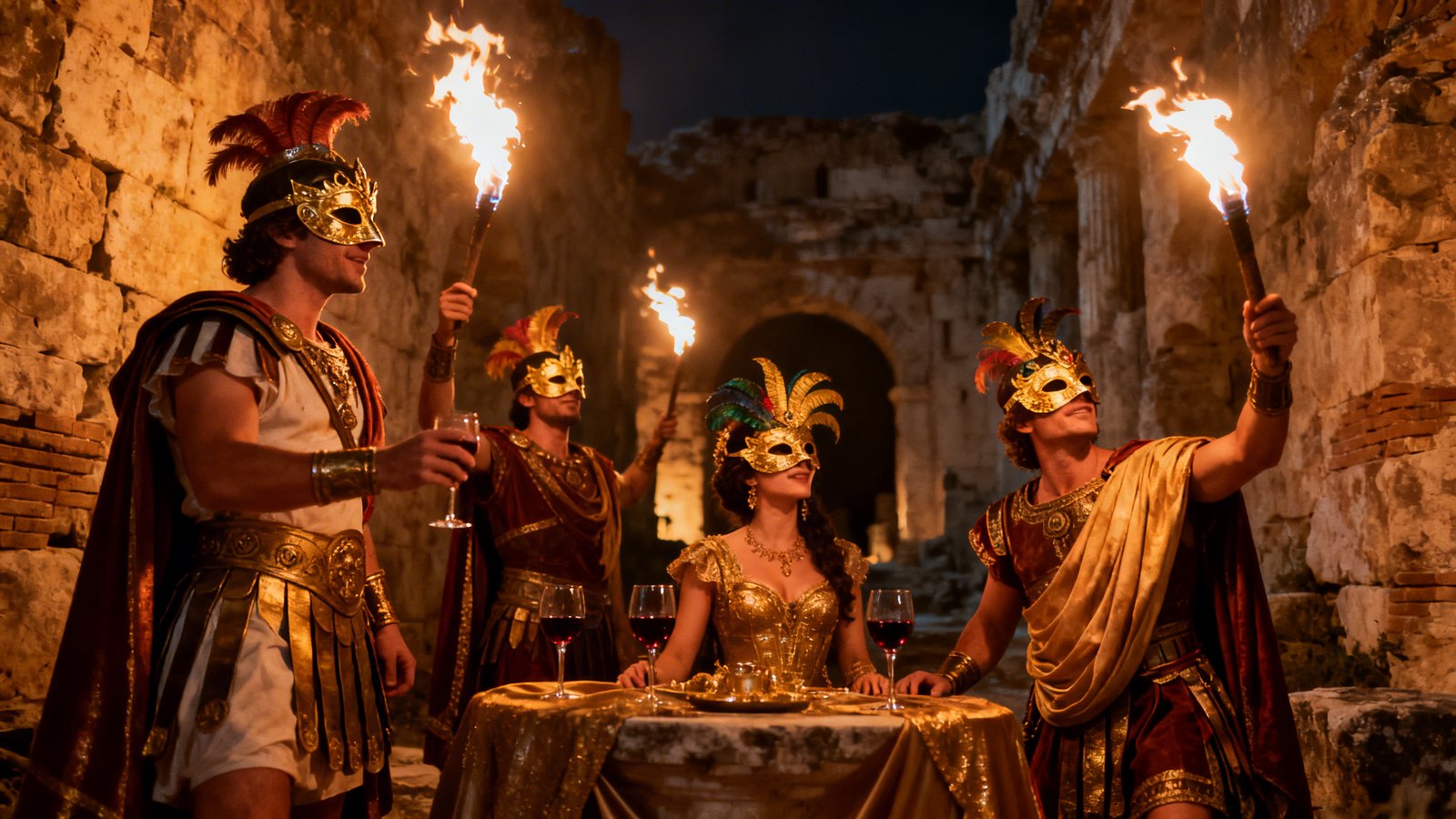
Okay, so everyone’s all hyped up about Mardi Gras, right? Beads, booze, jazz, maybe a little bit of questionable decision-making before Lent kicks in. You think it’s some New Orleans thing, or maybe something the French brought over. Cute. But here’s the thing: this whole “party-hard-before-the-fast” deal? It’s not new. Not even close. We’re talking ancient. Like, toga-party-level ancient. Rome had this down pat, centuries before anyone even thought about putting a feather on a mask.
Before the Beads, There Were Bacchantes
Look, if you think Fat Tuesday is some relatively modern invention, you haven’t been paying attention to history. Or, you know, just human nature. Because, seriously, people have been going wild before a period of solemnity since, well, forever. And the Romans? They basically wrote the book on elaborate, often excessive, celebrations. So the idea that Fat Tuesday has roots stretching all the way back to ancient Rome? Not shocking. Actually, it makes perfect sense.
Think about it. Before the Christian calendar started dictating our party schedule, Rome had a whole slew of festivals that were all about letting loose, turning the social order upside down, and generally having a good time. Often a really good time. You’ve got your Saturnalia, where slaves and masters swapped places, and gifts were exchanged, and there was just a general air of “anything goes.” Then there’s Lupercalia, which was… wild. Definitely wild. Lots of running around, some animal sacrifice (don’t worry, it was for fertility, supposedly), and a general shedding of inhibitions. So, this isn’t some new concept.
The transition from these pagan blowouts to what we now call Fat Tuesday, or Carnival, wasn’t some clean break. Not at all. It was more like a slow, messy morphing. The Church, smart as it was, didn’t just tell people, “Hey, stop having fun!” That never works. Instead, it kind of absorbed these existing traditions, reframed them, and stuck them onto its own calendar. It’s a classic move, if I’m being honest. You can’t beat ’em, join ’em, but make ’em wear a new hat, right?
The Psychology of Pre-Penitence
What’s interesting here is the underlying psychology. It’s this deep-seated human impulse to purge. To get all the indulgence out of your system before you’re supposed to be good. Like, you know you’re gonna have to eat gruel and think about your sins for 40 days, so you might as well eat every rich thing you can get your hands on, drink every last drop, and maybe dance until you drop. It’s a kind of ritualistic gorging, a final hedonistic hurrah. And the Romans? They understood that impulse better than anyone.
So, Are We Just Romans in Modern Dress?
You have to ask yourself, are we really that different? We’ve got our own versions of excess, our own ways of letting off steam before a self-imposed period of restraint. We might not be sacrificing goats or wearing quite as many leaves, but the spirit is undeniably similar. The masks, the parades, the general sense of playful anarchy – it all echoes back. It’s almost like a cultural memory, passed down through generations, even if we’ve forgotten the specific Latin names.
“They say history doesn’t repeat itself, but it certainly rhymes. And when it comes to human behavior, especially around feasting and fasting, that rhyme is practically a chorus.”
Think about what Fat Tuesday, or Mardi Gras, or Carnival, is really about for most people. It’s a break from the everyday. A chance to be someone else, even for just a day or two. To indulge without guilt, at least until Ash Wednesday rolls around and you’re reminded that, oh yeah, you’re supposed to be repentant now. This was big in Rome too. Those festivals were often about temporarily suspending the strict social rules. It was a pressure release valve for the entire society. And let’s be real, we still need those pressure release valves, maybe even more so today.
The Everlasting Party
This whole idea that Fat Tuesday has been observed since ancient Roman times isn’t just a fun fact. It actually tells you something profound about us. About how we’ve always dealt with the tension between our desire for pleasure and our need for structure, for spiritual reflection. We build up to it, we blow off steam, and then we try to be good. It’s a cycle, right? A very old cycle. And it’s not just some obscure historical footnote; it’s living history.
We’ve swapped out Bacchus for beads and Bacchanalia for beignets, but the core impulse is the same. It’s about that last glorious gasp of freedom, that final decadent meal, before we buckle down. And honestly, who cares if it’s dressed up in a different costume now? The fact that this tradition, in various forms, has persisted for millennia is pretty incredible. It says something about the enduring human spirit, doesn’t it? We like to party. And we always will. No matter what we call it, or what ancient empire we’re inadvertently channeling.
What This Actually Means
So, next time you hear someone talking about Fat Tuesday like it’s just some modern excuse for indulgence, just remember the Romans. Remember the sheer, unadulterated chaos of their festivals. Because what we’re doing now? It’s just a tamed, commercialized echo of something that’s been in our collective human DNA for thousands of years. We’re not inventing new ways to celebrate; we’re just re-packaging old ones. And that, to me, is kinda beautiful in its own messy, human way. It shows we haven’t really changed all that much, have we? We still need to let loose. We still need that last big hurrah. And probably, we always will. It’s not going anywhere, because we’re not going anywhere, and neither is our desire for a good old-fashioned blow-out before the reckoning.