





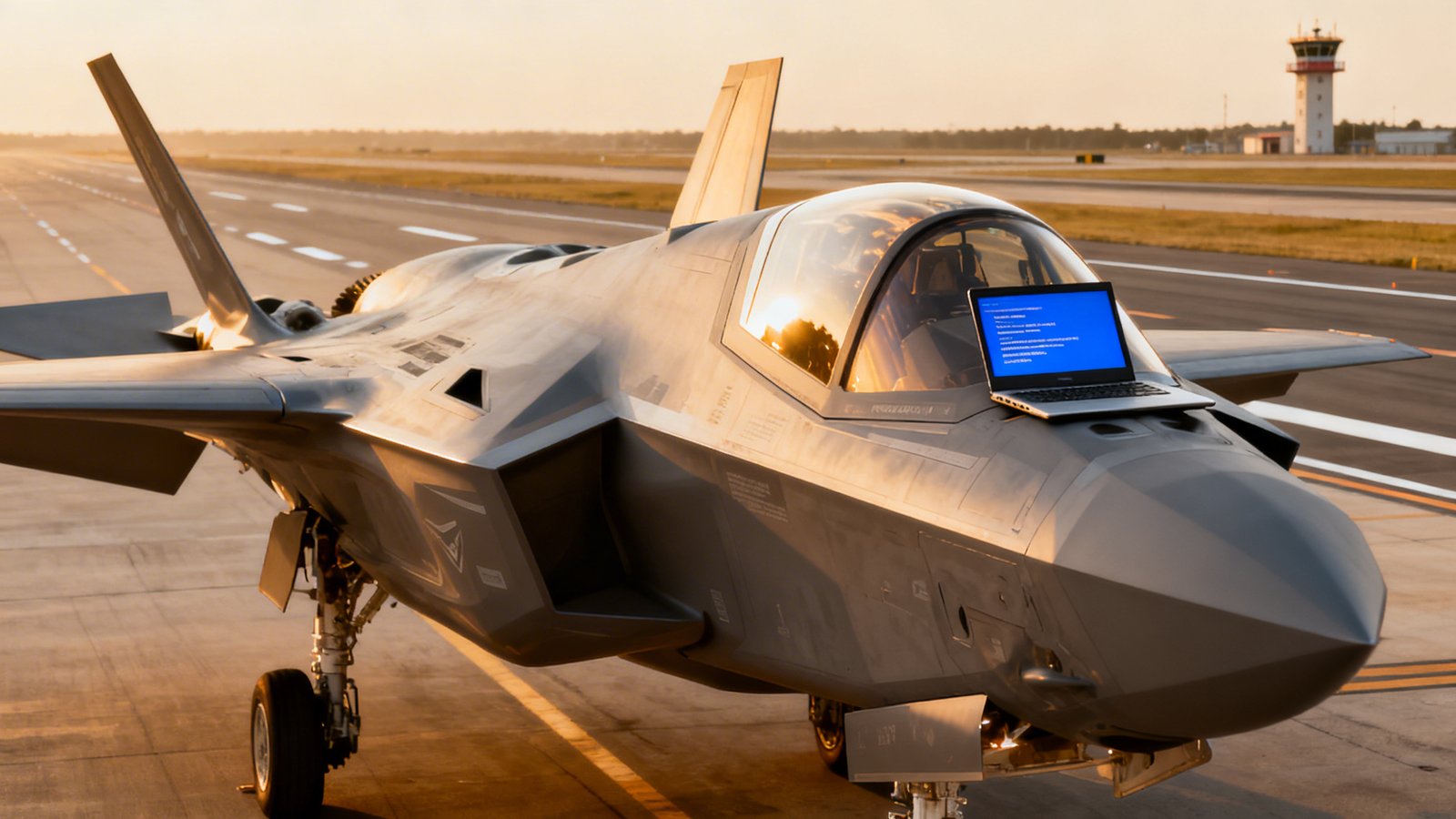
Yeah, you read that right. Like your old iPhone 4s back in the day when you wanted a custom ringtone or whatever.
Oh, So My Fighter Jet Has DRM Now?
So, here’s the thing. A Dutch defense chief – and I gotta tell you, it’s always the Dutch with the sensible, slightly alarming takes, isn’t it? – goes and says, quite casually it seems, that the F-35 is basically a giant, flying, super-expensive piece of proprietary tech. A “walled garden,” if you will. You don’t own the software. You license it. And if you wanna do anything outside the manufacturer’s approved parameters, well, you’re gonna have to “jailbreak” the damn thing.
I mean, come on! We’re talking about a warplane here, not some smart fridge that won’t let you buy milk from a different brand. This isn’t just about tweaking your notification sounds; this is about national security. It’s about a country’s ability to defend itself, to maintain its own equipment, to adapt its tools to its own specific needs. And now we find out that every time a pilot wants to, I don’t know, maybe optimize a radar setting for a new threat profile, they might be committing a digital felony, or at least voiding their warranty on a $100 million asset. It’s just wild.
The Lock-In Is Real, Folks
This isn’t new, really. We’ve seen this pattern before, haven’t we? Farmers fighting John Deere for the right to repair their own tractors. Hospitals struggling to fix their own medical equipment because the manufacturer holds all the keys. It’s a classic move: sell the hardware, but keep a death grip on the software, the parts, the diagnostics, and basically, all the control.
And now it’s reached the pinnacle of military technology. Lockheed Martin, the big dog behind the F-35, they’ve basically got every customer nation by the short hairs. You wanna upgrade? You wanna integrate a new weapon system that you developed? You wanna tweak the flight control software because, hey, maybe your pilots have a slightly different doctrine? Good luck with that. You’re gonna need Lockheed’s blessing, their technicians, and probably a check with more zeroes than I’ve ever seen. It’s just incredible.
Is This a Feature or a Bug, Seriously?
But wait, doesn’t that seem weird? On the one hand, you could argue that this tight control is a feature. It ensures standardization, prevents unauthorized modifications that could compromise safety or performance, and maybe even helps with cybersecurity by limiting access points. Right? That’s the official line, probably.
But then, you gotta wonder: whose security are we really talking about here? Because if a friendly nation – one that just shelled out billions for these jets – can’t access or modify its own software without permission, what does that say about their sovereignty? What if there’s a critical vulnerability and Lockheed takes too long to patch it, or decides it’s not a priority for your specific variant? What if you’re in a hot conflict and you need to adapt right now, and you’re waiting for a firmware update from a defense contractor based thousands of miles away?
“It’s not just about owning the plane; it’s about owning the ability to use the plane, on your own terms. And right now, that’s not fully in the hands of the nations who bought them.”
And let’s not even get into the truly terrifying thought: if the Dutch defense chief knows you can “jailbreak” an F-35, you can bet your bottom dollar that Russia, China, and every other nation with a serious cyber warfare division has already tried, or succeeded. If the manufacturer’s own customers are locked out, but a determined adversary isn’t… well, that’s a problem, isn’t it? A really, really big problem.
The Future of Warfare is a Software License Agreement
This whole thing just screams about the direction modern defense is heading. It’s not just about who has the biggest bombs or the fastest jets anymore. It’s about who controls the code. Who has the access. Who dictates the terms of service for weapons systems.
And it’s clear, at least for now, that the defense contractors are winning that battle. They’re building these incredibly complex, interconnected systems, and then they’re saying, “Thanks for your money, now here’s the user manual, but don’t touch anything under the hood.” It’s like buying a Ferrari but the manufacturer keeps the keys to the engine diagnostics and charges you every time you want to check the oil. Except, you know, with missiles and stuff.
It’s got to make you wonder what other critical systems – tanks, ships, missile defense – are running on similar, heavily locked-down, proprietary software. We’re essentially outsourcing our national defense capabilities to a few massive corporations, trusting them implicitly with not just the hardware, but the very brains of our military.
What This Actually Means
Look, this isn’t just a tech curiosity; it’s a fundamental shift in military power dynamics. For years, countries built their own stuff, or bought it and then had full control. Now, we’re in an era where national defense is increasingly dependent on software licenses and proprietary protocols.
It means smaller nations, or even big ones that aren’t the primary developer, are going to have less autonomy over their own defense assets. It means higher long-term costs due to vendor lock-in. And it means a potential, gaping security hole if an adversary figures out how to exploit these “jailbreak” capabilities before the owners do.
It’s a stark reminder that in the 21st century, true military power isn’t just about steel and gunpowder; it’s about lines of code, digital access, and who ultimately holds the root password. And right now, from what I can tell, it’s not always the people who paid for the jet. That’s just unsettling, isn’t it? It really is.

