Charles Spencer watched his nephew walk behind Diana’s coffin when the kid was just 12 years old. Twenty-eight years later, he’s still thinking about that walk, and now he’s wondering out loud if it explains a whole lot more than anyone’s been willing to admit.
The Interview Everyone’s Going to Be Talking About
Earl Charles Spencer, 62, sat down with CBS Sunday Mornings for an interview airing this Sunday, September 20, and dropped something that’s honestly been hanging in the air for years but nobody with this kind of insider access has said quite so plainly. Talking about Prince Harry, his nephew, and everything that’s gone down with the royal family drama, Spencer basically floated the idea that grief – real, unprocessed, decades-old grief – might be running the whole show.
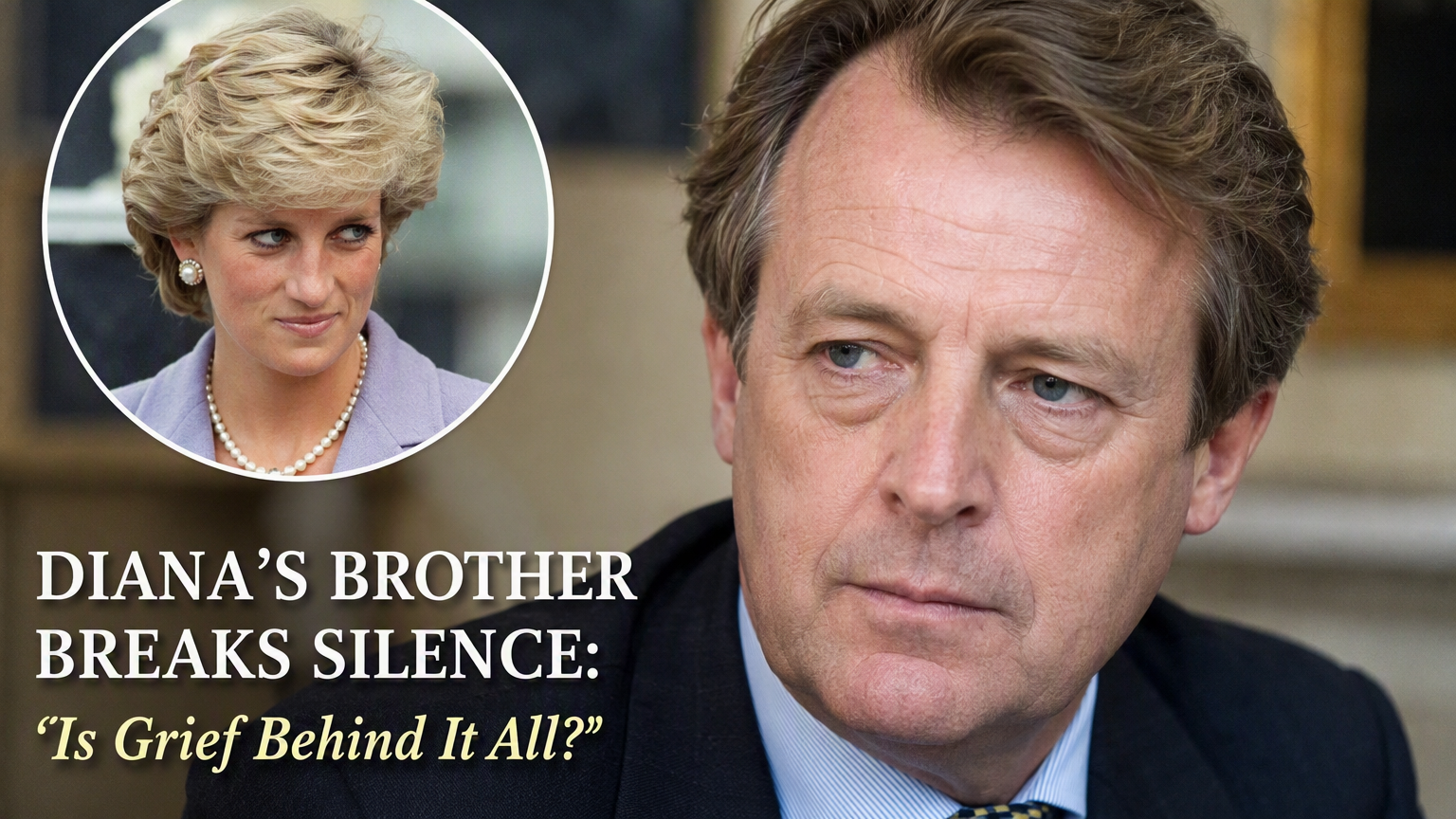
“I do sometimes wonder with the situation, if I can call it that, … how much it is connected to this very sad time,” Spencer said. And look, he’s not being cagey for no reason. This is a guy who literally walked in that funeral procession too. He was there. He saw it happen in real time, an entire nation grieving in public while two little boys had to do it in front of the entire world.
“This Little Boy Shouldn’t Have to Walk Behind His Mother’s Coffin”
That line right there. That’s the one that’s going to get quoted everywhere by Monday morning. Spencer remembers walking beside young Harry – who was tiny, and I mean that literally, the kid was small for his age – and just thinking to himself that none of this should be happening. No nine-year-old (Harry was actually 12, but he looked younger, everyone remembers how young he looked) should have to do that. Not for anyone. Not for a princess, not for a queen, not for anybody’s mom.
Diana died in that Paris car crash in August 1997. She was only 36. Thirty-six! That’s still wild to think about, honestly, especially now that Harry’s 42 and William’s 45 – both older than their own mother ever got to be. There’s something deeply unsettling about that fact and I don’t think we sit with it enough.
So Is Grief Really Behind It All?
Here’s the thing – Spencer isn’t diagnosing his nephew from across an ocean like some armchair therapist. He’s family. He was in the room, or rather, in the procession, for the worst day of these boys’ lives. So when he says he wonders if grief is connected to “the situation,” he’s not being dramatic. He’s asking a question a lot of us have probably asked too, just without the access to actually know.
“I do sometimes wonder with the situation, if I can call it that, … how much it is connected to this very sad time.”
Notice he doesn’t even want to call it a “situation.” He hesitates on the word. That tells you something. This isn’t a guy who’s comfortable reducing his nephew’s very public, very messy family estrangement into a tidy little narrative. But he’s also not pretending the timeline doesn’t matter. Losing your mom at 12, in the most public, most horrific way imaginable, cameras everywhere, conspiracy theories swirling before you’ve even had a chance to cry properly – that leaves a mark. It has to.
Why This Take Actually Matters
I’ve seen plenty of royal commentators try to explain Harry’s rift with his family using politics, or Meghan, or money, or “Californians ruined him,” whatever the tabloid flavor of the week happens to be. But rarely does anyone go back to the actual root of it. The kid lost his mother in the most traumatic way possible and then had to grieve her in front of millions of strangers while wearing a suit and trying not to cry on live television.
Not gonna lie, that context changes things for me. It doesn’t excuse every decision Harry’s made as an adult (nobody’s arguing that), but it sure explains a lot about why he might crave privacy, distrust the press to his core, and want to build a life far away from the exact machine that turned his mother’s death into a spectacle.
And Spencer would know. He’s the one who stood up at Diana’s funeral and gave that blistering eulogy – the one where he basically took a shot at the royal family in front of them, saying he and his sisters would make sure Diana’s “blood family” stayed involved in raising William and Harry. That moment alone tells you Spencer’s been thinking about this family’s wounds for almost three decades now. This isn’t a new thought for him. It’s just the first time he’s said it this directly, on camera, to an American audience.
The Timing Here Is Interesting Too
This interview isn’t happening in a vacuum. Harry and William’s relationship is still basically frozen, King Charles’s health has been a constant headline, and every few months there’s some new report about a possible reconciliation that never quite materializes. So when Diana’s own brother goes on television and essentially says “hey, maybe we’re all forgetting this started with a massive childhood trauma,” that lands differently right now than it might have five years ago.
What This Actually Means
Look, I don’t think Spencer cracked some secret code here. Grief experts have said for years that unresolved childhood loss shapes adult behavior in ways people don’t always see coming, sometimes decades later. That’s not exactly breaking news to anyone who’s read a psychology book. But hearing it from someone this close to the situation, someone who was actually there on that walk, hits different than a general observation from a stranger.
What strikes me most is that Spencer’s not pointing fingers. He’s not blaming Harry, he’s not blaming the palace, he’s not even really blaming the press (though, let’s be honest, plenty of blame belongs there too). He’s just wondering. Out loud. Which, honestly, feels like the most human response anyone in this family has given in years.
Maybe that’s the real story here – not some grand revelation, but a grown man still trying to make sense of what happened to his nephews, almost thirty years later. Grief doesn’t really have an expiration date. Seems like nobody in this family ever really got the memo that they were allowed to just… grieve, without an audience.