






Okay, so two years. Can you believe it’s already been two whole years since we collectively gasped, squinted, and then started endlessly debating that thing rolled onto the stage? I’m talking, of course, about the Tesla Cybertruck. The Stainless Steel Wedge of Destiny, the Love-It-Or-Hate-It Pickup, whatever you wanna call it. It’s been two years, and the darned thing is still more concept than reality for most of us, yet it lives rent-free in our heads, doesn’t it?
I remember watching the unveil live, coffee-mug in hand, thinking, “Is this a joke? Am I being punked?” And then that window shattering moment-you know the one-and the collective “oof” felt around the internet. It was pure chaos, pure Elon, and pure unforgettable. But now, with the dust settled (sort of), and production whispers sounding more like distant echoes, the question really shifts from “what is that?” to “what was that, and what will it be?” Has it been a monumental flop, a PR stunt gone sideways, or is it, somehow, shaping the future without even being here?
The Great Unboxing – Or Rather, The Great Non-Unboxing
Let’s be real, the Cybertruck’s journey from concept to consumer has been less like a smooth highway and more like a Baja 1000 race-full of unexpected bumps, breakdowns, and a whole lot of dust. When it first hit the scene in late 2019 (gosh, already?), it was supposed to redefine everything we thought we knew about trucks. Steel exoskeleton, armored glass (oops), insane torque, bulletproof-ish panels. It was basically a Mad Max vehicle for your suburban commute. Which, oddly enough, appealed to a lot of people, myself included, on some primal level.
Fast forward two years, and where are we? Well, we’ve seen prototypes, sure. We’ve seen Elon Musk drive one, Jay Leno drive one, and even some test mules kicking around Fremont. We’ve heard about Giga Texas being geared up for production, seen countless fan renders, and speculated endlessly about actual specs. But actual, customer-ready, volume production? Not quite so much. It’s almost mythical at this point, isn’t it? A unicorn with sharp edges and a seemingly impenetrable body. At times, it kinda feels like Tesla just threw a weird idea out there, saw the internet lose its mind, and then thought, “Okay, maybe we’ll actually build this thing… eventually.”
The Price of Anticipation (and Delays)
Here’s where it gets interesting, and a little bit sad for those initial reservation holders. Remember those initial price points? Absolutely bonkers competitive for what was promised. A single-motor RWD for under $40k, dual-motor for under $50k, and the tri-motor for roughly $70k. Those were pre-pandemic, pre-inflation, pre-microchip-shortage numbers, mind you. Back when “supply chain issues” wasn’t a daily headline.
- Price Hike: Tesla has, rather quietly, removed the pricing and configurations from the Cybertruck order page. Most industry watchers consider this a pretty clear sign that the final prices are going to be significantly higher than initially advertised. This isn’t just a minor adjustment; it’s practically a re-pricing from the ground up.
- Lost Momentum: Every delay chips away at the initial hype. Competitors are swooping in with their own electric trucks-Ford’s F-150 Lightning is already being delivered, Rivian’s R1T is out, and GM has the Silverado EV and Hummer EV on the horizon. The landscape has changed dramatically. Is the Cybertruck still revolutionary two years later, or just… late?
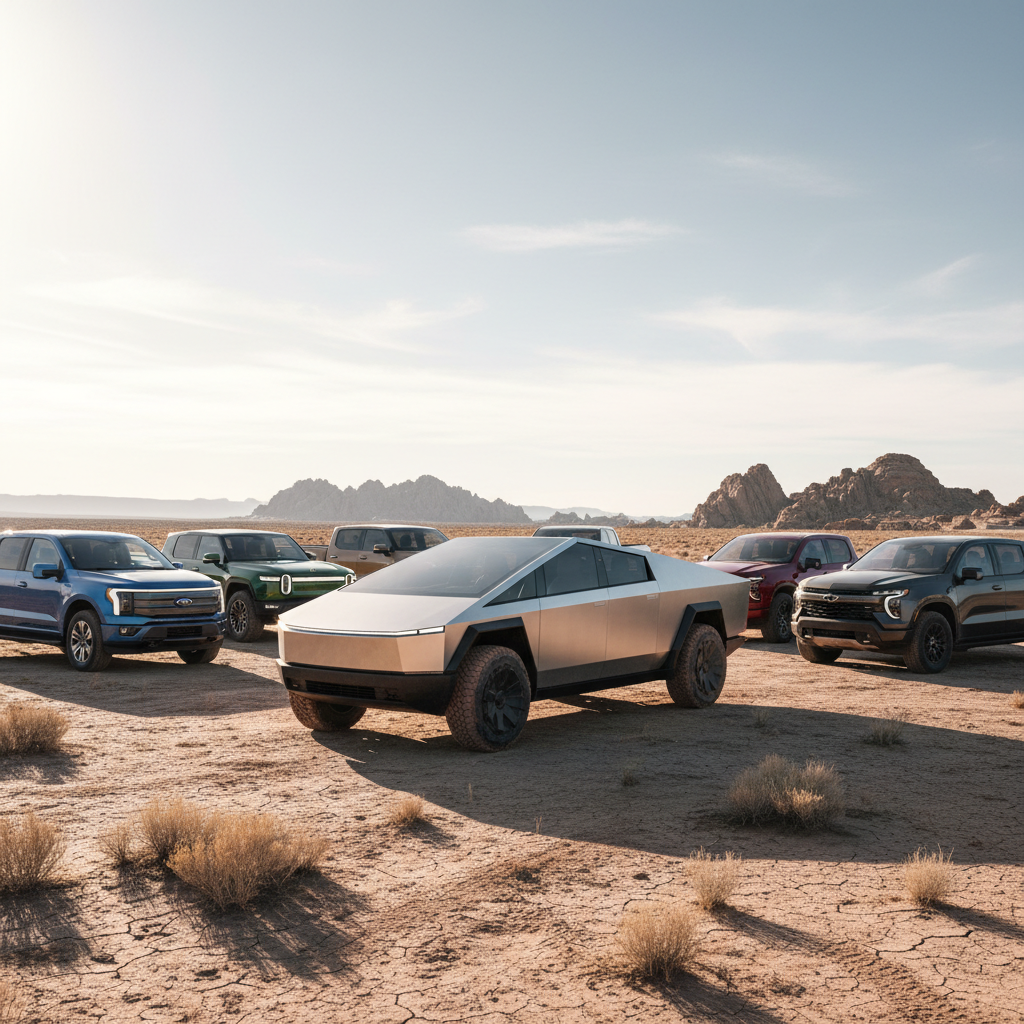
You can’t really fault Tesla entirely-the world went a bit sideways. But when you make such bold claims, and then can’t back it up with production for years, people start to wonder. The “flop” argument usually hinges on this: how can something be a success if it’s barely available? And if it is available, how much will it actually cost, and will the market still care?
“The Cybertruck was a promise of a new future for pickups. Two years in, it’s more of a very expensive, very shiny dream that keeps pushing its alarm snooze button.”
Beyond the Hype: Is it Still Future Shock?
Despite all the production woes and the eye-rolls from skeptics, you can’t deny the Cybertruck’s sheer impact. It forced everyone to look at truck design differently. Before the CT, electric pickups were, well, they looked like pickups. Suddenly, there was a vehicle that looked like it drove straight out of a low-poly video game from the 90s, and it polarized opinion like almost nothing else. THAT, my friends, is future shock.
It pushed the conversation. It made people think, “Do trucks have to look like that?” And that, in itself, is a testament to its design even if you personally think it’s hideous. It’s disruptive. It doesn’t just innovate on powertrain-it innovates on aesthetics, on manufacturing (that stainless steel exoskeleton is a whole can of worms for traditional auto production lines), and even on the very idea of what a personal vehicle can be.
What it Means for EV Pickups (Even if it Dies a Production Death)
Think about it: before the Cybertruck, electric pickups were either niche concept cars or just… normal trucks with batteries. The Cybertruck came along and said, “Nope, we’re doing something completely different.” Whether that “different” resonates with buyers long-term is still TBD, but it definitely shook up the establishment. Ford, GM, Rivian-they’re all out there trying to appeal to the traditional truck buyer, but also trying to capture some of that “new frontier” energy that Cybertruck initially burst onto the scene with. Even if it never becomes a mass-market vehicle, its influence on design and innovation in the EV pickup space is already undeniable. It basically told everyone, “Go big or go home! Or at least, go weird.”
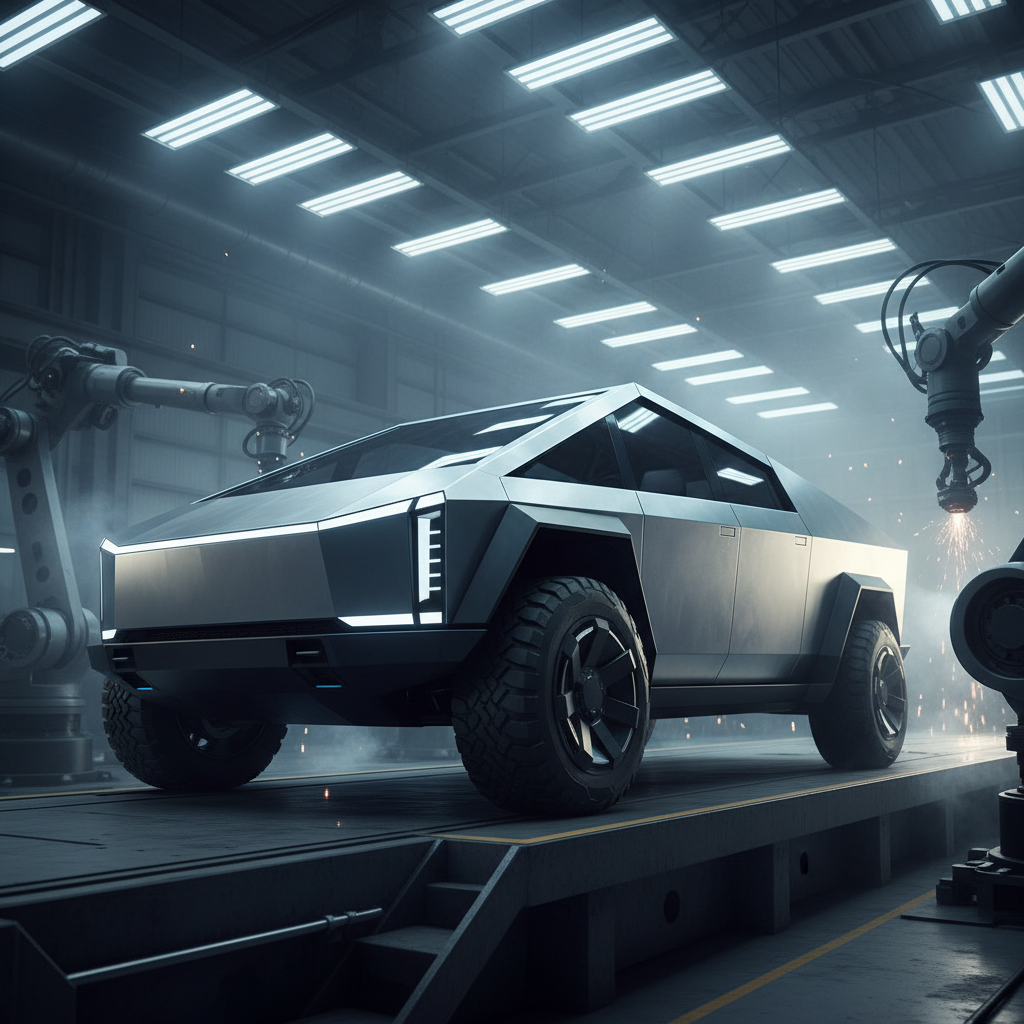
We’re seeing other manufacturers flirt with more angular, futuristic designs in their own ways now. It’s subtle, but the design paradigm has definitely been skewed by that polygonal beast. It’s like when the iPhone first came out; suddenly, every phone had to be a slab with a big screen. The Cybertruck might just be doing that for trucks, albeit in a more polarizing, love-it-or-hate-it kind of way.
So, back to the original question: flop or future shock? I’m inclined to say it’s a bit of both, leaning heavily towards future shock, at least in terms of its conceptual impact. As a tangible product, for customers who put down their deposits years ago, it’s been an absolute production flop so far. The delays are epic, and the likely price hikes will sting. But as an idea, as a declaration that cars don’t have to look the same, that utilities can be beautiful (in a brutalist sort of way), and that manufacturing can be reimagined-that’s where the Cybertruck truly shines.
It’s a bizarre, stainless steel paradox. A vehicle that’s barely real, yet profoundly influential. Will it ever be a common sight on roads? Who knows. But it’s definitely left its mark, carving out a jagged, angular space in our collective automotive consciousness. And for that, I think it’s more than just a flop. It’s a statement. A statement that we’re still trying to fully decode, two years later.


