
Okay, so let’s talk about China Vanke. You know, Vanke- the property giant. For years, they’ve been this kind of gold standard in China’s real estate market. The poster child of stable, government-backed development, always perceived as having their ducks in a row. Not like Evergrande, right? Evergrande was a train wreck everyone saw coming a mile away, all that debt, that aggressive expansion, it was basically a house of cards. But Vanke? They were the sensible older sibling. Or so we thought.
Now, suddenly, there’s this tremor. A really unsettling rumble in the foundations, and it’s emanating directly from Vanke. We’re talking about a company that has about 58 billion dollars in debt. Fifty-eight billion, with a ‘B’. And the whispers aren’t just whispers anymore they’re verging on shouts about debt restructuring. If even Vanke is struggling to manage its finances, if they’re needing to renegotiate terms with creditors, what does that say about the rest of China’s property market? That’s the billion-dollar-I mean, 58-billion-dollar-question, isn’t it?
The Cracks in the “Safe Bet” Narrative
Here’s where it gets interesting, and frankly, a bit concerning. For years, Vanke enjoyed this kind of implicit state backing. They’re partly owned by Shenzhen’s state asset regulator, which always gave them that golden halo of security. Investors just assumed, you know, the government would never let Vanke fail. It was too important, too intertwined with the overall stability narrative. This wasn’t some fly-by-night developer, this was Vanke. The brand, the reputation, it all seemed ironclad.
A Shifting Tectonic Plate
But the market, oh the market, it doesn’t care much for old reputations when cold, hard cash is on the line. What we’re seeing now is not just a dip in confidence, it’s a full-on re-evaluation. People are starting to realize that maybe, just maybe, that implicit government backing isn’t as solid as it once appeared. Or rather, it’s there, but with limits. Like, they’ll help you, sure, but not if you’ve been, shall we say, a bit too enthusiastic with your borrowing. This situation with Vanke, it’s like a test case for how far Beijing is willing to go to prop up even its most cherished property firms. And the early signs? Not exactly comforting for bondholders.
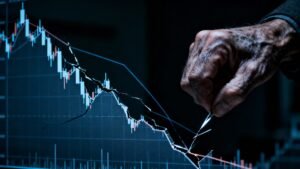
- Point: Vanke’s stock price hit a 15-year low in Hong Kong. Ouch. That’s not just a bad day at the office, that’s a serious indicator of investor panic.
- Insight: When a stock like Vanke’s plunges that far, it shows sentiment has shifted from “they’ll be fine” to “how bad can this get?” It’s a psychological tipping point, really.

The murmurs of renegotiating terms with insurance companies-massive lenders, by the way-are what really set off the latest alarm bells. If you have to ask your biggest lenders to basically, you know, give you some slack, it’s not a sign of robust financial health, is it? It’s a sign of stress. Plain and simple. And given that China’s property sector is still reeling from defaults from literally dozens of other developers, any flicker of distress from Vanke feels like a giant spotlight on the endemic issues.
“The market is asking: If Vanke needs a lifeline, then who else is silently drowning?”
The Domino Effect: Beyond Vanke’s Balance Sheet
This isn’t just about Vanke, you see. This is about trust. Investor trust, consumer trust, the whole shebang. When a pillar of an industry starts to wobble, it sends shockwaves. Think about what happened globally with financial crises-it’s rarely just one bad apple; it’s a systemic failure of confidence. And China’s property market? It’s huge. Like, unbelievably huge. It’s a massive contributor to GDP, a huge employer, and for most Chinese families, their home is their primary, if not only, form of wealth.
What Does “Debt Restructuring” Really Mean?
So, when we hear “debt restructuring,” it sounds kind of technical, right? Like some stuffy bankers in suits are just moving numbers around. But what it actually means can be pretty messy. It can mean extending repayment timelines, accepting lower interest rates, or even taking a haircut on the principal-basically, getting less than what you’re owed. For those insurance companies and banks holding Vanke bonds, it’s not a fun conversation. It means their investments are now, shall we say, less secure than they were yesterday.
- Point: There are reports of provincial government entities, which hold stakes in some of these insurance companies, being involved in discussions.
- Insight: This is a key detail. It implies that Beijing is trying to coordinate solutions without direct central government intervention, possibly pushing local entities to share the burden. It’s a very Chinese way of handling a crisis, sort of a distributed problem-solving.

And then there’s the broader issue. If banks and insurance companies are being asked to be flexible with Vanke, what about other struggling developers? Will they all start lining up, asking for similar treatment? It’s a slippery slope, you know? And it can create this kind of precedent effect, where one restructuring paves the way for others, eroding market discipline even further. No one wants to be the first to blink, but someone has to, eventually.
Beijing’s Tightrope Walk
This whole situation really puts Beijing in a tough spot. They’ve been trying to deleverage the property sector for years-that’s what the “three red lines” policy was all about, basically limiting how much debt developers could take on. They wanted to cool off a ridiculously overheated market and prevent systemic risk. But now, it feels like they’ve cooled it down so much, they’re approaching hypothermia. It’s this delicate balance, trying to prevent a full-blown financial meltdown without just bailing everyone out, which would just encourage more reckless borrowing in the future. Kind of like trying to land a jumbo jet on a postage stamp during a hurricane, blindfolded.
So, what’s the endgame here? It’s not entirely clear, and that, my friends, is the biggest problem. The uncertainty is brutal. Will Vanke get its lifeline, even if it’s a messy one? Probably. They’re too big, too connected, too symbolic to just let collapse entirely. But the terms of that lifeline, and the implications for everyone else in China’s colossal property market, that’s what we’ll be watching. Because a 58-billion-dollar tremor from Vanke- that’s an earthquake for the rest of an already shaky foundation. And no one wants to be caught inside when the big one hits, do they?