
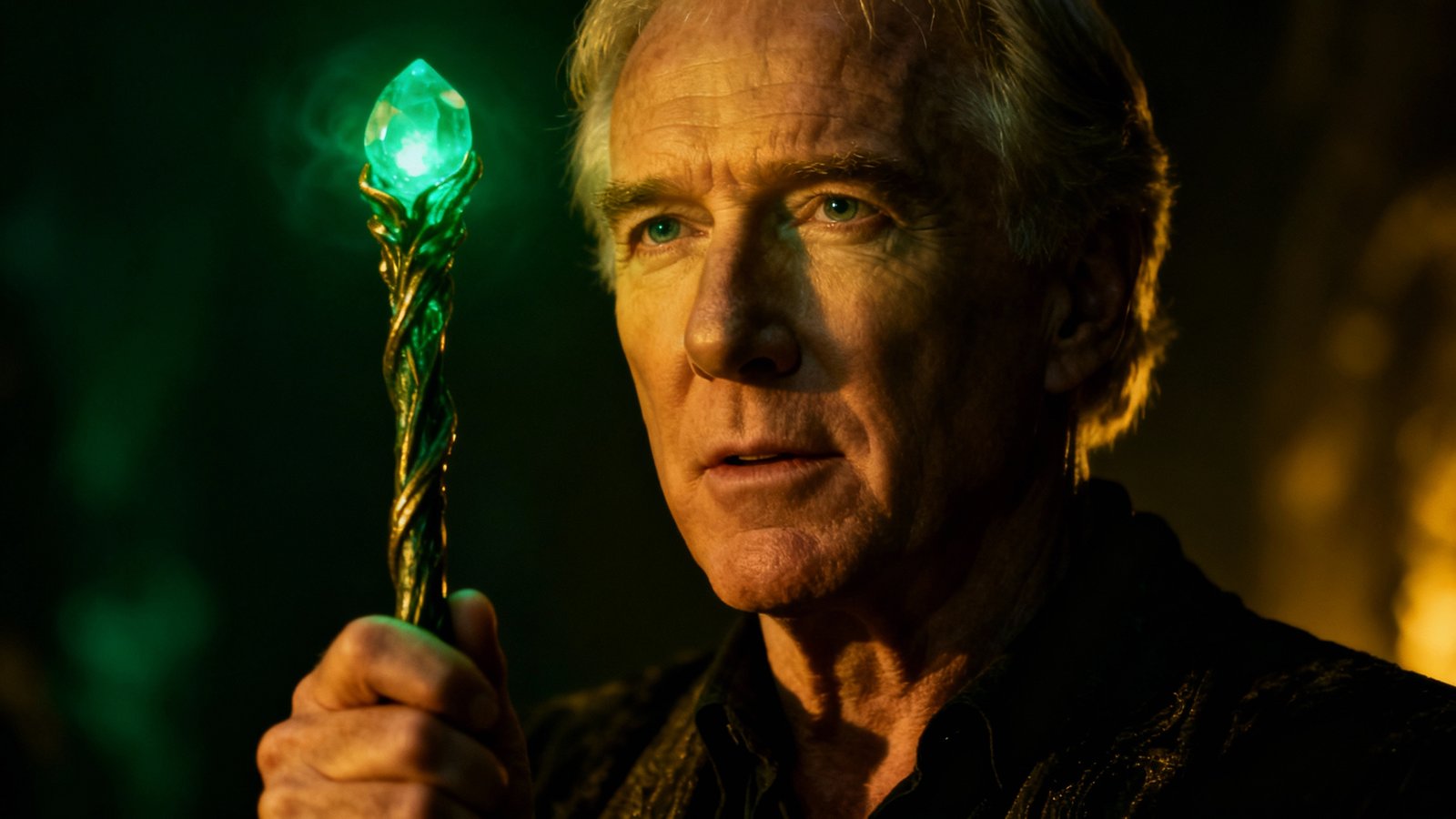
Okay, so try to wrap your head around this for a second: James Cameron, the king of technological spectacle, the man who gave us Titanic and then practically reinvented cinema with Avatar and its sequels- that James Cameron- almost directed Wicked. Yeah, you heard me right. Not a musical. The musical. The one with Elphaba and Glinda, the flying monkeys, the green skin. It’s almost too wild to believe, isn’t it? Because when you think Cameron, you think spaceships and sunken ships, not necessarily belting out “Defying Gravity” on a soundstage.
Most of his flicks, you know, they’re not just movies, they’re events. Grossing billions- plural- and breaking all sorts of records. This guy has helmed three of the four highest-grossing films ever, which is just bonkers when you actually think about it. But a musical? That’s a genre he’s famously, conspicuously, kind of avoided. Until now, or rather, until this tidbit surfaced which makes you wonder about the alternate cinematic universe where this actually happened. It would have been… different, to say the least.
The Unlikeliest Director for Emerald City?
You’d think a director known for pushing the boundaries of CGI and practical effects, who’s basically obsessed with world-building on an epic scale, would be a natural for a fantastical musical like Wicked. I mean, Oz is all about that larger-than-life spectacle, right? Flying monkeys, a wizard in a giant head, talking animals- it’s got all the ingredients for a Cameron-esque visual feast. He builds entire planets for crying out loud. Making Munchkinland vibrant? That’s probably a Tuesday for him. But there’s a certain- shall we say- sensibility to a musical that might not immediately scream “James Cameron.”
A Different Kind of Spectacle
Cameron’s films are often characterized by intense action, groundbreaking effects, and often, a really serious, sometimes grim, underlying message. Think about Terminator, Aliens, even Titanic‘s tragic romance- there’s a gravity to them. Wicked, while having its serious moments, is also full of theatricality, humor, and, well, singing. Big, emotional, theatrical singing. It takes a certain touch to blend that with massive effects without it feeling… I don’t know, a little too much? Or perhaps, not enough human connection amid all the spectacle. It’s a fine line.
- Point: Cameron excels at visual storytelling and grand scale science fiction or historical dramas.
- Insight: Musicals often require a different kind of heightened reality, one driven by emotion expressed through song, which is a departure from his usual dramatic vehicles.
Here’s where it gets interesting though: Cameron’s films, despite their scale, always have a strong emotional core. Rose and Jack in Titanic. Jake and Neytiri in Avatar. He knows how to make you care about the characters, even when they’re blue aliens. So, maybe it wouldn’t have been such a stretch. Maybe he could have brought a really grounded, gritty realism to Oz, which would’ve been a super bold choice. Imagine a version of “Defying Gravity” where the effects are so insane, so immersive, you actually feel like you’re soaring above the clouds. That’s a Cameron move, isn’t it?
The Road Not Taken, and Why
So, why didn’t it happen? The intel, as I understand it, is pretty sparse. It seems like these conversations happen all the time in Hollywood, little flirtations between directors and projects that just don’t quite pan out. Maybe schedules didn’t align. Maybe the vision didn’t quite gel with Universal, the studio behind Wicked. Or maybe, just maybe, Cameron himself looked at it and thought, “You know what? This isn’t my kind of spectacle. Not this time.” Which, given his track record of only making films he’s absolutely passionate about and willing to essentially dedicate a decade of his life to, feels pretty plausible.
A Director’s Instinct
Artists, especially directors at Cameron’s level, have an instinct, a gut feeling about what projects are truly theirs. He’s not chasing trends; he’s setting them. He’s making the movies he wants to see, or rather, the movies he wants to build. So, for him to step away from something as massive and potentially lucrative as a Wicked adaptation says something. It says he probably had a different epic brewing, likely deep in the alien oceans of Pandora, waiting for his full attention. Because let’s be real, you don’t just sort of “phone in” a James Cameron movie. It’s an all-consuming process.
“Cameron’s brilliance is in transforming the impossible into visually stunning, emotionally resonant reality, but perhaps some stories sing best without his particular, all-encompassing orchestration.”
The What-Ifs and the Actualities
So, we’re getting Jon M. Chu’s vision of Wicked, split into two parts, and it actually looks pretty faithful, vibrant, and, well, magical in a way that feels very true to the stage show. Which is great! We’ll get to see Ariana Grande and Cynthia Erivo absolutely knock it out of the park. And James Cameron, meanwhile, is probably already thinking about Avatar 5, or some other mind-bending project that will push technology even further. It’s not a bad trade, really. We get the iconic musical adaptation, and we still get Cameron doing what Cameron does best.
A Different Kind of Legacy
It just makes you wonder, though, doesn’t it? What would a James Cameron Wicked have even looked like? Would it have been darker? More action-packed? Would the songs have been re-orchestrated to fit a grander, more cinematic scale with less theatricality? Would he have found a way to render Elphaba’s magic in some hyper-realistic, scientific way? The possibilities are kind of endless, and a little bit hilarious to ponder. It’s a fascinating footnote in Hollywood history, a glimpse into a parallel movie-making universe that almost was. And it just proves that even the biggest directors, the ones who seem to conquer everything, still have those “one that got away” stories. It’s truly a human thing, isn’t it?