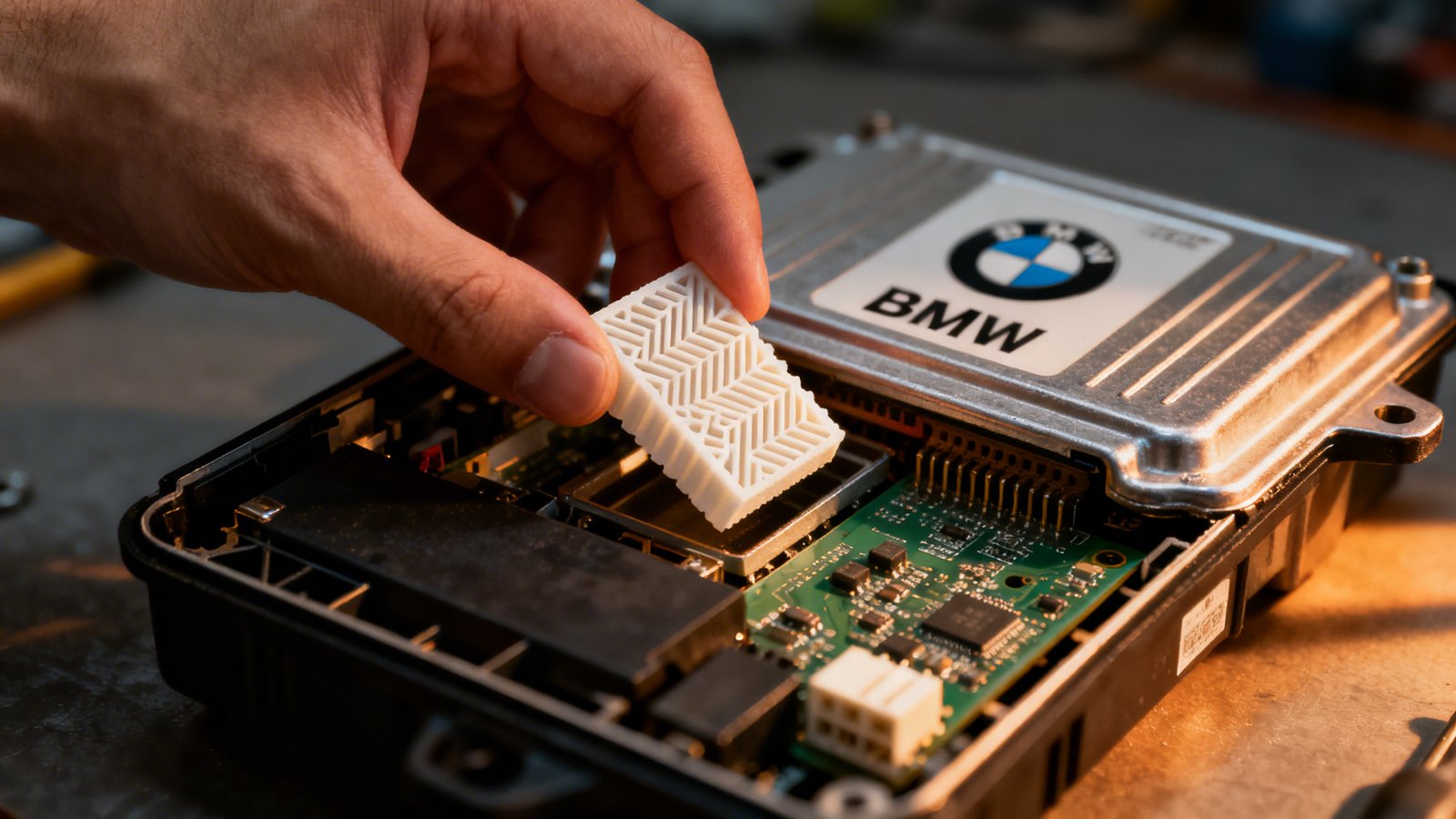
Okay, so here’s the thing. BMW, you know, the “ultimate driving machine” folks? Yeah, them. They’ve decided to pull a stunt that, honestly, just screams “we don’t want you touching your own damn car.” And it involves a screw. Not just any screw, mind you. A special, fancy, BMW-logo-shaped security screw. Like, are you kidding me?
BMW’s Latest “Innovation” – A Real Head-Scratcher
Look, I’ve been writing about tech and consumer rights for fifteen years, and this kind of garbage just grinds my gears. BMW, in their infinite wisdom – or maybe just their infinite greed – has rolled out these brand-new, proprietary security screws on some of their electrical components. We’re talking about things that, frankly, sometimes need to be fixed or replaced by a human being who isn’t necessarily wearing a BMW dealership uniform.
iFixIt, bless their hearts, immediately called it what it is: “a logo-shaped middle finger to right to repair.” And you know what? They’re not wrong. It’s an overt, blatant move to prevent independent mechanics, and even you, the car owner, from doing basic repairs. Why? Because they want you bringing that car back to their dealership, paying their exorbitant prices, and keeping their service departments humming. It’s a classic play, really. We’ve seen it before with various manufacturers, but this one feels particularly petty, doesn’t it? A screw shaped like your logo? That’s just… audacious.
And it’s not like these are some super-secret, classified components. We’re talking about stuff that a regular mechanic might need to access for diagnostics or repairs. But with these new screws, good luck. You can’t just pick up a standard toolkit. You’d need a special tool. A BMW-proprietary special tool, of course. Which, surprise, surprise, BMW isn’t exactly rushing to make available to just anyone. It’s a lock-in strategy, pure and simple. And it’s a pain in the neck for everyone involved except, well, BMW’s bottom line.
The Patent Plot Twist
But wait, it gets better. Or worse, depending on how you look at it. See, these big companies, when they come up with these “innovations,” they often file patents, right? To protect their brilliant, consumer-hostile ideas. BMW did just that. They patented this very connector, these very screws. And that, my friends, is where the story takes a delightful, unexpected turn.
Because patents are public. They’re out there for anyone to read. And what’s in a patent? Detailed drawings. Specifications. Measurements. All the juicy bits you’d need to, say, reverse engineer something. Which is exactly what happened here. Oh, the irony. You try to lock everyone out by patenting your special screw, and that very patent becomes the blueprint for someone to unlock it.
So, Who Came to Save the Day?
Enter Adafruit. If you’re not familiar with them, they’re kind of a legend in the open-source hardware and maker community. They sell electronics components, kits, all sorts of cool stuff, and they’re huge proponents of learning, sharing, and making things yourself. Basically, they’re the antithesis of everything BMW is trying to do here. And when they saw BMW’s shenanigans, they weren’t having it.
They took one look at BMW’s patent filing – the very document meant to protect BMW’s anti-consumer scheme – and thought, “You know what? We can make a tool for that.” And they did. They basically reverse engineered the connector and, more importantly, the tool needed to open it, using the patent as their guide. Then they 3D printed a solution. Yeah, you heard me. 3D printed. A small, ingenious, 3D-printed tool that allows you to bypass BMW’s “security” screws.
“iFixIt calls BMW’s new anti-consumer security screws ‘a logo-shaped middle finger to right to repair,’ Adafruit 3D prints a solution – BMW’s connector reverse engineered using patent filing as a design blueprint”
I mean, you gotta love that, right? It’s like something out of a movie. The giant corporation tries to lock everyone out, and a plucky, open-source hardware company uses the corporation’s own legal documents against them to create a workaround that anyone with a 3D printer can make. It’s a beautiful, beautiful thing. And it really shows the power of the maker community. This wasn’t some huge, expensive R&D project. It was a couple of smart people saying, “This is wrong, and we can fix it.”
The Bigger Picture: It’s a War, Folks
This isn’t just about a BMW screw. Oh no, not by a long shot. This is a skirmish in a much larger war, the one between manufacturers who want absolute control over their products even after you’ve bought them, and consumers who believe that once they’ve paid for something, they own it. They own the right to repair it, modify it, or take it to whoever they damn well please to get it fixed.
We see this everywhere. From John Deere tractors that farmers can’t repair themselves because the software is locked down, to Apple making it a nightmare to fix your iPhone without their “authorized” parts and tools, to gaming consoles that try to prevent you from installing anything but their approved games. It’s all part of the same playbook: control, control, control. It’s about turning ownership into a kind of perpetual lease, where you’re always beholden to the original manufacturer for service, parts, and updates. And frankly, it’s exhausting.
It impacts our wallets, obviously. Repairs become more expensive, sometimes prohibitively so, forcing us to buy new things instead of fixing old ones. But it also has a huge environmental impact. Think about all the perfectly good products that get trashed because a simple, inexpensive repair is made impossible or uneconomical. It’s a waste, plain and simple. And it’s not sustainable.
What This Actually Means
So, what does Adafruit’s clever hack mean? It means there’s hope. It means that while these massive corporations are throwing up new walls, there are incredibly smart, resourceful people out there who are just as determined to find a way around them. It’s a testament to the power of open-source, the strength of the maker community, and the simple human desire for autonomy.
It’s not going to stop BMW from trying this stuff again, or other companies from following suit. This battle for the “right to repair” is far from over. But every time a company like Adafruit steps up, every time iFixIt shines a light on these anti-consumer practices, we chip away at that corporate control. We send a message: we’re watching, we’re not stupid, and we’re not going to take it lying down.
It’s a reminder that sometimes, the best defense against corporate overreach isn’t a lawsuit or a protest, but a really smart person with a 3D printer and a healthy dose of exasperation. And that, I think, is a pretty cool thing to remember when you’re feeling like the little guy can’t win. They totally can. And sometimes, they do it with a tiny, logo-shaped piece of plastic.