
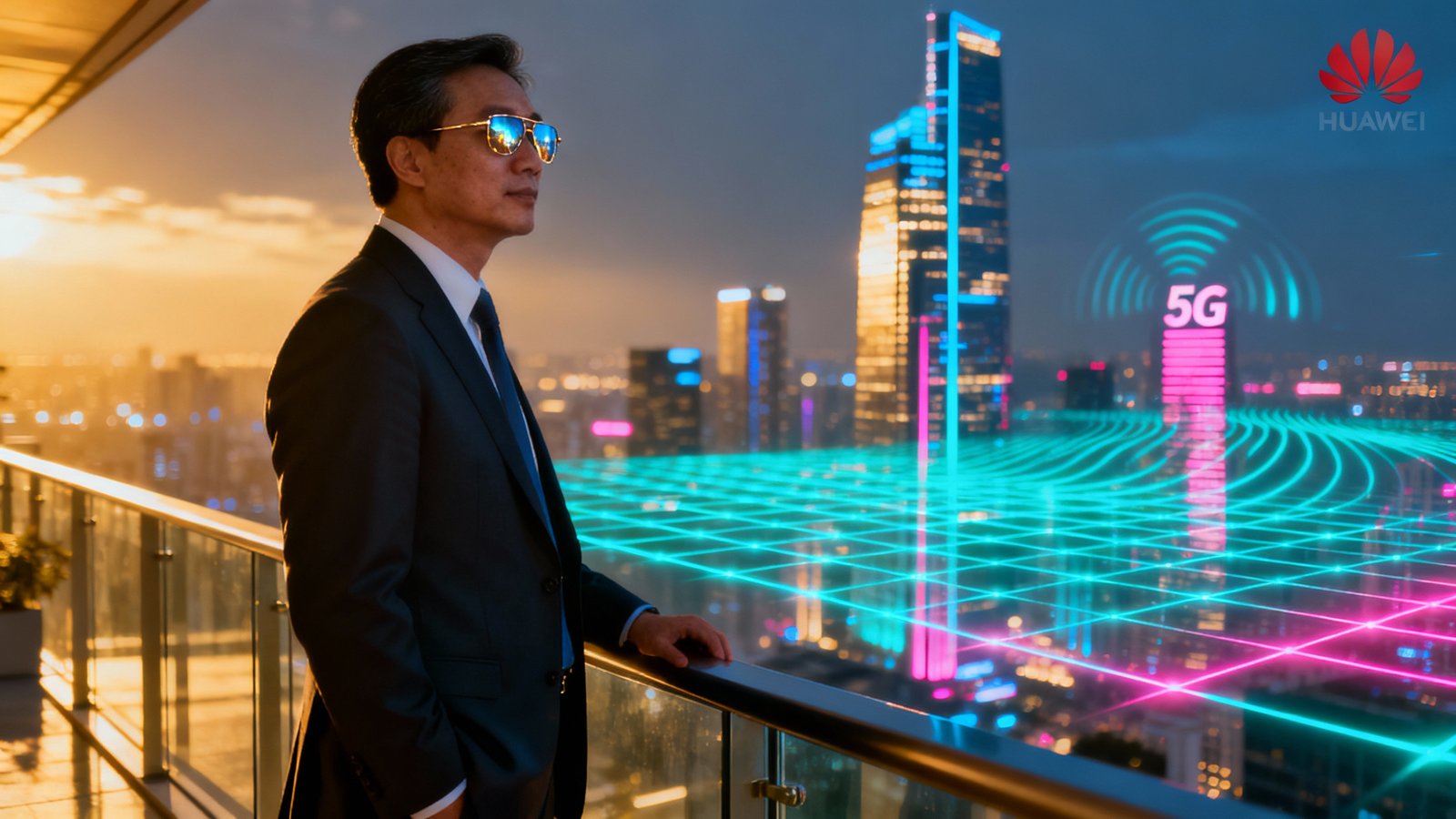
Asia’s 5G Coup: Huawei Strikes Back!
You know, for years, it felt like America’s tech narrative – especially post-Trump tariffs – was that China, and specifically Huawei, was pretty much locked out of the big league, particularly when it came to 5G. The whole “national security threat” thing really stuck, creating a massive digital divide, or so we were told. But here’s the thing about narratives: they don’t always, or even often, hold up to reality. Because while the U.S. was busy building its digital wall, something pretty remarkable-and frankly, a little ironic in a geopolitical sense-has been happening across Asia. It turns out, you can’t really keep a good tech giant down, not when there’s a practical need,
real value on the table, and changing political winds.
Suddenly, whispers are turning into shouts: Huawei, along with ZTE, its Chinese counterpart, aren’t just surviving, they’re thriving in unexpected places. Specifically, Vietnam. A country you might remember has, shall we say, a rather “complicated” relationship with both China and the U.S. in its history books. Now, that’s what I call a plot twist.
The Dragon’s New Roar-in Southeast Asia
So, what’s actually happening on the ground? Well, while the U.S. has been pushing its “Clean Network” initiative, basically telling everyone to shun Chinese gear, countries like Vietnam are doing their own thing. They’re making pragmatic choices. And those choices, surprisingly, frequently involve Huawei and ZTE. It’s not just about cost-though let’s be real, price is always a huge factor, especially in developing economies. It’s also about proven technology and the speed of deployment.
Vietnam’s Calculating Gambit
Think about it: Vietnam has this historical tension with China, right? Yet, they’re embracing Chinese 5G tech. Why? Because while they’re keen on diversifying their supply chains and making friends in new places-like the U.S., which, full disclosure, has been trying to woo them-they’re also intensely practical. They need fast, reliable, and affordable 5G infrastructure, and they need it now. To support their growing economy, their burgeoning tech sector, all of it. And for a long time, Huawei has basically been the undisputed leader in 5G deployment outside of, well, places actively trying to sanction them.
Here’s the kicker: The U.S. imposing those tariffs and restrictions on Huawei? It actually pushed Huawei to innovate harder, to focus more intensely on markets that would accept them. It’s like kicking someone when they’re down, and they just get up, dust themselves off, and find a new playground.
Point: Huawei and ZTE have secured multi-million dollar contracts in Vietnam for 5G, 4G, and fiber optic cable systems. This isn’t small potatoes.
Insight: This suggests a strategic shift-Vietnam isn’t letting geopolitical alliances entirely dictate its infrastructure build-out. Their economic development seems to be the primary driver. Or rather, it’s a careful balancing act, isn’t it?

“The U.S. blacklisting of Huawei ironically made them more agile and desperate to succeed in markets willing to do business, leading to more competitive offerings.”
A Geopolitical Tango-Not a Solo Act
This whole Vietnam situation isn’t happening in a vacuum, of course. It’s inextricably linked to larger geopolitical currents. The U.S. and China are still, I’d say, in a bit of a dance-sometimes a waltz, sometimes a tango, sometimes more like a brawl. But lately, there have been signs of a slight thaw, at least on the economic front.
From Tariffs to Talks
Remember all the trade wars? The tariffs? It was intense. But now, President Biden has met with President Xi Jinping. There’s been talk of de-escalation, of finding common ground, especially economically. And this, my friends, is where things get really fascinating. Because if the biggest players are starting to mend fences, even a little, it opens up doors for everyone else.
It’s not that Vietnam is suddenly choosing sides. Far from it. They’re playing the field, smart. They’re seeing increased investment from the U.S., becoming a huge manufacturing hub for companies trying to decrease reliance on China. But they’re also accepting Chinese tech where it makes sense. It’s a pragmatic, non-aligned approach that many smaller nations are adopting the world over. Why limit your options if you don’t have to? Especially when those options are cost-effective and efficient.
Point: The U.S. extended a trade waiver to Vietnam, highlighting a growing economic partnership. At the same time, Vietnam deepens tech ties with China.
Insight: Nations, especially those in dynamic regions like Southeast Asia, are becoming super adept at balancing competing global powers. They’re pursuing multidirectional diplomacy, which is, frankly, brilliant.

What This Means for the Global Tech Race
So, what does this all mean for the big picture, the global 5G race, and beyond? Well, for one, it completely scrambles the idea that the U.S. could simply “ban” Huawei out of existence in the global market. It shows the limitations of unilateral sanctions when there are viable, cheaper alternatives, and when other nations have their own sovereign interests-economic interests-to prioritize.
It also suggests that the future of global tech infrastructure might not be so cleanly divided into “Western” and “Eastern” camps. It’s probably going to be a lot messier, a lot more integrated, and definitely more competitive. Huawei isn’t going anywhere. ZTE certainly isn’t either. They’ve found a way to not just survive, but to thrive by adapting, focusing, and offering compelling solutions where they’re welcome.
The lesson here, I think, is that technology is rarely purely about technology. It’s about politics, economics, history, and a whole lot of human decision-making. And sometimes, those decisions are surprising. They defy the headlines, the policy papers, even the narrative we’re often fed. Asia’s 5G coup with Huawei is a testament to that-a subtle, but powerful, shift in the global tech landscape. And it’s definitely something worth keeping an eye on. Because if it’s happening in Vietnam, where else might it pop up next? Makes you wonder, doesn’t it?