
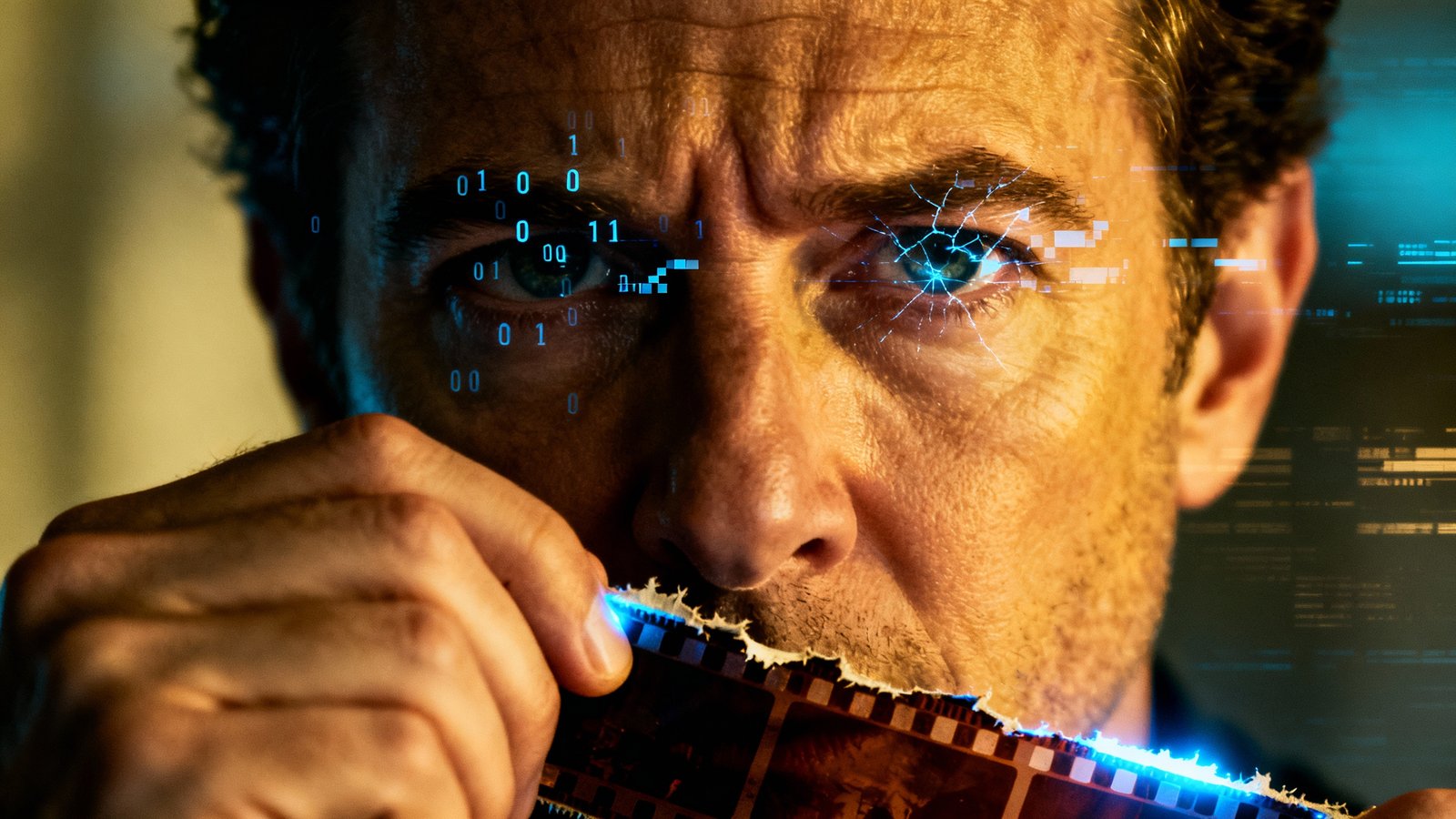
Aronofsky and the Robot Uprising, or Just a Really Bad Idea?
Look, when I hear “Darren Aronofsky” I think gritty, visceral, deeply human (and often deeply messed up) storytelling. I think of the sheer, raw intensity of Mickey Rourke in The Wrestler or Jennifer Lawrence losing her mind in mother! The man is a master of pushing boundaries, sure, but usually, it’s about pushing human boundaries, exploring the darkest corners of our psyche. Not… this. Not a revolutionary war series rendered by algorithms.
The news, if you can even call it that without my eyes rolling into the back of my head, is that he’s apparently developing this thing, and the article calls it “a horror.” And yeah, no kidding. The horror isn’t just the subject matter, though I’m sure he’ll find a way to make colonial times feel utterly bleak and soul-crushing. The real horror, the existential dread, is that a filmmaker of his caliber is even touching this stuff. It feels like… I don’t know, like a Michelin-star chef deciding to open a restaurant where all the food is made by a 3D printer. It’s technically food, maybe, but is it cooking? Is it art?
The Ghost in the Machine, or Just a Ghost?
I’ve been in this game for fifteen years, seen trends come and go. Remember 3D movies? Remember when everyone thought VR was gonna be the next big thing for storytelling? (Still waiting on that, by the way.) But this AI stuff feels different. This isn’t just a new tool; it’s a fundamental shift in the very definition of creation. We’ve always had artists using new technologies, obviously. Spielberg used computers for Jurassic Park, but he didn’t ask a computer to write the script or direct the actors. The human hand, the human mind, the human soul was still at the core.
And that’s the thing. What happens when the soul is outsourced? What happens when the struggle, the pain, the triumph of human imagination is replaced by lines of code trying to mimic it? This isn’t just about jobs, though that’s a massive, terrifying part of it. This is about what it means to be a creator. What it means to watch something truly original, truly born of a singular vision.
Is This The End of Film As We Know It?
You hear whispers, right? About how studios are already experimenting, how they’re looking at AI to cut costs, generate background characters, even draft scripts. And I get it, from a purely cynical, money-grubbing perspective. Why pay a writer, a director, a crew, when you can just prompt a machine? But then, who cares? Who cares about a film born from a prompt? Who’s gonna remember it? Who’s gonna feel it?
This Aronofsky thing… it’s like a shot fired. It’s a statement. And if he’s willing to go there, where does that leave everyone else? It legitimizes the whole terrifying idea.
“The machine can mimic, it can imitate, it can even surprise us with its output. But it cannot bleed. It cannot love. And it sure as hell can’t tell a story that truly matters, because it doesn’t understand what ‘mattering’ even means.”
That quote, yeah, it pretty much sums up how I feel. It’s not about being a luddite. It’s about preserving something essential.
The Great Uncanny Valley of Creativity
I remember seeing some of those early AI art generators, and yeah, some of it was wild. Trippy, surreal, often beautiful in a very alien way. But it always felt… off. Like a dream you can’t quite grasp, or a painting that’s technically perfect but utterly devoid of emotion. That’s the uncanny valley for art, I guess. It looks almost human, almost real, but there’s a disconnect, a coldness.
And film? Film is so much more complex. It’s not just images; it’s performance, timing, pacing, the nuance of a glance, the power of silence. Can an AI truly understand the subtext of a scene from Requiem for a Dream? Can it capture the desperation of a drug addict, the obsessive drive of a ballerina? No. Not really. Not in a way that resonates deep down in your bones. It can approximate. It can simulate. But it can’t feel.
So, when Aronofsky’s name pops up next to “AI revolutionary war series,” my gut reaction is pure, unadulterated horror. Is he trying to make a point about AI? Is the “horror” that it is AI-generated, a meta-commentary on the death of art? Or is he just… doing it? Because if it’s the latter, then we’re in more trouble than I thought. It means even the artists we thought were untouchable, the ones who championed raw, human expression, are susceptible to the siren song of… efficiency? Novelty? I don’t know what it is, but it sure ain’t art.
What This Actually Means
This whole thing isn’t just a Reddit curiosity; it’s a loud, clanging alarm bell for anyone who gives a damn about cinema. It forces us to ask: What do we value? Do we want perfectly rendered, soulless content generated at lightning speed, or do we want the messy, imperfect, utterly human creations that actually move us? The ones that take years, blood, sweat, tears, and a whole lot of real, live people to make?
If Aronofsky, a guy who usually demands so much from his audience, is willing to offer up something generated by a machine, then the line is blurring in a big, scary way. It’s like we’re standing at the edge of a cliff, and someone just pushed a major director closer to the edge. And you know what? I don’t wanna go over. I want films made by humans, for humans. Flawed, brilliant, infuriating, beautiful humans. And if that makes me old-fashioned, then so be it. But if this is the future, then honestly, who wants to watch it?