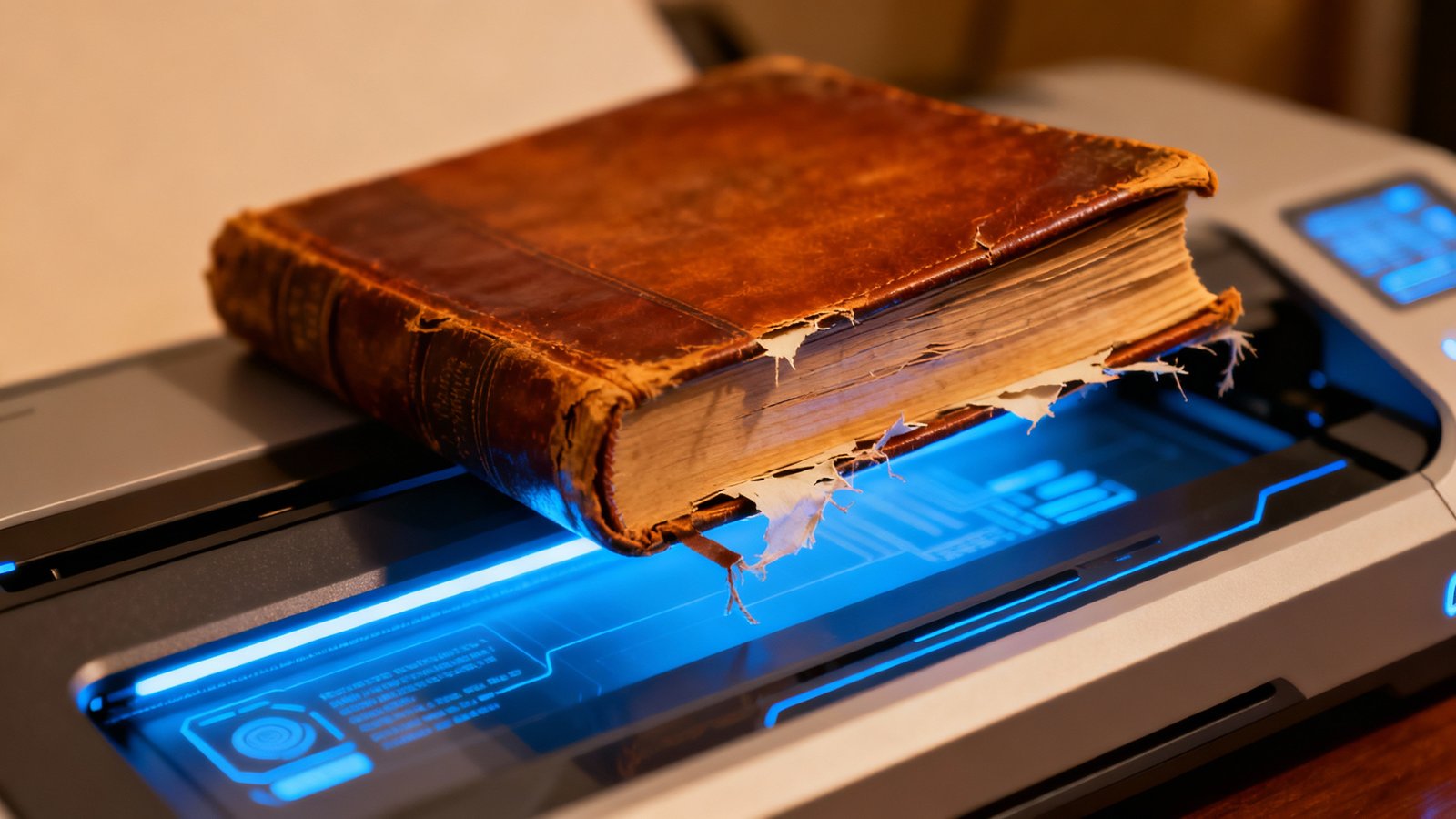
So, Anthropic, huh? They’re one of those big AI companies, you know, trying to make the next big thing that either saves us all or turns us into paperclips. And here’s the kicker, the actual, honest-to-god reveal that just dropped: they apparently had a “secret plan” to “destructively scan all the books in the world.” Destructively. As in, rip ’em up, feed ’em to a machine, and then… what? Throw ’em in the recycling? Burn ’em? Poof, gone. Just, wow.
“Destructive Scanning” – A Fancy Term for Book Slaughter?
Look, when I first read that headline, I actually scoffed. Like, come on. “Destructive scanning”? That sounds like something out of a bad sci-fi flick where the evil corporation is eradicating human culture for data points. But then you dig a little, and you see the source – unredacted files, apparently spilled into the public, laying out this whole scheme. Not some conspiracy theory from a guy in a tinfoil hat, but actual internal documents.
The whole thing just feels… dystopian, doesn’t it? We’re talking about taking physical books – actual artifacts, some of them ancient, some just beloved paperbacks – and literally tearing them apart to digitize their contents. For what? To feed an algorithm? To train a chatbot to write slightly better poetry? It’s like, we’re so obsessed with the digital future that we’re willing to sacrifice the physical past. And for me, a guy who still loves the smell of an old bookstore, that’s just a bridge too far.
You gotta wonder, who signed off on this? Who thought, “Yeah, let’s just obliterate physical copies of human knowledge, what could possibly go wrong?” I mean, I get it. Data is the new oil, right? And books? Books are like the biggest, most concentrated oil reserves of human thought, creativity, and history you can imagine. Thousands of years of stories, facts, poems, philosophies – all just sitting there, waiting to be slurped up by an AI.
The Unredacted Truth
The Reddit post (yeah, I know, Reddit, but sometimes the internet unearths gold) specifically points to unredacted files. And that’s key. It’s not someone speculating or making assumptions. This isn’t just a “what if” scenario. This was, or maybe still is, a legitimate consideration within Anthropic. They were looking at how to get all that text, and apparently, the most efficient way they considered involved destroying the originals. It’s brutal efficiency, I guess. But at what cost? This isn’t just a technical problem, it’s a moral one, a cultural one.
But Seriously, Who Cares About Old Books Anymore?
Okay, I know some of you are probably thinking, “Who cares? Most of that stuff is probably online anyway, or in libraries, or nobody reads it.” And yeah, sure, a lot of it is. But a lot isn’t. And even the stuff that is digitized? The original physical copy still matters. It’s the provenance, the history, the tangible link to the past. It’s like saying, “We’ve got pictures of the Mona Lisa, so let’s just shred the original painting to save space.” No! That’s insane! It’s not just about the information, it’s about the object itself, the cultural heritage it represents.
“The relentless pursuit of data, unchecked by ethical guardrails or a shred of common sense, is how we accidentally erase ourselves.”
This isn’t just about preserving books. It’s about how these AI companies view the world. As raw material. As something to be consumed, processed, and spit out in a new, often monetized, form. There’s a real arrogance there, a belief that their computational power and their algorithms are more valuable than the physical heritage of humanity. And frankly, that pisses me off. It really does.
The Real Implications of “Efficient” Data Collection
So, let’s talk about what this really means, beyond just the shock value of “destroying books.”
- Irreversible Loss: Once a physical book is gone, it’s gone. What if the digital scan is imperfect? What if the format becomes obsolete? What if the servers crash? We’ve seen this pattern before – the rush to digitize without thinking about long-term preservation of the originals. It’s short-sighted, plain and simple.
- Copyright Nightmares: Who owns the data from these destructively scanned books? If they’re destroying the originals, are they doing this without permission from authors and publishers? This whole AI training data thing is already a legal minefield, but this just adds a whole new level of ethical grey to it. It’s basically saying, “We’ll take your intellectual property, destroy its physical form, and then use it to train our multi-billion dollar AI models. Thanks!”
- Centralized Knowledge: When you put all this data into the hands of a few private companies, you create an unprecedented centralization of knowledge. Who controls what’s scanned? What’s prioritized? What gets saved versus what gets destroyed? That’s a scary thought. It gives immense power to a very small, very private group of people.
- The “Move Fast and Break Things” Mentality, But With Culture: This just feels like another iteration of that old Silicon Valley mantra, but this time, the “things” they’re breaking are literally books. It’s a disregard for established norms, for cultural value, for the very slow, careful process of preserving history.
What This Actually Means
The whole “secret plan” thing for Anthropic – and let’s be honest, probably other AI companies have had similar thoughts, just maybe not documented quite so sloppily – it’s a wake-up call. It tells us where their heads are at. They’re not just trying to build smart assistants; they’re in a frantic race to ingest every piece of human knowledge, by any means necessary. And if that means sacrificing the physical integrity of our shared history, well, then so be it, from their perspective.
It means we, the public, have to be incredibly vigilant. We can’t just trust these tech giants to do the right thing, because their definition of “right” often seems to align perfectly with “most profitable” or “most efficient for AI training.” This isn’t just some abstract tech debate. This is about what kind of future we want to live in – one where our past is preserved and respected, or one where it’s just raw material to be consumed and discarded by algorithms. Me? I’m gonna go hug a book now. A real one. Before they all get shredded.