





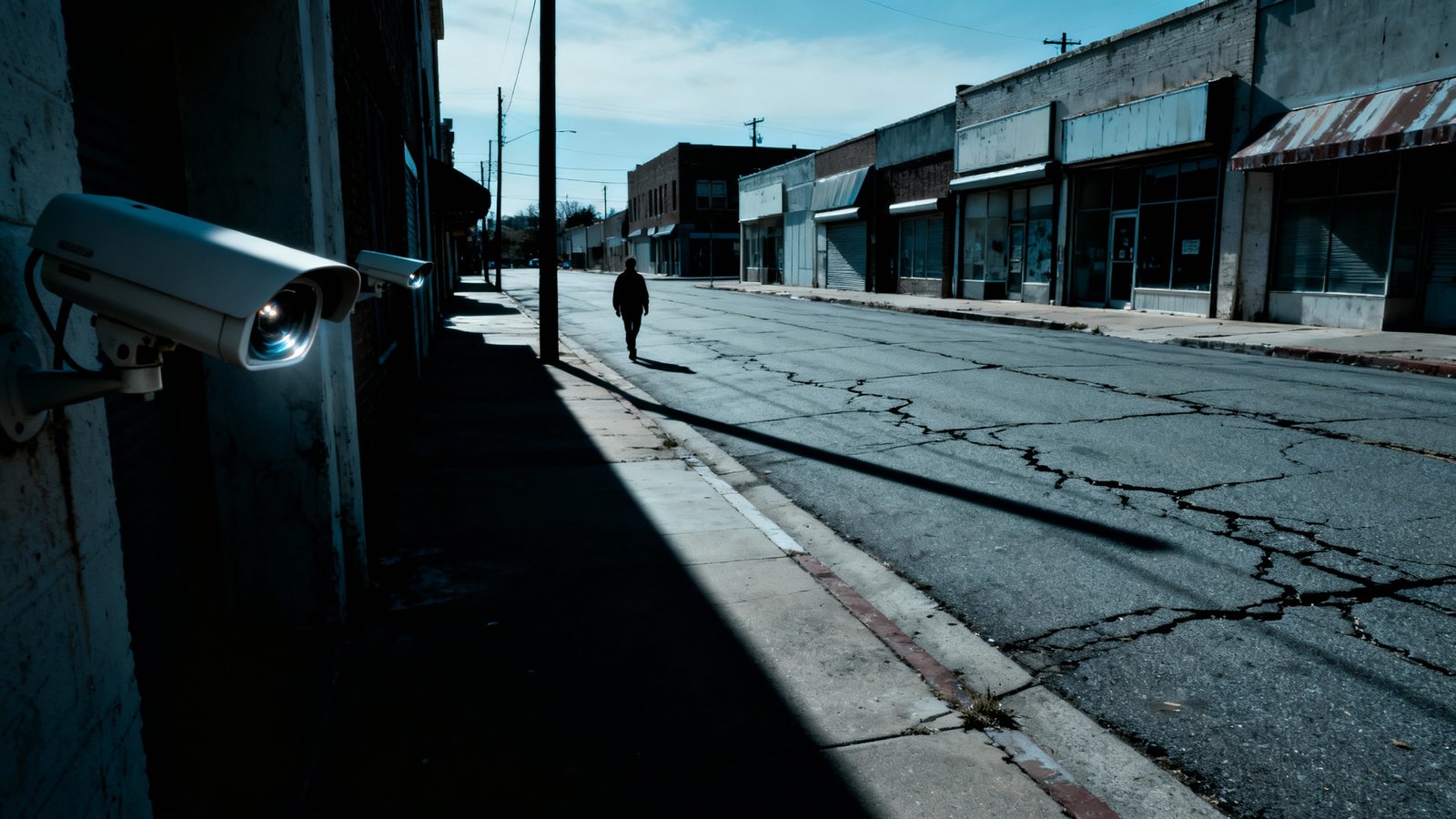
Okay, let’s just cut right to it. You know that feeling when you’re driving home, minding your own business, and you pass a camera on a pole? Just a little blink, maybe, or you don’t even notice it. You probably think, “Oh, it’s for traffic, or maybe if there’s a hit-and-run.” Right? Yeah, well, if you’ve been living under that rock, let me tell you, that little blink is probably logging your license plate, your car’s make and model, the time, the date, and who knows what else. And it’s not just for traffic anymore. Not by a long shot.
So, About That ‘Land of the Free’ Thing…
For a while now, my colleagues and I – and honestly, anyone with half a brain cell paying attention – have been sounding the alarm about just how deep America’s dive into surveillance has gotten. It’s not some far-off sci-fi flick anymore; we’re in it. We’ve been digging into the nitty-gritty, the actual tools, the companies, the data trails, and who’s getting their hands on all of it. And believe me, it’s not pretty. Not even a little bit.
We’ve spent over a year, I mean, a solid year plus, just trying to peel back the layers on how agencies like ICE – yeah, the Immigrations and Customs Enforcement folks – and DHS, and even your local police departments, are building this incredibly intricate web of surveillance. It’s designed to track, to target, and let’s be blunt, to detain. Citizens, immigrants, permanent residents – doesn’t really seem to matter who you are. If you’re in the crosshairs, you’re in the crosshairs.
Remember Palantir? That super-secretive, Peter Thiel-backed data mining company? The one that always seems to pop up whenever there’s some shadowy government data operation going on? Well, guess what? We recently got our hands on the user guide for a tool they built for ICE. It’s called ELITE. And I’m not gonna lie, the name itself just sends a shiver down my spine. This isn’t some benign database; this thing is designed to help ICE identify entire neighborhoods to raid. Neighborhoods! Think about that for a second. It’s not about finding one specific person; it’s about casting a wide net over entire communities based on God knows what data points. It’s chilling, frankly.
Palantir’s Little Helper for ICE
The whole Palantir thing, it just makes you wonder, doesn’t it? How did we get to a point where a private company is building tools that essentially help a federal agency pinpoint residential areas for enforcement actions? And what kind of data are they feeding into this ELITE system? Are we talking about publicly available stuff, or are we talking about something much more invasive? From what I can tell, it’s probably a mix of everything they can get their hands on – utility bills, social media, vehicle registrations, maybe even your shopping habits. It’s a digital dragnet, plain and simple, and it’s got real-world consequences for real people. This isn’t theoretical; this is happening right now.
Your Local Cop, Their Federal Partner – A Cozy Arrangement?
But wait, there’s more! Because it’s not just the big federal agencies cooking up these schemes. Oh no. The problem, actually, runs right through your hometown. We’ve also been looking at how local police departments, bless their hearts, are getting in on the surveillance game, and then, get this, sharing all that data with ICE and DHS. How? Through companies like Flock Safety. You’ve probably seen their cameras. They’re those little black boxes, usually mounted on poles, often at entrances and exits to neighborhoods, or along main roads. They’re called Automated License Plate Readers (ALPRs), and they’re everywhere. Literally everywhere.
These Flock cameras, they’re marketed as a way to “reduce crime” – catching porch pirates, finding stolen cars, all that good stuff. And sure, maybe they do some of that. But the dirty secret is, these systems don’t just log the bad guys. They log everyone. Every car that passes, every license plate, every time. And then that data, your data, your neighbor’s data, gets dumped into a massive database. And here’s the kicker: many police departments that use Flock Safety cameras have agreements to share that data directly with federal agencies, including ICE. So, a camera put up to catch a car thief in your suburban cul-de-sac could easily become a tool for ICE to track someone across state lines. It’s a back door, a side door, a secret tunnel right into your privacy. It’s a complete mess.
“It’s not about public safety when the tools meant to protect us become instruments of dragnet surveillance that funnel our private lives into federal databases. That’s a betrayal of trust, plain and simple.”
The Invisible Net is Spreading, Folks
The implications of this stuff are, to put it mildly, terrifying. We’re talking about a system where every movement, every car ride, every visit to a friend’s house could be logged, stored, and potentially used against you or someone you know. It creates a chilling effect, doesn’t it? If you know you’re being watched, even if you have nothing to hide (which, by the way, is a completely bogus argument against privacy), it changes your behavior. You start to self-censor, you start to worry about where you go, who you see. And that’s exactly what a surveillance state wants: an obedient, self-regulating populace.
This isn’t just about immigration enforcement, either. It starts there, but these technologies, once they’re in place, they always expand. Always. Today it’s immigrants, tomorrow it’s protestors, the day after that it’s anyone deemed “undesirable” by whatever political wind is blowing. This is how you build a pervasive surveillance infrastructure that can be turned on anyone, anytime. It’s about power, and about control, and it’s happening without most people even realizing it.
What This Actually Means
Look, if I’m being honest, what we’re seeing here isn’t just an “unfolding surveillance dystopia” as we put it. It’s a full-blown, take-your-breath-away, privacy-be-damned reality. The tools are here. The data is flowing. The agreements are signed. And it’s happening at every level of government, from the smallest town police department right up to the federal behemoths. What are we going to do about it? Are we just going to sit back and let our movements be tracked, our communities profiled, our privacy eroded, all in the name of “safety” or “enforcement”?
Because here’s the thing: once these systems are entrenched, once the data is collected and shared, it’s incredibly hard to undo. The genie doesn’t go back in the bottle. We’re talking about a future where your car’s location history, your neighborhood’s “risk score,” and your daily commutes are all just data points in a massive, interconnected network. And who controls that network? Who gets to decide how it’s used? Not you, that’s for sure. It’s something we all need to think about, really think about, before it’s too late… and frankly, it feels like we’re already pretty far down that road.

