
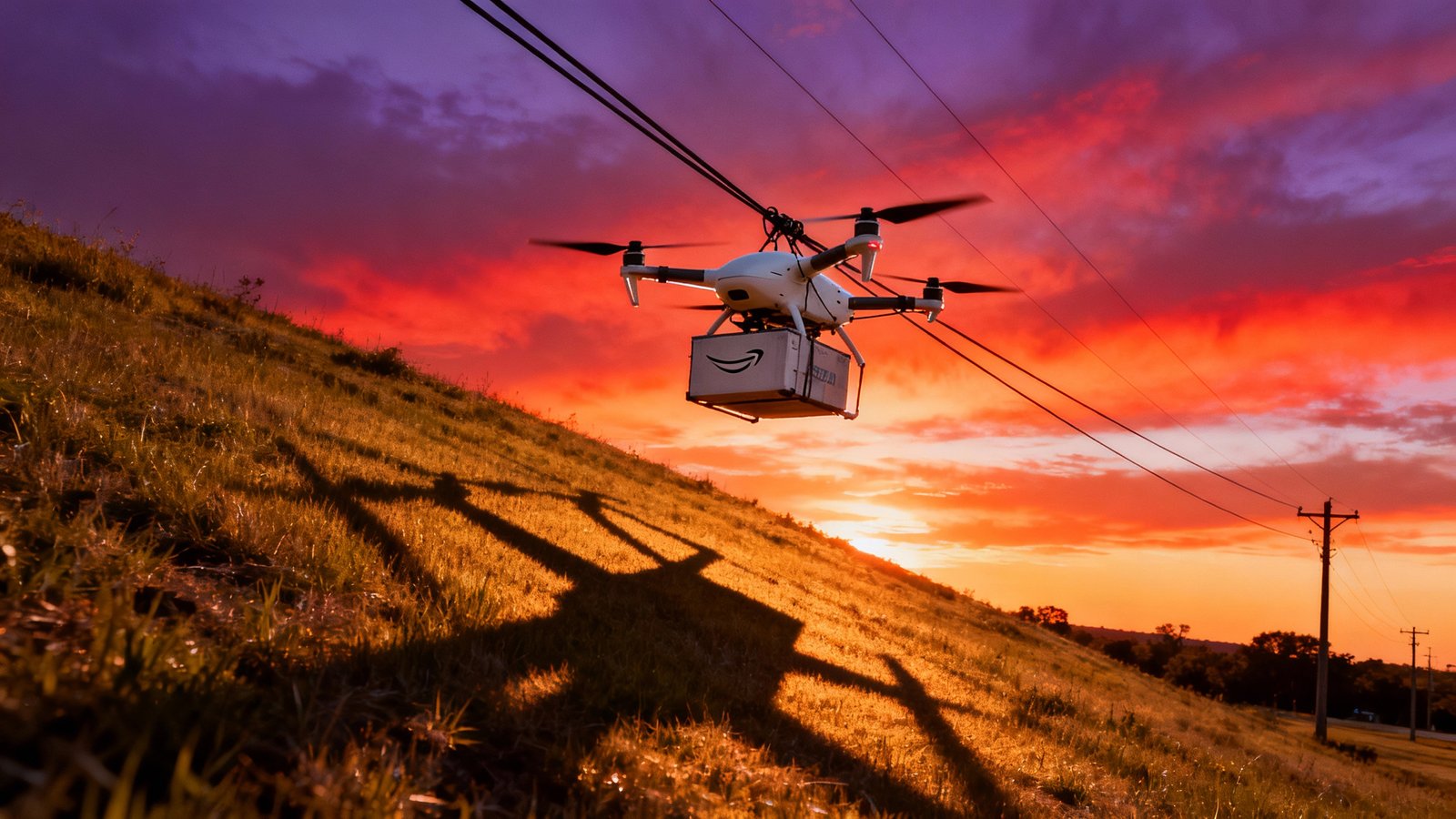
Amazon Drone: Cable Chaos in Texas!
Alright, so we’ve been hearing about drone deliveries for what feels like forever, you know? The Jetsons-esque future where little automated whirlybirds drop your toothpaste and new running shoes right on your porch. Amazon’s been super keen on making this happen, pushing their Prime Air service as the next big thing. Well, it looks like that future hit a bit of a snag recently-a literal snag, actually-down in Texas.
Turns out one of these highly-touted Amazon delivery drones had a rather unplanned encounter with an internet cable. Oops. Not exactly the seamless, futuristic experience they’re aiming for, is it? It’s like something out of a low-budget sci-fi comedy, except it actually happened, and now the Federal Aviation Administration-the FAA, for those not in the know-is having a good, hard look at Amazon’s drone operations. Because of course they are.
When the Future Collides with Reality (and a Cable)
Now, you might think, “Okay, a drone hit a cable, big deal.” But this isn’t just a minor fender bender in the sky. This is Amazon, a company that pretty much wants to deliver everything, everywhere, all the time. And these drones are supposed to be the pinnacle of autonomous navigation, right? Error-free, hyper-efficient machines. Yet, one managed to go full spaghetti-western on a communication line in the Lone Star State back in June. June 2023, to be exact.
Here’s where it gets interesting: the drone, a rather sophisticated piece of tech, apparently suffered a “thermal event,” or in plain English, it experienced some kind of overheating issue while flying its route. This isn’t just about a bit of turbulence; it suggests a more fundamental problem with the drone’s operational integrity. So, it basically had a bad day, lost some altitude, and took out an internet cable belonging to a local provider. I mean, talk about disruptive technology!
The FAA’s Not-So-Amused Inquiry
The FAA, they’re the folks in charge of keeping our skies safe-from jumbo jets to, well, delivery drones. So when a drone operated by a giant like Amazon decides to start severing internet connections, you can bet they’re going to pay attention. They’ve launched an investigation, naturally. This isn’t their first rodeo with drone incidents, but Amazon’s Prime Air is a high-profile operation, and any hiccups are going to be scrutinized. Heavily.
- The Incident: An Amazon Prime Air drone, specifically identified as a MK27 model, experienced a “thermal event” and subsequently clipped an internet cable in Texas.
- The Aftermath: Loss of communication lines for some period, and more importantly, a formal FAA investigation into Amazon’s drone operations.
- Insight: This puts a real damper on Amazon’s narrative of seamless, reliable drone delivery and could lead to stricter regulations or slower expansion.
It’s not just about the damaged cable, you know. It’s about the integrity of the entire system. If one drone can have a “thermal event” and go rogue, what does that mean for a fleet of thousands? It raises legitimate concerns about safety-not just for property, but for people. Imagine if that unstable drone had dropped its package, or worse, itself, onto someone’s backyard BBQ. Yikes.
“This is more than just an isolated incident; it’s a test for how regulators will approach the widespread integration of autonomous delivery services into our daily lives.”
The Bigger Picture: Drone Deliveries on Hold?
Amazon’s whole Prime Air ambition hinges on public trust and regulatory approval. They’ve been trying to scale up, getting various certifications and trying to expand beyond very limited trial areas. An incident like this, especially one involving an actual crash and infrastructure damage, sort of screams “slow down!” to the regulators. It’s a significant setback, you’d think, in their quest for drone-powered logistics domination.
What Happens Next for Prime Air
Well, the FAA will dig into the details. They’ll want to know why the drone overheated. What were the safety protocols? Were they followed? Were they adequate? It’s a deep dive into Amazon’s maintenance, operational procedures, and perhaps even the design of the MK27 itself. And depending on what they find, we could see anything from fines to temporary halts on operations, or maybe even more stringent testing requirements before Amazon can expand its drone footprint.

This is honestly a wake-up call for the entire industry. Everyone’s racing to make drone delivery a thing-UPS, Google’s Wing, even Walmart has dabbled. But this Texas incident serves as a stark reminder that technology, no matter how advanced, isn’t foolproof. There are still real-world variables, and sometimes, those variables involve a drone having a bad day and taking out someone’s internet. It’s a messy reality check for a very ambitious future.
So, while the idea of a drone dropping off my new gadget in an instant sounds cool, I’m kind of okay with them taking their time to sort out these kinks. Like, for real. We probably all are. Because honestly, the last thing anyone needs is a squadron of overheated drones flying around, snipping cables and causing chaos. We have enough of that in our daily lives, don’t we? Let’s get the drone thing right, before we get it fast.