





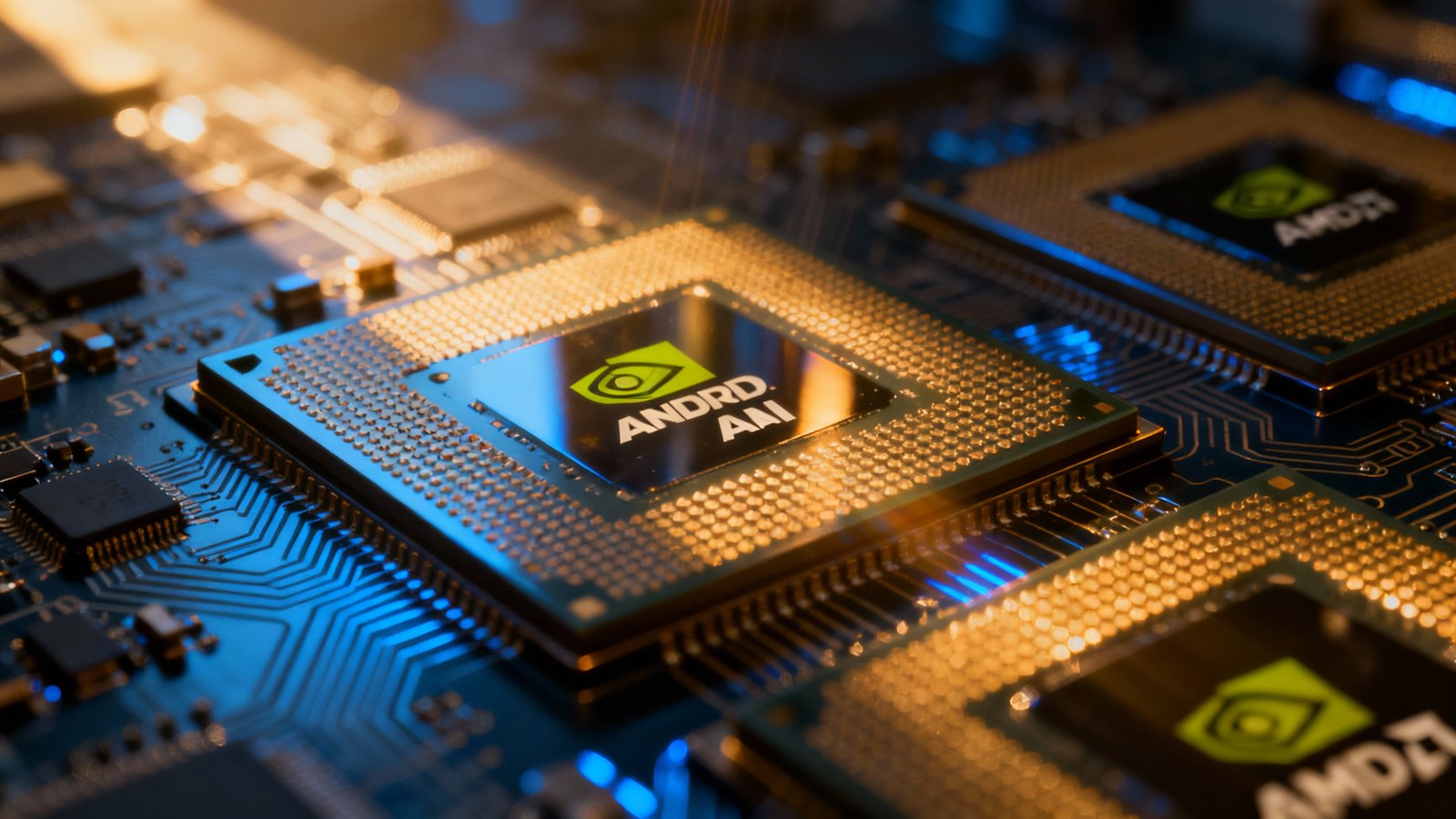
AI Chip Wars: Nvidia & AMD – Buy or Bust?
Alright, let’s talk about the elephant in the room – or rather, the silicon elephant stampeding through the stock market. Because lately, it feels like every conversation, every investment newsletter, every talking head on CNBC is blathering about AI, AI, AI. And right at the heart of that whole glorious, terrifying, fascinating mess are two names: Nvidia and AMD. You know them, you probably own shares of one or both, or at least you’ve been tempted, right? It’s like everyone’s scrambling for a seat on the rocket ship, and these two are holding the ignition keys. But here’s the real question that keeps me up at night: are we looking at a legitimate, long-term revolution, or is this just another dot-com-esque bubble waiting for a pin?
We’ve witnessed some absolutely bonkers gains. Nvidia, in particular, has basically gone parabolic, becoming a trillion-dollar company faster than you can say “generative AI.” AMD isn’t exactly slouching either, though it often plays the scrappy underdog, forever chasing Nvidia’s lead but always, always with something interesting up its sleeve. The narrative is powerful: AI needs processing power, and these guys make the best processors. Simple, right? Too simple, maybe? It kind of makes you wonder if everyone’s just nodding along, buying up shares, without truly digging into the details. Because beneath all the hype, there’s a serious wrestling match happening.
The Reigning Champ or the Challenger’s Secret Weapon?
Let’s be blunt: Nvidia is the undisputed heavyweight champ right now. Their H100 GPU is basically the Mona Lisa of AI chips – everyone wants it, it costs a fortune, and it’s notoriously hard to get your hands on. Jensen Huang and his team have been building this ecosystem, CUDA, for years, and it’s paid off spectacularly. It’s not just the hardware; it’s the software, the community, the whole shebang that makes it incredibly sticky for developers. They’re locked in, for better or worse. This isn’t just about raw power; it’s about making that power easy to use, and Nvidia nailed that years ago.
Why Breaking Nvidia’s Stranglehold is So Hard
Think about it like this: if you’re a developer, you’ve probably spent thousands of hours learning to optimize your AI models on Nvidia’s platform. Switching to something else isn’t just a matter of plugging in a new chip; it’s rewriting code, re-testing, dealing with new bugs. It’s a massive headache. And in the fast-paced world of AI, time is literally money. So, even if AMD rolls out a chip that’s technically faster or cheaper, the inertia is huge. That’s Nvidia’s secret sauce, probably more so than any individual chip spec.
- Point: Nvidia’s CUDA ecosystem has decades of developer adoption.
- Insight: This creates a powerful moat, making it incredibly hard for competitors to lure away developers, even with compelling hardware.

But here’s where it gets interesting, and frankly, a bit more nuanced. AMD isn’t just sitting around twiddling its thumbs. Lisa Su, AMD’s CEO, is no slouch; she’s a force of nature. They’re pouring resources into their MI300X chips, which are designed specifically to tackle these monstrous AI workloads. And some of the early benchmarks? They’re impressive, like, really impressive. They’re not just trying to beat Nvidia on raw numbers; they’re attacking the cost aspect, the power consumption – all those things that matter deeply to the massive tech companies building these AI models.
“The AI market is big enough for multiple winners, but execution is everything.”
AMD’s Stealthy Ascent: The Underdog Bites Back
Now, you might think, “Well, if Nvidia’s so entrenched, what’s even the point?” And that’s a fair question. But remember, the AI space is exploding. It’s not just about one company building one giant model. We’re talking about everything from self-driving cars to drug discovery, from personalized assistants to advanced robotics. The demand for AI computation is basically insatiable. Even Nvidia, with its monstrous production capabilities, can’t meet all of it. That leaves a massive opening, a really, really big opening, for AMD to step in.
Finding Their Niche
AMD’s strategy seems to be twofold: first, offer competitive, sometimes superior, hardware for certain AI tasks, particularly inference (running already trained models, which is a HUGE use case). Second, they’re working hard on their ROCm software platform, trying to make it more developer-friendly, more compatible with existing AI frameworks. It’s an uphill battle, no doubt, but not an impossible one. The big cloud providers, like Microsoft and Google, they don’t want to be entirely beholden to one chip supplier. They want diversity, competition, better pricing. And that’s where AMD really shines – as a credible alternative.
- Point: Cloud providers actively seek alternatives to Nvidia for supply chain diversity and pricing power.
- Insight: This is AMD’s sweet spot – offering a powerful solution that helps big tech companies avoid Vendor Lock-in and improve their bottom line.
The Bet: Who Wins the Long Game?
So, back to our original question: buy or bust? Frankly, it’s not a simple black-and-white. For Nvidia, the concern isn’t about their current dominance, but about whether their valuation has gotten ahead of itself. Can they maintain that incredible growth trajectory when competition inevitably heats up from AMD, and from custom AI chips being developed by Google, Amazon, and even Apple? It’s a tall order. For AMD, it’s about execution. Can they truly make ROCm a viable alternative to CUDA? Can they ramp up production and secure those big cloud deals? Their stock price often reacts sharply to any news of AI wins, telling us just how hungry investors are for a true contender.
This isn’t a winner-take-all scenario, not in the long run. The AI market is just too vast for that. Both companies are likely to do well, but the question is which one offers the better risk-adjusted return from here. Nvidia has the momentum, the market share, and the established ecosystem. AMD has the compelling story of the underdog, significant technical chops, and a massive addressable market hungry for alternatives. If I had to pick, I’d say both probably have more room to run, though maybe not with the same explosive growth rates we’ve seen recently. It’s less about choosing one over the other, and more about understanding their individual battlegrounds.
Ultimately, the “AI winner” remains a moving target. It might not even be a single company, but a diverse ecosystem of specialized chips. What’s clear is that the demand isn’t going away, and these two – Nvidia and AMD – are positioned right at the heart of it all. As always, do your own homework. This is just my two cents, you know, based on watching this crazy tech world for far too long. Good luck out there.


