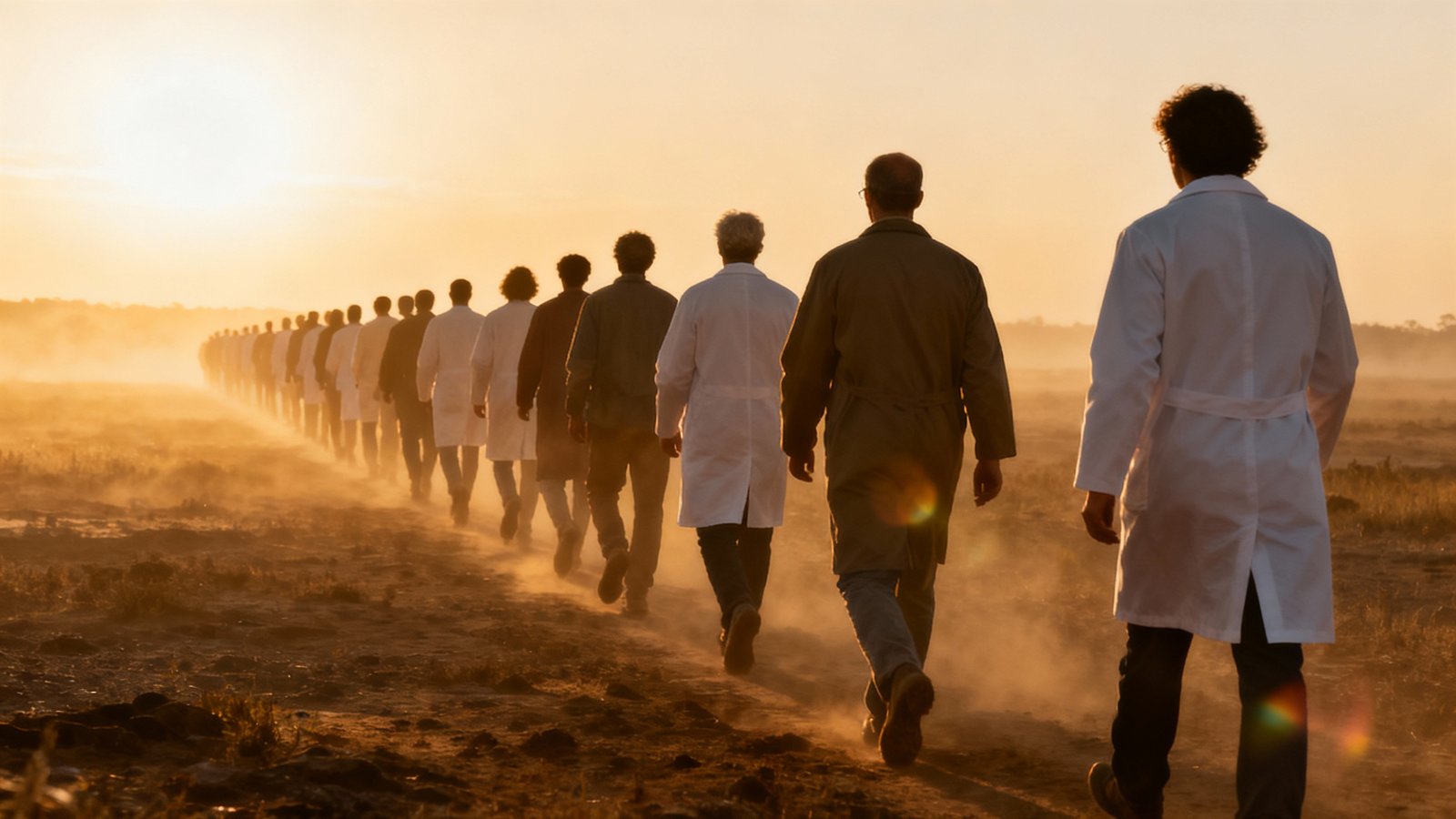
Ten thousand. That’s how many. More than ten thousand STEM Ph.D.s have walked out the door of the U.S. government since 2017. Since Trump took office, specifically. Think about that for a second. We’re not talking about interns or entry-level folks here. We’re talking about people who spent years, decades even, mastering incredibly complex scientific and technical fields. These are the brains behind our public health, our national security, our environmental protections, our very future. And they’re gone.
Seriously? Ten Thousand Brains, Just… Gone?
I read this on Science.org, and honestly, my jaw just kinda hit the floor. Ten thousand Ph.D.s. That’s a huge number. A staggering number, actually. These aren’t just any government employees. These are the folks at places like the CDC, figuring out how to stop the next pandemic before it starts. Or at NASA, designing the next generation of space exploration. Or at the EPA, protecting our air and water. You know, the really important stuff.
The report points out that a lot of these departures weren’t just retirements, either. It was a significant outflow, a brain drain, if you will, that accelerated during a period where, let’s be real, science wasn’t exactly getting a standing ovation from the top. And that, my friends, is a problem. A really, really big problem. Because when you lose that kind of institutional knowledge, that kind of specialized expertise, it doesn’t just poof and reappear. It takes years, decades, to build that back up. And sometimes, you just can’t.
I mean, think about the kind of person who gets a Ph.D. in a STEM field. These are not people who are easily swayed or who just pick up a new job on a whim. They’re dedicated. They’re passionate. They’re often driven by a sense of public service, especially if they’re working for the government. So for that many of them to decide, “Nope, I’m out,” something fundamental had to shift. Something broke, it seems like.
What Actually Made Them Leave?
From what I can tell, and from what a lot of us observed at the time, there was this general vibe. A feeling that expertise was being sidelined, that facts were optional, that scientific integrity was, well, kinda negotiable. And if you’ve spent your entire adult life chasing facts, meticulously testing hypotheses, and dedicating yourself to objective truth, that’s gotta be soul-crushing.
Budget cuts, hiring freezes in critical agencies, the constant political interference in what should be purely scientific decisions – it all adds up. You can only beat your head against that wall for so long before you decide your talents are probably better appreciated, and put to better use, elsewhere. Like, maybe in the private sector where they actually want you to invent things or cure diseases without someone in a suit telling you it’s “bad for business” or “politically inconvenient.”
So, Who’s Minding the Store Now?
That’s the million-dollar question, isn’t it? When you shed that much top-tier talent, who steps in? Are the positions being filled? And if so, by whom? Are we talking about equally qualified individuals, or are we just… making do? Because “making do” with our nation’s scientific capabilities is not a strategy I’m comfortable with. Not when we’re facing challenges like climate change, new pandemics, global tech races, and cybersecurity threats that are only getting more complex.
“You can’t just wish away a pandemic, or legislate a new type of battery into existence. Science needs scientists, and the best ones are a precious resource.”
The thing is, these aren’t just numbers on a spreadsheet. Each of those 10,000 Ph.D.s represents years of specialized training, unique insights, and practical experience that’s absolutely vital for the smooth functioning of our government and, frankly, the safety and prosperity of our country. They were the institutional memory, the quiet experts keeping things running, innovating, protecting us from threats we often don’t even know exist. And now, they’re not.
The Long Game of Losing Brains
This isn’t a problem that just magically fixes itself overnight. When you lose this kind of talent, you lose momentum. You lose leadership. You lose the ability to attract the next generation of bright minds, because who wants to work somewhere where their expertise isn’t valued? It’s a vicious cycle, honestly. And it takes years, sometimes a full generation, to recover from something like this.
Think about it in terms of national security. When our top scientists are leaving agencies that deal with, say, bioweapon defense or advanced materials for military applications, that’s a hole. A big, gaping hole. Or in public health. Imagine the expertise lost from the NIH or CDC right before, or during, a global health crisis. Oh wait, we don’t have to imagine that, do we? We kinda lived it.
And it’s not just about the big, scary stuff. It’s about the everyday advancements too. The quiet research that leads to better infrastructure, more efficient energy, new medical treatments. That stuff needs consistent, high-level brainpower. And if the government isn’t providing an environment where that brainpower can thrive, well, it’s gonna go somewhere else. Simple as that.
What This Actually Means
Look, this isn’t about pointing fingers at one administration, though the data clearly points to a specific period. This is about recognizing a really dangerous trend. When a society, or its government, starts to undervalue expertise, starts to dismiss facts, starts to treat scientific inquiry as an optional extra rather than a fundamental necessity, we all suffer. We just do. There’s no way around it.
Losing 10,000 Ph.D.s from critical government roles isn’t just a staffing issue; it’s a strategic blow. It weakens our ability to innovate, to respond to crises, to lead the world in scientific discovery, and honestly, to simply keep our people safe and healthy. We need to be doing everything we can to attract and retain the best and brightest in public service, not push them away. Because if we don’t, the consequences, while maybe not immediately obvious, are gonna be felt for a very, very long time. And that’s not a future I’m looking forward to.