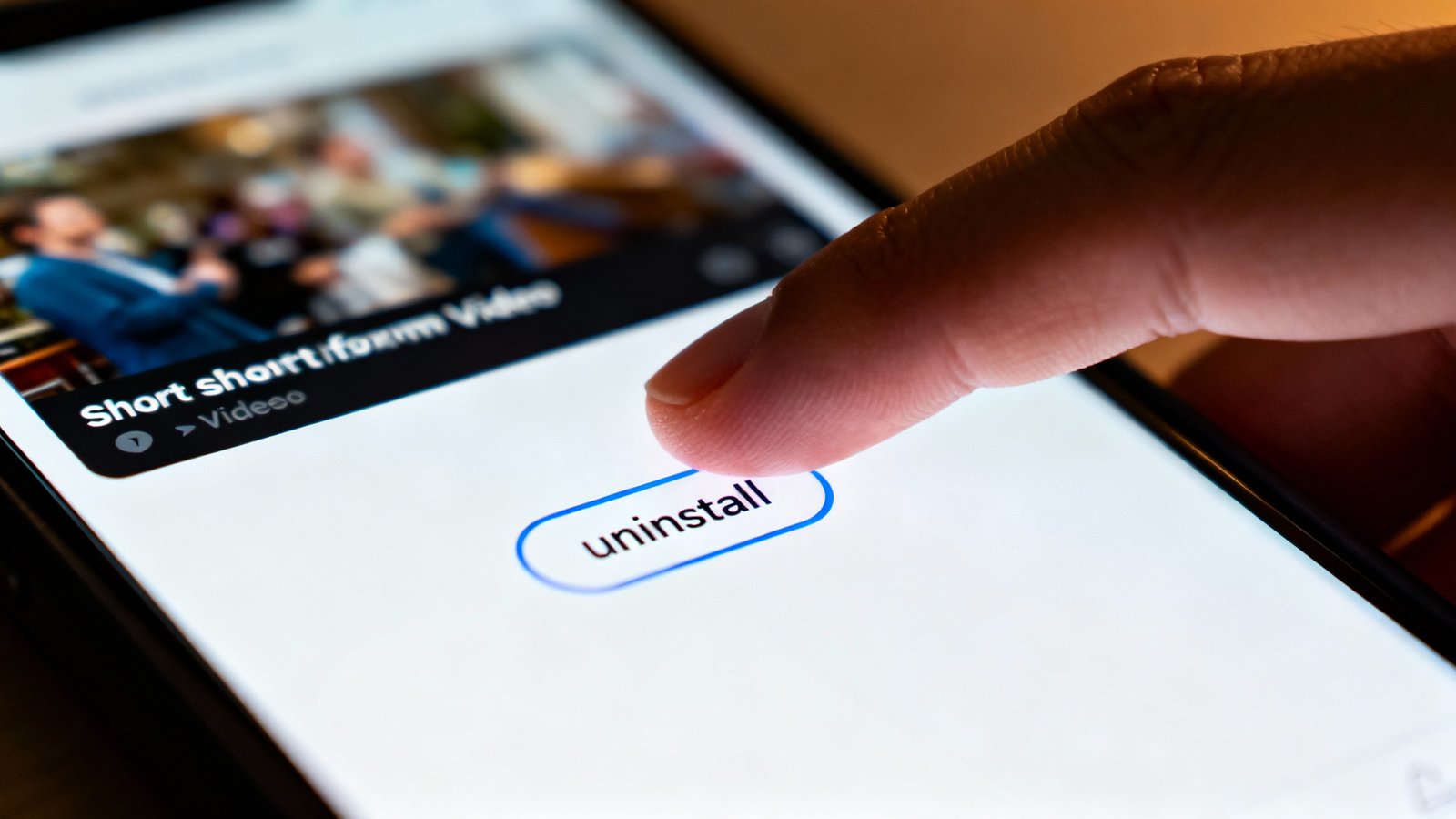
Okay, so let’s just rip the band-aid off, shall we? You know that little app, the one with the endless scroll and the dances and the cooking hacks you’ll never actually try? TikTok. Yeah, that one. Turns out, people are dumping it faster than a bad date. We’re talking a 150% jump in uninstalls. One hundred and fifty percent! Let that sink in for a second. That’s not a gentle decline, folks. That’s a full-on stampede for the uninstall button.
“Joint Venture” or Just a Very Public Breakup?
Now, what’s got everyone suddenly hitting eject? The buzz is all about this new “U.S. joint venture” TikTok supposedly cooked up. And if I’m being honest, it sounds less like a groundbreaking business deal and more like a desperate attempt to say, “Look! We’re doing something! We swear we’re not secretly sending your cat videos straight to Beijing!”
You remember all the noise, right? The government bans, the national security concerns, the constant whispers about data privacy? It’s been a low hum in the background for ages. And frankly, for a lot of us, it was a “yeah, yeah, I know, but look at this hilarious dog” kind of situation. We all knew there were issues. We just kind of collectively shrugged because, well, the algorithm was just that good at feeding us exactly what we wanted to see. And that’s the insidious genius of it, isn’t it?
But apparently, this new “joint venture” – which, from what I can tell, was supposed to calm everyone down and make everything magically okay – has actually done the opposite. It’s like someone tried to put out a small fire with gasoline. Instead of reassurance, it seems to have just hammered home the point: “Oh right, there are serious problems here.” Because why else would you need a big, flashy ‘joint venture’ if everything was hunky-dory?
The ‘But It’s Just My Data!’ Argument Gets Old
I mean, for years, the narrative from a lot of TikTok users was, “Who cares if China has my data? What are they gonna do with my embarrassing dance moves?” And honestly, a part of me always thought, yeah, fair point. What’s the worst that could happen? A personalized ad for communist party propaganda tailored to my specific shoe size? Probably not. But the thing is, it’s never just about the dance moves, is it? It’s about patterns, about connections, about access to vast amounts of behavioral data that can be used for… well, pretty much anything, from targeted influence campaigns to actual security risks.
So, Are We Finally Waking Up?
This isn’t the first time a popular app has faced a reckoning. Remember Cambridge Analytica? Facebook took a hit, people were outraged, and then… everyone pretty much went back to posting vacation photos. So, is this different? Is this 150% surge in uninstalls a real turning point, or just a momentary spasm of digital virtue signaling?
“It’s like people suddenly realized the free candy came with a tracker chip. Took ’em long enough, honestly.” – A very exasperated tech analyst (me, basically)
I’ve seen this pattern before. There’s a big news story, everyone freaks out, makes a grand gesture (like deleting an app), and then slowly, subtly, the old habits creep back in. But this time, it feels… different. The government’s been pretty vocal. The concerns are mounting. And it’s not just some obscure tech blog saying it; it’s mainstream news, national security folks, even some of the app’s biggest creators are starting to look a little nervous.
The China Question, Again. And Again.
Look, let’s be blunt. The underlying issue here, the big elephant in the server room, is China. It always has been. And no amount of corporate restructuring or fancy ‘joint ventures’ is going to change the fact that TikTok’s parent company, ByteDance, is based there. And in China, companies don’t really have a choice when the government comes knocking for data. They just… hand it over. That’s the law. That’s the reality. And honestly, for a lot of people, that’s just a bridge too far, especially when it comes to an app that collects so much personal, intimate data about their daily lives.
It’s not about hating on a country. It’s about understanding how different governments operate and what that means for our personal information. We’re not talking about some abstract philosophical debate here. We’re talking about tangible risks. And this 150% jump? It tells me that a lot of people, who maybe used to just shrug, are now sitting up and paying attention. Or maybe they just got tired of seeing the same damn dance challenge for the thousandth time. Could be both, honestly. I wouldn’t put it past us.
What This Actually Means
So, what’s the takeaway here? Is TikTok dead? Nah, probably not. Not yet, anyway. It’s too deeply ingrained, too addictive for millions. But this is a massive blow to its reputation, a huge dent in its armor. It’s going to make advertisers think twice, it’s going to make new users hesitate, and it’s going to put immense pressure on ByteDance to prove, beyond a shadow of a doubt, that user data is safe. And let me tell you, that’s a tough sell when you’re dealing with a government that doesn’t exactly prioritize individual privacy.
I think what we’re seeing is a slow but steady shift in public consciousness. People are starting to connect the dots between the apps they use and the larger geopolitical landscape. It’s not just about entertainment anymore. It’s about security, sovereignty, and who ultimately controls the digital fingerprints we leave all over the internet. And if this trend continues, well, TikTok might find itself in a much smaller room than it’s used to. Or maybe, just maybe, it’ll force them to actually, genuinely, fundamentally change how they operate. One can hope, right? But I’m not holding my breath.