So, They Want to Scan ICE Agents, Huh?
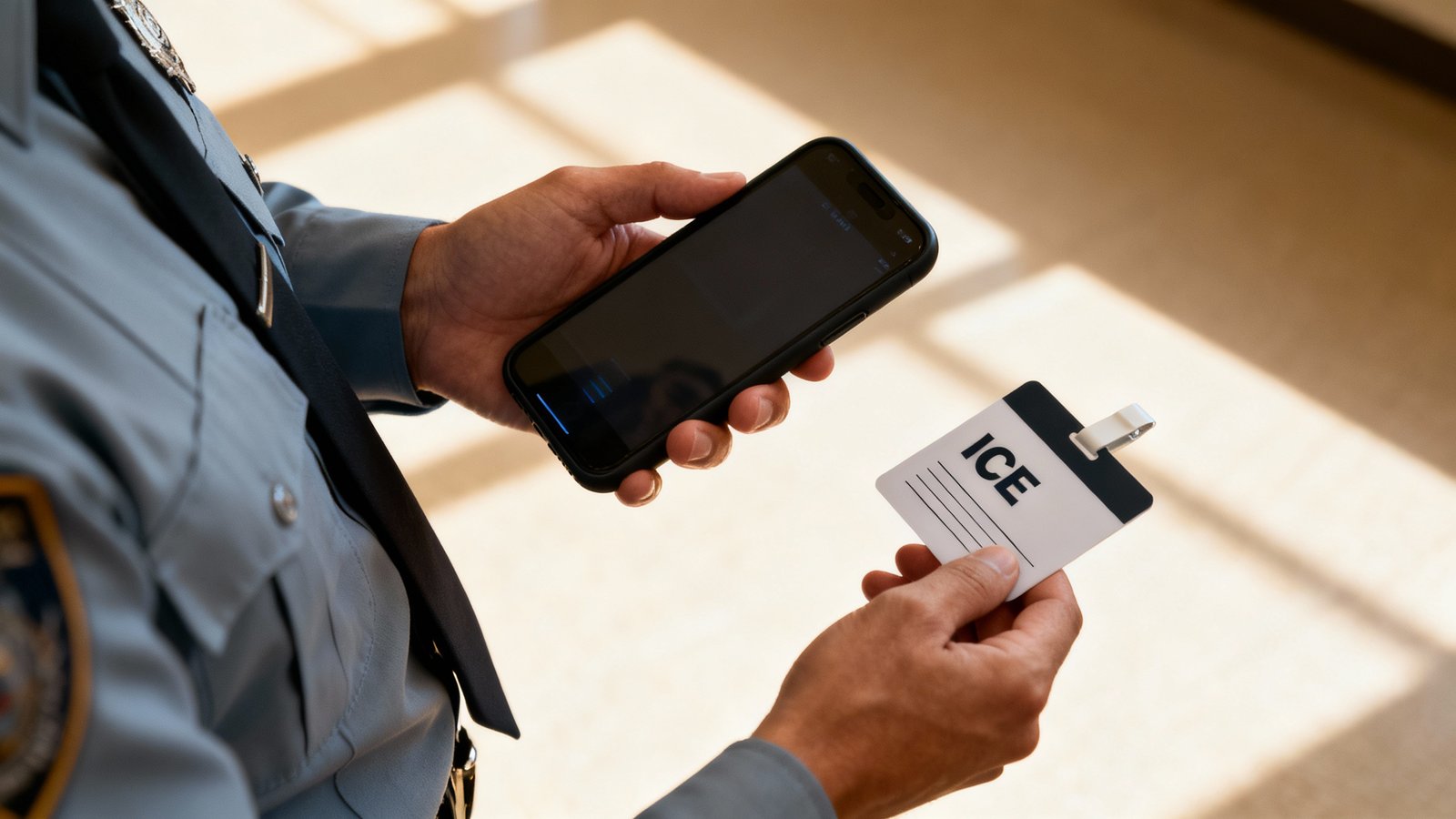
Yeah, you heard that right. The idea, if I’m being super blunt about it, is pretty simple: accountability. Or, more accurately, forced accountability. We’re talking about making it so if an ICE agent is out there doing their thing-you know, enforcement actions, which can get… complicated, let’s just say-they’d have this little square on their uniform. A square you could whip out your phone and scan. Just like you’re checking into a restaurant or, I don’t know, buying a new gadget. Wild.
The whole premise here, from what I can tell, is to cut through the anonymity that sometimes, well, often seems to shroud federal agents during these sorts of actions. Think about it: how many times have we heard stories, seen videos, where folks are yelling, “Who are you? Show me your badge!” and getting, shall we say, less than satisfactory responses? A lot. Too many. This bill, if it ever saw the light of day, would basically say, “Nope, not anymore. Here’s your ID, literally scannable, right on your chest.” It’d probably link to their name, their unit, maybe even a public complaint portal. Who knows the full details yet, but that’s the vibe. It’s a pretty aggressive move, politically speaking, but also, if you’re on the receiving end of an enforcement action, maybe a necessary one.
The Nitty-Gritty (Or What We Think It Means)
This isn’t just about a pretty little barcode, obviously. This is about transparency. It’s about giving people, anyone really, a quick, undeniable way to identify an agent. No more “I couldn’t quite see the badge number.” No more “They wouldn’t tell me who they were.” Just beep and there it is. The legislation specifically calls for it to be “clearly visible and scannable.” Which, you know, makes sense. You can’t exactly hide a giant QR code on your uniform. And frankly, the folks pushing this are probably thinking about all those instances where things went sideways, and identifying agents was like pulling teeth. They’re saying, “Enough.”
But Wait, What About…?
Now, I can already hear the objections, right? And trust me, I’ve covered enough of these debates to anticipate them. The first one is always: “Agent safety!” And yeah, that’s a legitimate concern. If agents are easily identifiable, does that make them targets? It’s a fair question. You’ve got people out there doing a tough, often dangerous job. Adding a literal target symbol to their uniform, even if it’s for accountability, is going to raise some hackles. Big time.
“The idea of making every agent an easily identifiable data point feels like a solution born of frustration, but one that could create a whole new set of problems for the people on the front lines.”
And then there’s the privacy angle. Not just for the public, but for the agents themselves. Are we talking about linking to their personal information? Probably not, I’d hope. But even their professional identity, their full name, unit, etc., being instantly accessible to anyone with a smartphone? That’s a shift. A big one. It’s an interesting balancing act, isn’t it? The public’s right to know versus an agent’s right to, well, not be doxxed by a random bystander. This isn’t just some abstract policy; it’s got real human consequences on both sides.
The Bigger Picture, Or Why We’re Even Talking About This
Here’s the thing: this isn’t happening in a vacuum. This isn’t some random tech bro’s idea for a new app. This is a direct response to years-decades, really-of criticism leveled at federal immigration enforcement agencies. We’ve seen the reports, the lawsuits, the protests. Concerns about use of force, about due process, about separations of families, about agents operating with what critics call “impunity.” It’s all part of a larger narrative where trust between certain communities and federal law enforcement, particularly ICE, is, let’s just say, paper-thin.
This QR code proposal is basically a legislative symptom of a much deeper, more systemic issue. It’s saying, “We’ve tried other ways. We’ve asked nicely. We’ve filed FOIA requests. Now we’re going to use technology to force your hand.” It’s a pretty stark indicator of how broken the trust really is. And, honestly, it’s a desperate measure by lawmakers who feel like they’ve run out of options to ensure basic transparency from an agency that often seems to operate in the shadows, at least from the public’s perspective. It’s not just about one agent; it’s about the institution.
What This Actually Means
If I’m being honest, I don’t know if this bill has a snowball’s chance in… well, you know. But it’s not really just about passing. It’s about sending a message. A really loud one. It’s about pushing the envelope on what accountability looks like for federal agents, especially those involved in sensitive and often controversial enforcement actions. It signals a growing impatience, a demand for change that’s getting more and more creative (or, depending on your view, extreme).
It forces a conversation, right? Even if the QR code itself never becomes a reality, the very idea of it makes people stop and think: how should agents be identified? How do we ensure transparency without compromising safety? What’s the right balance? Because the current situation, for a lot of people, just isn’t working. This is about power, about visibility, and about a fundamental push to make sure that everyone, even those carrying a badge and a gun, is ultimately accountable to the public they serve. It’s a messy, complicated issue, and this QR code idea? It’s just another fascinating, slightly wild, piece of the puzzle… and probably not the last.