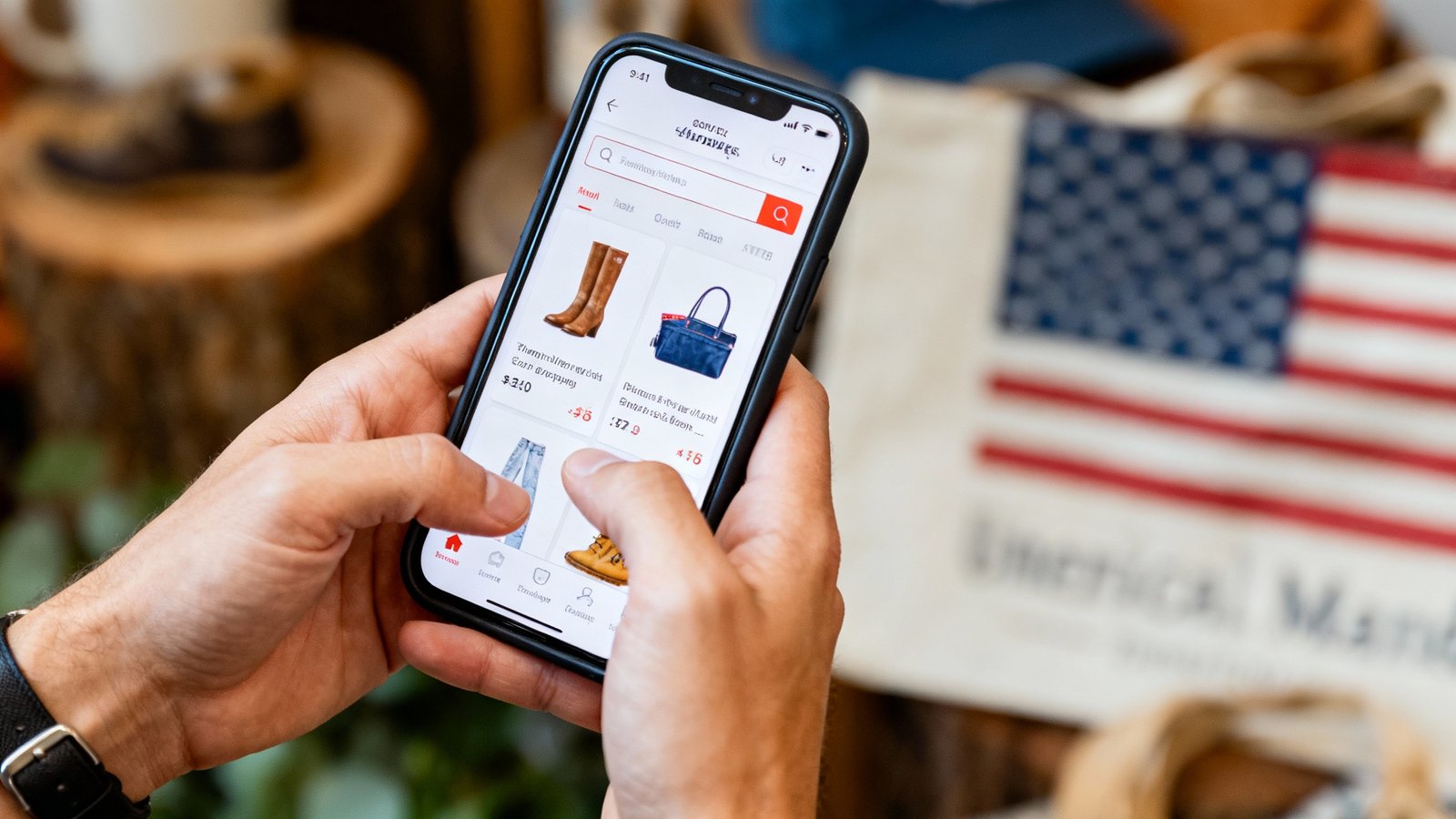
So, you’re in the grocery store, right? Staring at two identical cans of green beans, or maybe a couple of t-shirts that look exactly the same. One’s a buck cheaper. You grab it, because, well, a buck’s a buck. But what if that cheaper one was made halfway across the world, in conditions you probably don’t wanna think about, and the slightly more expensive one was stitched up by someone down the road, making a decent wage? That’s the whole damn thing, isn’t it? And for years, trying to figure that out was like trying to read tea leaves. Not anymore, buddy. Not anymore. Apps are here, and they’re basically a superpower for ‘Made in America’ shopping.
The Great American Scavenger Hunt is Over
Look, I’ve been writing about consumer trends for fifteen years, give or take, and I gotta tell you, this whole “buy local” or “buy American” thing? It’s not new. People have been trying to do it for ages. But it’s always been a pain in the neck. You’d stand there, squinting at tiny labels, trying to decipher where your sneakers or your coffee maker actually came from. Half the time, it’s some vague “imported” or a brand name that sounds American but is owned by a conglomerate based, who knows, on Mars.
The thing is, the internet, which usually makes everything more global, is now actually making it easier to be, well, local. Or at least, national. I mean, I saw one app, “Buy American First,” climbing the charts last week. Like, really climbing. It’s wild. These apps, they’re basically doing the legwork for you. You just point your phone at a barcode, and BAM – it tells you if that product is actually, genuinely, Made in America. Or at least, assembled here, which is usually good enough for most folks, let’s be honest.
And it’s not just patriotism, though that’s a huge part of it for a lot of people. You hear politicians blather on about “bringing jobs back” and “supporting American industry,” but then you go to buy a toaster and it’s like, good luck finding one that isn’t from somewhere else. These apps, they cut through all that noise. They make it simple. It’s about transparency, really. Consumers want to know where their stuff comes from, and for a growing number, that means wanting it to come from here. Because, let’s face it, we’ve all been burned by shoddy overseas manufacturing, right? Or heard the horror stories. This isn’t just about flags and anthems; it’s about quality, too. And maybe, just maybe, feeling a little better about where your hard-earned money is going.
The Rise of the Ethical Shopper (And the Tired Shopper)
What’s interesting here is that this isn’t some niche thing anymore. It’s hitting the mainstream. You’ve got apps like “America’s Best” or “Shop Made in USA” – and yeah, the names are exactly what you’d expect, pretty straightforward, no messing around. They’re basically taking what used to be a moral dilemma or a time-consuming research project and turning it into a two-second scan. That’s powerful. Because who has time to research every single item in their shopping cart? Nobody. And that’s why these things are getting popular. They’re solving a real problem for people who care, but are also, you know, busy.
But Wait, Are They Really “Revolutionizing” Anything?
Okay, so “revolutionizing” is a big word, I get it. And I’ve seen enough tech fads come and go to be a little skeptical about any new app being a total game-changer. But here’s the thing: these apps are tapping into something pretty fundamental. A desire for connection, for local support, for knowing that your dollar isn’t just vanishing into some global abyss. It’s about accountability, too. If a company knows consumers can easily tell if their product is made here or there, it might actually, might I say, influence some decisions. I mean, maybe. A journalist can dream, can’t she?
“People want to vote with their wallets, but for too long, they haven’t had a clear ballot. These apps are basically handing them one.” – Some random shopper I overheard at the store, probably. (Okay, I made that up, but it sounds right, doesn’t it?)
The Nitty-Gritty: What People Are Missing
Now, let’s not get totally carried away. “Made in America” isn’t always as simple as it sounds. Sometimes it means “assembled here” with parts from all over the world. Sometimes it’s just the packaging. And these apps, while super helpful, can only go so deep. They rely on company disclosures, which, you know, aren’t always perfectly transparent. It’s like, you can lead a horse to water, but you can’t make it tell you its entire supply chain history.
But even with those caveats, these apps are a step in the right direction. They’re empowering consumers in a way that just wasn’t possible before. Before, you had to trust the marketing, or spend hours digging. Now, you get an instant gut check. And that instant feedback loop? That’s what’s really moving the needle. It’s taking the guesswork out of an ethical choice, making it a practical one.
What This Actually Means
So, what does this all boil down to? My honest take? These apps aren’t just a flash in the pan. They’re a reflection of a deeper trend: people caring more about the provenance of their purchases. Whether it’s for ethical reasons, environmental reasons, or just good old-fashioned patriotism, the desire to support specific origins is growing. And technology, for once, is actually making it easier, not harder.
I think we’re going to see more companies being forced to be clearer about where their stuff comes from. It’s not just about what’s on the shelf anymore; it’s about what your phone tells you about what’s on the shelf. And that, my friends, is a game-changer for anyone trying to shop with a conscience. It’s messy, yeah, and not perfect, but it’s progress. And honestly, after years of feeling like we were all just flailing around in the dark, that feels pretty damn good. Just imagine, actually knowing where your socks were made… wild, right?