My Cynicism, Briefly Silenced
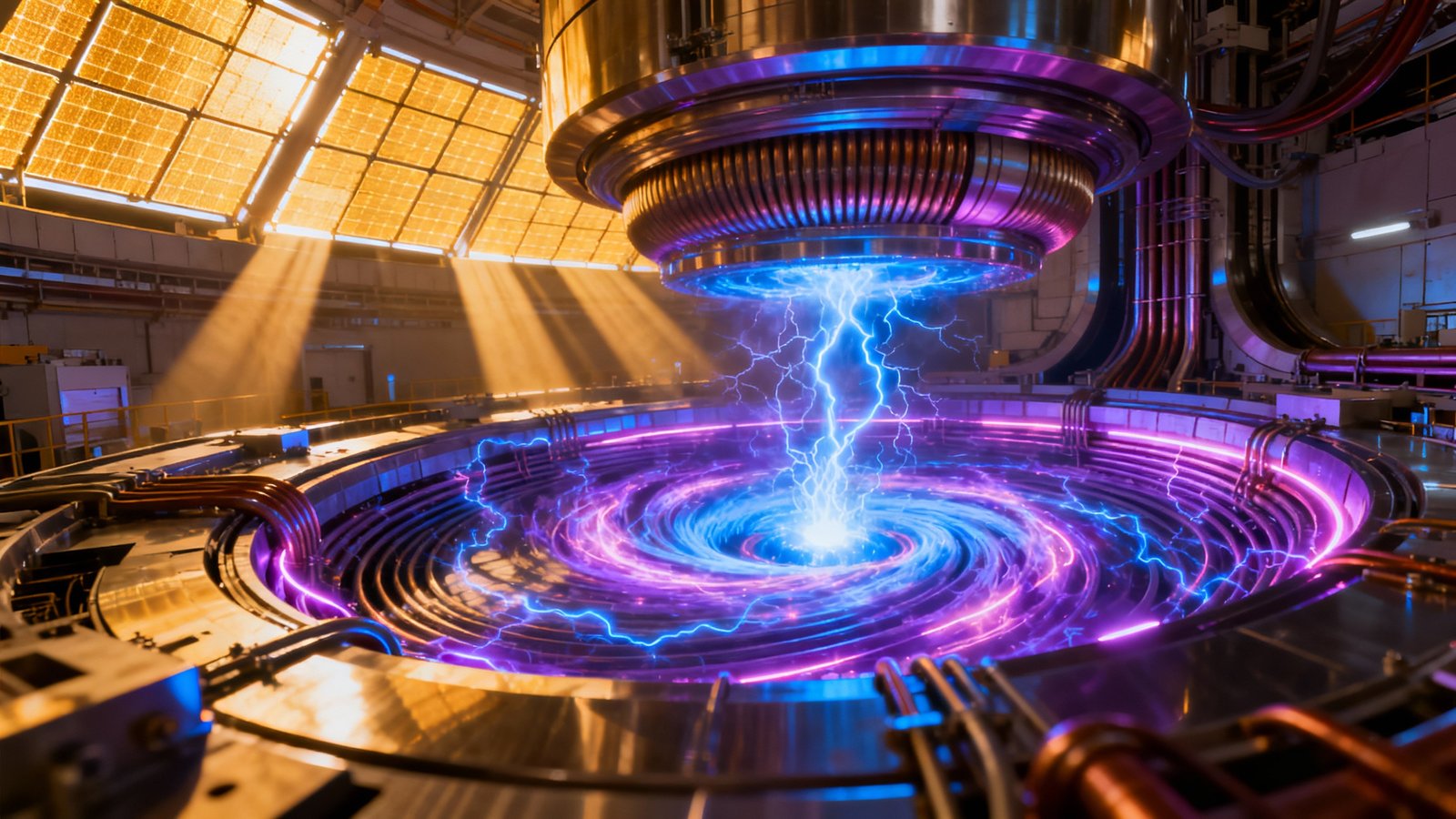
But then I actually, you know, read the darn thing. And holy moly, I gotta admit, my cynicism took a pretty solid hit. This isn’t just another incremental step. This isn’t just them getting a tiny bit closer. What they did, from what I’m understanding, is they managed to hold a super-hot plasma for seven whole minutes. Seven minutes! At temperatures way, way hotter than our actual sun’s core. Think about that for a second. It’s like holding a tiny, scorching piece of a star in a magnetic bottle for longer than it takes to brew a cup of coffee.
And the kicker? The “impossible limit” they broke was related to how long you can sustain that plasma at those crazy-high temperatures and densities without it just kind of… fizzling out. Scientists, the smart folks who actually understand the physics here, had these theories, these models, that basically said, “Nah, you can’t go past this point. It just won’t work.” And China’s guys, bless their hearts, just kinda went, “Hold my beer,” and did it anyway.
What’s This “Impossible Limit” Anyway?
Basically, you’re trying to smash atoms together to create energy, right? Like what happens inside the sun. But to do that here on Earth, you need incredibly high temperatures and pressures. And you need to contain that super-hot, super-unstable plasma for long enough to actually get more energy out than you put in. That’s the holy grail. There are all these instabilities that try to break the plasma apart, like a toddler trying to escape a playpen. This “density limit” was one of those theoretical walls, a kind of cosmic speed bump, that everyone thought was pretty much a hard stop for certain types of fusion reactors. And now? Poof. Gone.
So, Are We All Getting Free Energy Tomorrow?
Hold your horses, pal. That’s always the first question, isn’t it? Every time there’s a fusion breakthrough, everyone immediately thinks we’re gonna be charging our cars with clean, limitless power by next Tuesday. And yeah, no. Not quite.
The thing is, while this is absolutely, undeniably a massive scientific achievement – a really, really big deal for the physics community – it’s still, well, research. It’s like discovering you can make a car engine run for seven minutes on a new type of fuel. That’s awesome! It means the fuel works! But it doesn’t mean you’re driving to the grocery store in it tomorrow. There are still so many hurdles. So many.
“The dream of limitless, clean energy from fusion has always been tantalizingly out of reach. This isn’t the finish line, but it sure as hell feels like a giant leap past a barrier we didn’t even know we could clear.” – Some scientist probably, feeling pretty jazzed.
The China Factor
Now, let’s talk about who did this. It was China. And that, frankly, adds another layer to this whole thing. For years, the big fusion projects, like ITER in France, have been these massive international collaborations. Everyone pooling resources, sharing knowledge. And here comes China, quietly (or maybe not so quietly, depending on who you ask) pushing the envelope with their own domestic program.
It’s not just about scientific bragging rights, though that’s definitely part of it. It’s about energy independence. It’s about technological leadership. And if one country, especially a rapidly developing superpower like China, manages to crack the fusion code first, well, that’s a game-changer on a geopolitical scale that makes your head spin. Imagine the leverage. The economic power. The ability to solve climate change for itself, and maybe for others, on its own terms. That’s big. Really big. It makes you wonder about the race. Is it a friendly race? Or are we seeing the beginnings of a new kind of energy arms race? Not with bombs, but with power plants.
What This Actually Means
Look, I’m not gonna pretend I understand all the quantum mechanics or plasma instabilities involved here. My eyes glaze over after about two sentences of heavy physics jargon. But what I do understand is impact. And this has impact.
This breakthrough – shattering a long-held theoretical limit – means we’ve learned something fundamental about how plasma behaves. It means our understanding of fusion, which was already pretty complex, just got a major upgrade. It opens up new avenues for research, new designs for future reactors, maybe even new materials. It means the models we were relying on might need a serious re-think.
It doesn’t mean we’re getting fusion power next year. Or probably even in the next twenty. But it does mean that the path to fusion power, which always seemed to hit these invisible walls, just got a bit clearer. A wall we thought was solid brick turned out to have a door, and China just kicked it open.
And that, my friends, is why even a jaded old hack like me has to sit up and pay attention. Because while the “20 years away” joke still holds some truth, every now and then, something happens that makes you think, “Huh. Maybe this time, they really are on to something.” And if that something means a future with clean, virtually limitless energy, well, who wouldn’t want to see that? Even if it means China got there first. For now.