
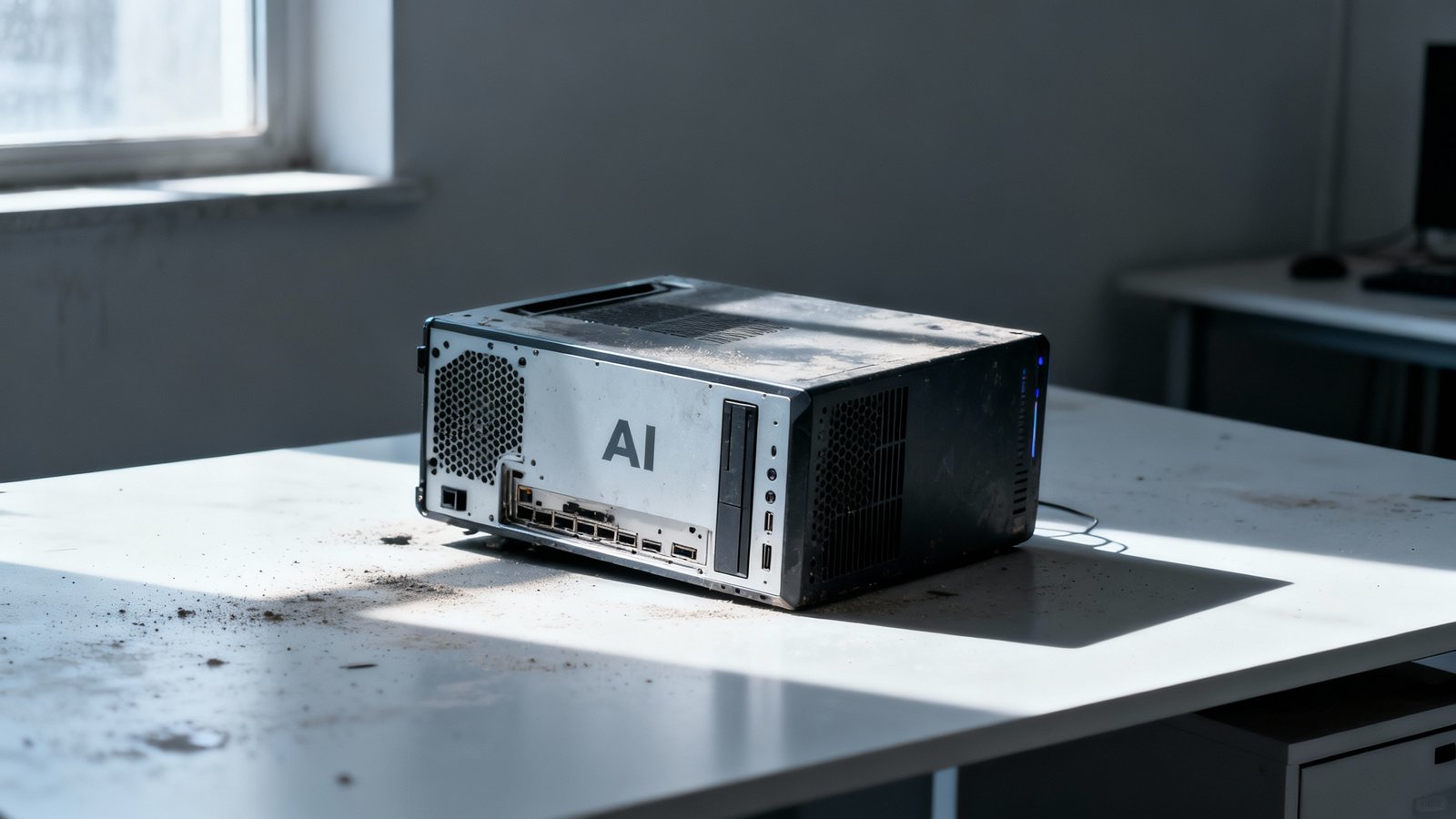
Seriously, Dell? It Took You This Long?
Yeah, you heard that right. According to a Reddit post, linking to a PC Gamer article, Dell’s finally waving the white flag on the whole “AI PC” thing, at least as far as consumer excitement goes. They’re admitting, and I quote (or paraphrase, because who cares about exact quotes when the sentiment is this clear), that consumers just don’t care. Not one bit. And if I’m being honest, I’m sitting here thinking, “Duh.”
Like, did anyone actually believe this was going to be the next big thing? Remember all the hype? “Buy an AI PC! It’s got an NPU! It’ll… uh… do AI stuff!” And everyone, myself included, was scratching their heads going, “What AI stuff, exactly? My phone already does AI stuff. My cloud services do AI stuff. What exactly is my PC going to do that’s so revolutionary it warrants a whole new category and a premium price tag?” The answer, as it turns out, was basically nothing. Or at least, nothing you couldn’t already do, or nothing that wasn’t just a gimmick.
The Great NPU Mystery
The thing is, the entire “AI PC” push felt like a solution desperately searching for a problem. We were told these new chips, these NPUs, would unlock incredible on-device AI capabilities. Great! But what are those capabilities? Real-time translation that’s still kinda janky? Background blurring on video calls that your current PC probably handles fine? Maybe some photo editing features that are already cloud-based or in professional software? It just never clicked, did it? Consumers aren’t stupid. We’re not going to shell out extra cash for something that offers marginal, if any, real-world benefit to our daily computing. It’s like buying a car because it has a special “pizza warming tray” when you’ve already got a microwave at home. Who needs that?
But Wait, What Was The Point, Then?
This whole saga reminds me so much of the 3D TV craze, or maybe even the early days of smart home tech where everything was proprietary and didn’t talk to anything else. A bunch of companies, particularly the chipmakers (looking at you, Intel and Qualcomm), decided this was the future, so they pushed it hard. They got the OEMs (Dell, HP, Lenovo, etc.) on board, probably with some sweet incentives, and then expected us, the poor, unsuspecting public, to just open our wallets. And we didn’t. Because, and this is a recurring theme in tech, you can’t force innovation that nobody wants or needs.
“The tech industry often confuses ‘can do’ with ‘should do,’ and ‘should do’ with ‘consumers will pay for.'”
And that’s really the crux of it. The engineers could build NPUs into chips. They could integrate some local AI features. But that doesn’t mean it was necessary or desirable for the average person buying a new laptop or desktop. We buy PCs to browse the web, work, play games, stream movies, do schoolwork. We want them fast, reliable, and maybe good looking. “AI capabilities” are just not on most people’s top five, or even top ten, list of priorities.
What This Actually Means
Look, this isn’t the death of AI, obviously. AI is everywhere and it’s transformative in so many ways – in data centers, in cloud applications, in specialized software. It’s just the death of the AI PC as a distinct, must-have consumer category. And that’s a good thing, actually. It means the industry has to go back to the drawing board and figure out what people actually want, not what they think people should want.
So, what does this Dell admission mean?
Less marketing BS: Hopefully, we’ll see fewer “AI-powered!” stickers on every new laptop that just means it can do a slightly better job blurring your background.
A refocus on real value: Maybe manufacturers will start focusing on things that truly improve the PC experience – better battery life, more durable designs, innovative form factors, actual performance gains for gaming or creative work.
AI will become ambient: Instead of being a feature you pay extra for, AI will just be baked into everything, seamlessly, in the background, making things better without needing a whole new category. Like spellcheck, or smart search results. You don’t buy a “spellcheck PC,” do you?
A dose of reality: It’s a wake-up call for the industry to listen to consumers, not just each other.
Honestly, this just proves that sometimes, the simplest explanation is the right one. People didn’t buy into the AI PC hype because, well, there wasn’t much there to buy into. And Dell, bless their hearts, finally admitted it. Now, can we go back to making computers that just work really, really well without needing some buzzy, ill-defined feature? Thanks.