
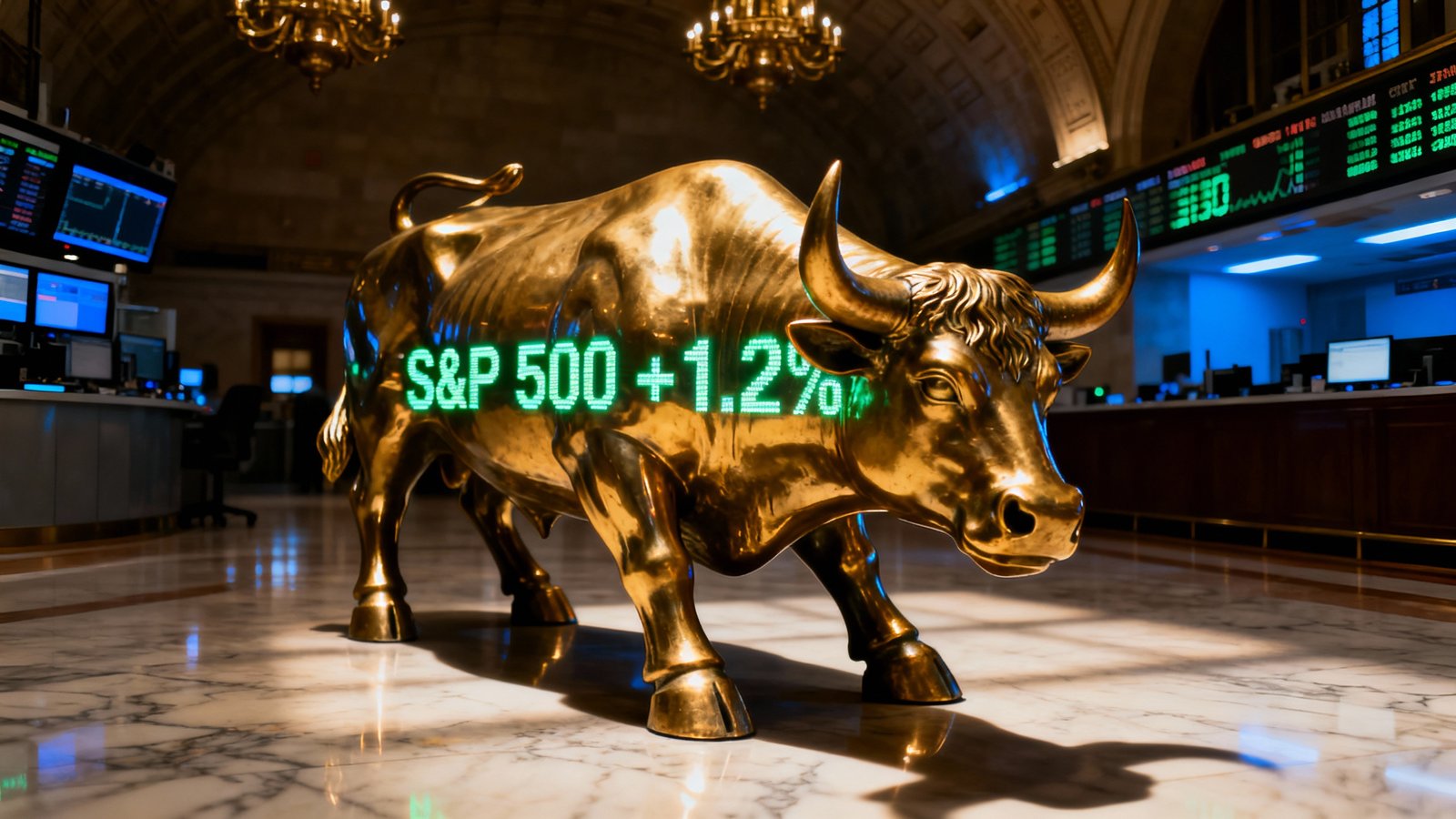
So, here we are again, staring down the barrel of a rate cut. Or at least, the hope of one. You know, that whisper-turned-roar that sends markets into a frenzy? Well, it’s happening. Again. The TSX- futures, they’re not just pointing up; they’re practically doing a backflip, all because everyone- and I mean everyone– is crossing their fingers for the Fed to finally, mercifully, ease off the gas. It feels a bit like a seasonal tradition now, doesn’t it? Every few months, the rate cut carnival rolls into town, and investors, bless their hearts, line up for a ride.
This time, though, it feels a little different. Or maybe I’m just saying that because I’ve seen this movie before, a few times actually. But the enthusiasm? It’s palpable. It’s almost infectious, actually. You can almost hear the collective sigh of relief, or perhaps wishful thinking, echoing through trading floors from Bay Street to Wall Street. We’re all kind of looking at the same tea leaves, aren’t we? The economic data, the inflation numbers- they’re hinting, gently at first, now a bit more insistently, that the tide might genuinely be turning. For real this time. Or so we hope.
The Great Rate Expectation Game
The whole thing- this market surge driven by rate cut rumours– it’s a fascinating dance, isn’t it? It’s less about what’s actually happening right now and more about what everyone thinks is going to happen a few months down the line. It’s a game of predicting the predictor, basically, and right now, the smart money seems to be betting on cheaper borrowing costs sooner rather than later. This isn’t just about big institutional money, either. Your average investor, the person trying to figure out their mortgage payments for goodness sake, they’re feeling this too. It’s not just some abstract economic concept; it’s tangible, you know?
Why Everyone’s Getting Jumpy- in a Good Way
So, what’s really fueling this fire? It’s not just a hunch, a gut feeling. It’s a blend of hard data points and a healthy dose of market psychology. Think about it: inflation, that monster we’ve all been wrestling with, it appears to be behaving a bit better. Not perfect, mind you, but better. And when inflation cools down, the central banks- the Fed, the Bank of Canada, you name it- they tend to get a little less trigger-happy with rate hikes. It’s like they’ve been pushing the brakes so hard, and now, finally, they might just ease up a smidgen. That’s the signal everyone’s looking for.
- Point: CPI numbers in the US and Canada have shown some signs of moderation, giving central bankers a bit more breathing room.
- Insight: This subtle shift in inflation data is like a green light for market participants to start pricing in rate cuts, even if they’re still several months out. It’s all about anticipation.

And let’s not forget the unemployment numbers. While the job market has been surprisingly resilient- almost stubbornly strong, actually- there are whispers, just whispers mind you, of it softening just enough to give central banks another reason to cut. It’s a delicate balance, trying to slow things down without crashing the economy entirely. A soft landing, that’s the dream. And these rate cut hopes? They’re intrinsically tied to that very dream.
The TSX’s Time to Shine (Perhaps)
For us here in Canada, the TSX- well, it’s particularly sensitive to this kind of chatter. Energy, financials- these sectors are big players on our exchange, and they’re often quite responsive to interest rate movements. Lower rates generally mean cheaper borrowing for businesses, more disposable income for consumers (eventually), and a potential boost to corporate earnings. It’s not rocket science, but it’s certainly impactful. You see, when the cost of money goes down, investing in things with borrowed money becomes more attractive. Companies expand, individuals buy houses (they hope to, anyway!), and the economy gets a little shot in the arm. It sounds simple, but the psychology behind it is complex and powerful.
The Ripple Effect Through Sectors
So, who benefits most when the rate cut fever hits? Historically, certain sectors tend to get a bigger bounce. Think about our banks, for example. Now, you might think lower rates hurt banks because their lending margins shrink. And sometimes, sure, a little. But when the economy picks up steam, when more people are borrowing, when housing markets regain some footing- it balances out, often in their favor. It’s not just banks, though.
“The market isn’t just predicting a cut; it’s practically demanding it, pricing in every whisper of a dovish tone from central bankers. It’s a self-fulfilling prophecy in the making, provided the data doesn’t spectacularly derail it.”
- Point: Technology and growth stocks, often more sensitive to future earnings discounted at lower rates, usually see a significant boost.
- Insight: For companies that rely heavily on future growth projections, lower interest rates make those future earnings look comparatively more attractive in today’s dollars. It’s like suddenly getting a better deal.

Real estate, of course, is another big one. Higher interest rates have put a serious squeeze on housing markets across Canada. Anyone who’s tried to renew their mortgage lately can attest to that. A credible path to lower rates could, potentially, inject some much-needed life back into that sector. It’s not going to solve everything overnight, but it could certainly provide a much-needed psychological lift. People might actually start thinking about moving again, you know, without instantly calculating how much more interest they’ll be paying. That’s a big deal for a lot of Canadians.
But Let’s Not Get Ahead of Ourselves, Eh?
Now, while the enthusiasm is quite infectious, it’s important to keep a level head. Markets often get a little zealous, a bit ahead of themselves, running on pure adrenaline and speculation. Central banks- they’re famously, shall we say, deliberate. They won’t just flick a switch because the market wants them to. They’ll look at the full picture, the entire economic tapestry, not just the loudest voices. So, while the hope is strong, the reality is that nothing is guaranteed.
We’ve seen false starts before, haven’t we? Moments where the market got all excited, only for the central bank to put on a poker face and say, “Nope, not yet.” It’s an exercise in patience, often a frustrating one. But for now, the TSX is certainly enjoying the ride. Let’s just hope it doesn’t run out of fuel before it reaches its destination. Because honestly, who couldn’t use a little bit of good news, right?