




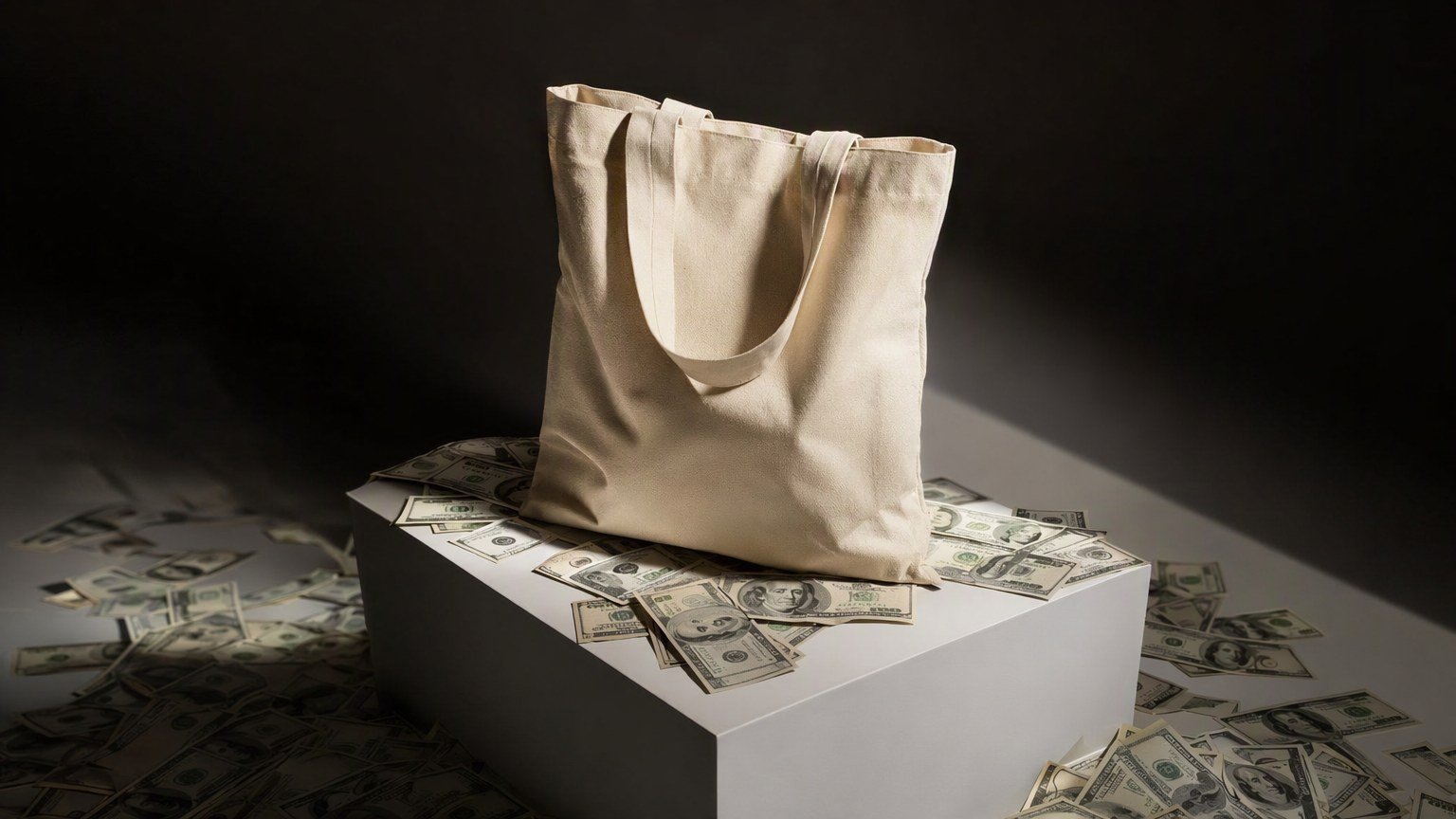
A three-dollar tote bag is selling for $500 on eBay right now. Not a designer knockoff. Not vintage Hermès. A canvas grocery bag from Trader Joe’s with their logo on it.
A three-dollar tote bag is selling for $500 on eBay right now. Not a designer knockoff. Not vintage Hermès. A canvas grocery bag from Trader Joe’s with their logo on it.
And honestly? This might be the most 2026 thing I’ve ever seen.
When Did Shopping Become a Full-Contact Sport?
Look, I’ve covered consumer trends for over a decade, and I thought I’d seen everything. The Supreme brick that sold for $1,000. Beanie Babies in the ’90s. Hell, I watched people camp out for Popeyes chicken sandwiches. But something shifted in the last couple years. We’re not just buying things anymore – we’re hunting them.
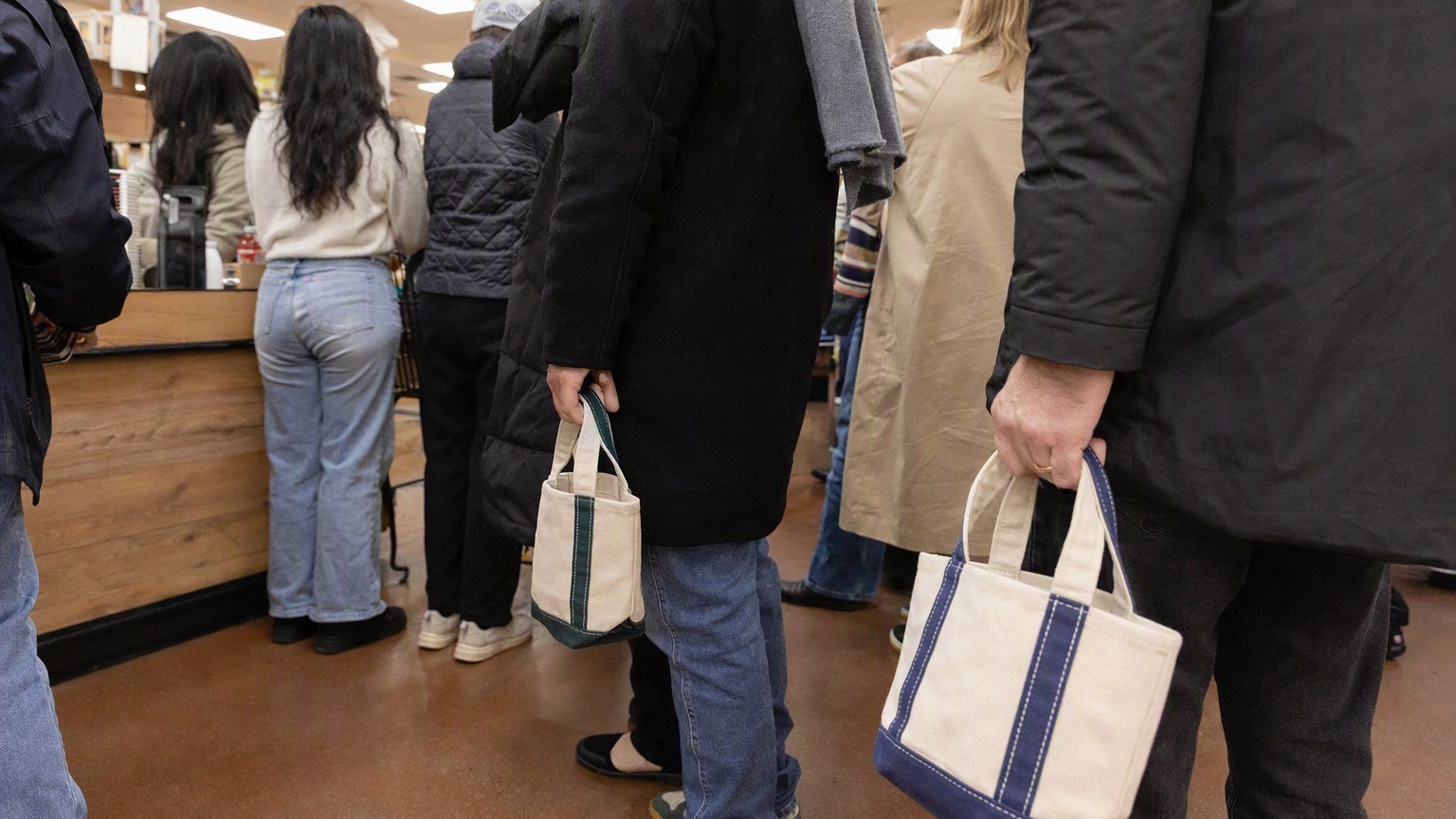
Trader Joe’s kicked this whole thing off in early 2024 with their $2.99 mini canvas totes. They were cute, sure. Practical. But here’s what made them different: they were limited. The company didn’t say how many they made, didn’t announce a restock date. They just… appeared. And then they were gone.
TikTok did what TikTok does – turned the search into content. Videos of people calling every Trader Joe’s in a 50-mile radius. Haul videos of someone who scored three bags, grinning like they’d won the lottery. The FOMO was immediate and it was everywhere.
It’s Not Just Tote Bags
By November 2025, Starbucks had clearly been taking notes. They dropped the Bearista Cold Cup – a bear-shaped thing that probably cost them $2 to manufacture – and it sold out in hours. Not days. Hours. I mean, we’re talking about a plastic cup here. The same thing happened with Why Jessica Biel's $2K Jacket Is Selling Out – proof that scarcity marketing works at any price point.
Then there were these tiny buckets from hardware stores. Buckets! The kind you’d use for paint samples or organizing screws in your garage. Collectors started posting them on Instagram like they were Fabergé eggs.

What’s wild is that none of these products are actually rare in the traditional sense. They’re mass-produced items from massive retailers. But artificial scarcity works just as well as the real thing, apparently. Maybe better, because you can always make more if the hype sustains.
So What’s Actually Happening Here?
The thing is, this isn’t complicated psychology. It’s actually kind of embarrassingly simple, which is probably why it works so well.
First, there’s scarcity – real or perceived, doesn’t matter. Our lizard brains hate missing out. When something might not be available tomorrow, we want it today. Even if we didn’t want it yesterday.
Second, social proof. When you see fifty TikToks of people excited about a tote bag, your brain starts thinking “maybe I need that tote bag too.” We’re social creatures. We want what other people want. It’s not rational, but it’s reliable.
Third – and this is where it gets interesting – the price point. Three dollars isn’t an investment. It’s not even a risk. You don’t have to justify a $3 purchase to anyone, including yourself. But when that $3 item suddenly has $500 worth of resale demand? Now you’ve got a story. You’ve got social currency. You were smart enough to get in early. It's the same reason Taylor's $34 Corduroy Secret: The Jeans Killer went viral – an accessible price point that suddenly became social currency.
“The playbook mixes limited availability, social media buzz and a willingness to let the product release itself become the event.”
And that’s the real shift. The product isn’t the product anymore. The hunt is the product. The scarcity is the product. The ability to say “I got one” is the product.
Why Brands Can’t Stop Doing This
Here’s what drives me a little nuts: it works too well. Every marketing team in America has now seen what happened with those Trader Joe’s bags. They’ve seen the earned media value – hundreds of thousands of dollars worth of press coverage for a product that probably cost less than a dollar to make.
So now everyone’s trying to engineer their own viral moment. Limited drops. Mystery releases. Intentional understocking. Some of it feels organic (I’ll give Trader Joe’s credit – I don’t think they planned for this level of insanity). Some of it feels cynically calculated.
The problem is that you can’t really fake authenticity at scale. Or maybe you can – we’re still figuring that out. Stanley cups kind of pulled it off. Their 40-oz tumblers became a whole thing, complete with people lining up at Target like it was a sneaker drop. But for every Stanley, there are fifty brands trying to create artificial hype that just… doesn’t land.
What This Actually Means
I think we’re watching shopping transform into something closer to entertainment. Maybe that’s been true for a while – malls were always social spaces, not just transactional ones. But social media accelerated everything. Made it performative.
The Trader Joe’s tote bag isn’t just a bag. It’s proof you were paying attention. That you were fast enough, connected enough, lucky enough to get one. In a world where everyone’s trying to signal something about themselves online, even a $3 purchase can become a flex.
What I keep wondering is: how long can this last? At some point, won’t we get tired of the chase? Won’t the artificial scarcity feel too artificial?
But then I look at those eBay listings – $500, $600, some listings pushing $800 for a canvas bag – and I think maybe I’m asking the wrong question. Maybe it doesn’t matter if we get tired of it. There’s always someone new logging onto TikTok, seeing the hype for the first time, wanting in on whatever everyone else seems to have.
The internet broke over a $3 bag. And if you think that’s the last time it’ll happen, you haven’t been paying attention.