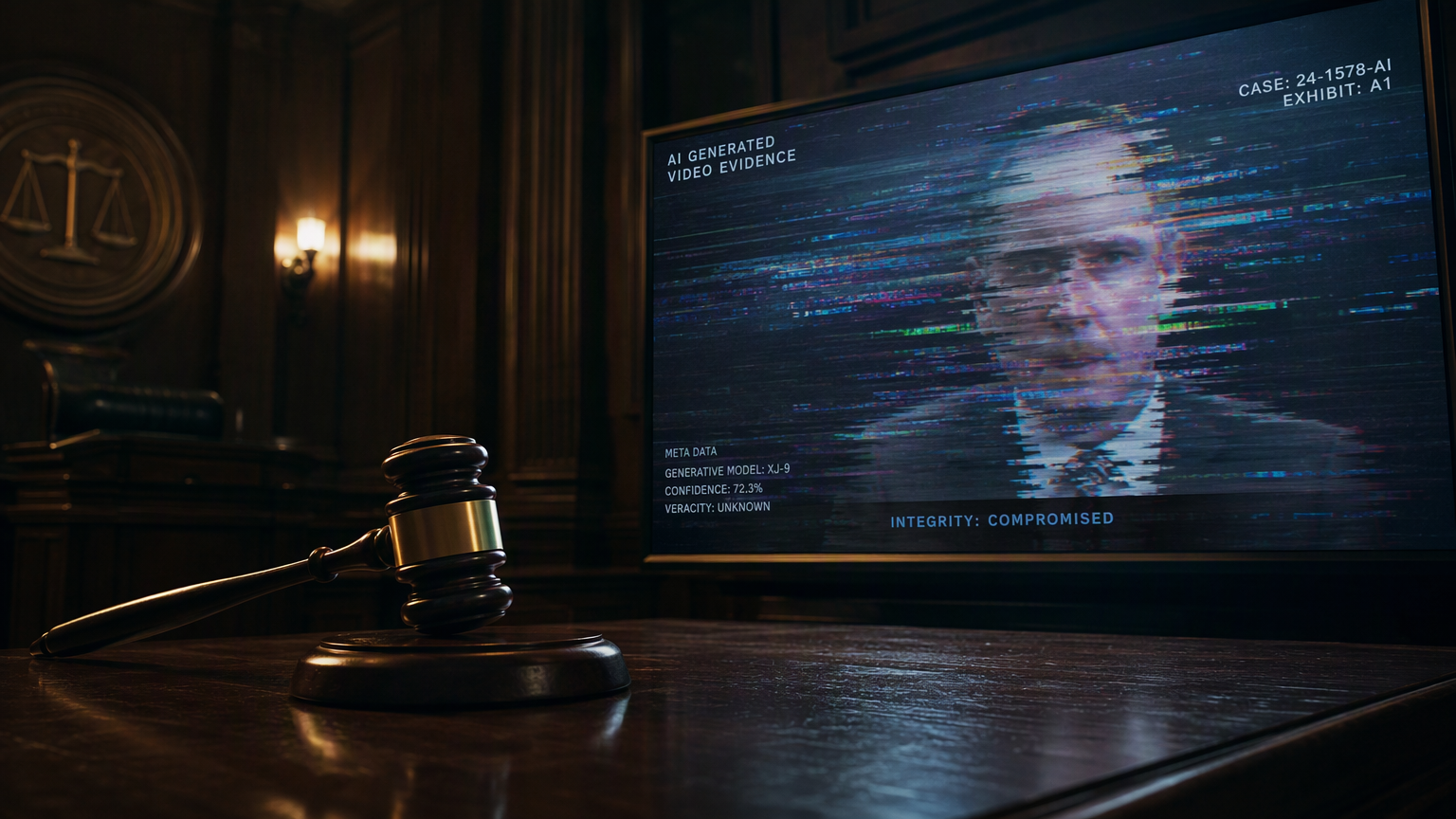
So here’s a sentence I never thought I’d type: a judge in Arizona let an AI-generated video of a dead man “speak” at his own killer’s sentencing hearing. And now that killer might walk free, or at least get a new sentencing, because of it. If that sounds like the plot of a Black Mirror episode someone pitched after one too many drinks, well, congratulations, we’re living in it now.
Okay, Wait, Back Up – What Actually Happened
The case centers on a road rage killing, the kind of senseless, split-second violence that ends one life and ruins a dozen others. The victim’s family, in what I’m sure felt like an act of love and grief, worked with an AI company to create a video of him essentially addressing the court. Giving a victim impact statement from beyond the grave, basically. His face, his voice, generated and animated to say words he obviously never got the chance to say.
I get it. I really do. If I lost someone I loved to a senseless act of violence, I think I’d want to give them a voice too, even an artificial one. That impulse makes total sense to me emotionally. But here’s the thing – a courtroom isn’t a memorial service. It’s not a place for emotional closure first and legal process second. It’s supposed to be the opposite, legal process first, always.
The Appeal
And that’s exactly what got this sentence quashed. The appeals court basically said, hold on, we can’t have fabricated footage, however well-intentioned, influencing how long someone sits in prison. Doesn’t matter if it was AI-generated out of love or AI-generated to deceive. The effect on a judge or jury can be the same: emotional manipulation dressed up as evidence.
Why This Should Terrify Literally Everyone, Not Just Lawyers
Look, I’m not a lawyer. I don’t even play one on TV. But you don’t need a law degree to see the problem here. Courts run on the idea that what you’re looking at is real, or at least that everyone agrees on what’s real and what’s argument. Once you let AI-generated reenactments or “statements” into that room, you’ve basically opened a door that is going to be really, really hard to close again.
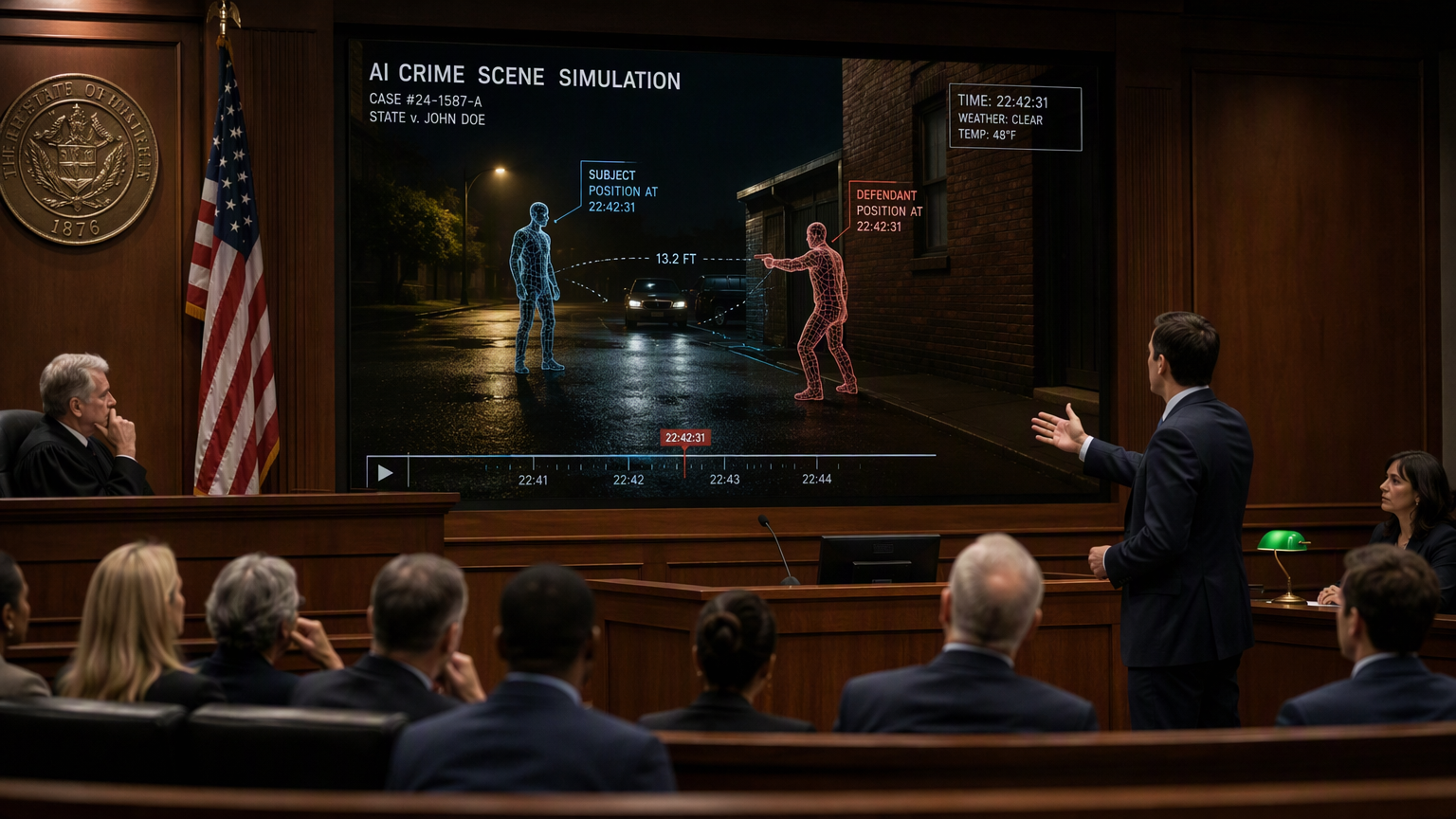
Think about it this way. If families can submit AI videos of victims, what happens next? Defense attorneys start building AI reconstructions of “what really happened” from their client’s perspective? Prosecutors generate hyper-realistic simulations of the crime designed to maximize emotional impact on a jury? None of that is far-fetched anymore. Not even a little.
I’ve seen this pattern before, honestly, just in different industries. Tech moves fast, the rules lag years behind, and by the time anyone writes a policy, the technology’s already three generations ahead of the law trying to catch it. Courts are usually slower than most institutions to adapt, which is normally a good thing (we probably don’t want judges experimenting with cutting-edge tools on people’s freedom), but it also means this stuff is going to keep slipping through cracks nobody’s patched yet.
“The question isn’t whether the technology was used with good intentions. The question is whether a courtroom can function if fabricated evidence, however sincere, gets treated the same as fact.”
The Part Nobody’s Really Talking About
Here’s what’s bugging me the most, if I’m being honest. Everyone’s framing this as an “AI problem.” It’s not really an AI problem. It’s an evidence problem that AI just made a thousand times easier to create.
Courts have always had rules about what counts as admissible evidence and what doesn’t. Hearsay, speculation, inflammatory material designed to prejudice a jury rather than inform them, all of that gets filtered out, at least in theory. The whole system is built on the idea that emotion shouldn’t override fact. A victim’s family grieving on the stand, through tears, in their own words? That’s allowed, and honestly it should be, that’s real grief from a real person testifying to real impact.
But a synthetic video built to look and sound like someone who can’t actually consent to how they’re being portrayed anymore? That’s not testimony. That’s a production. And productions can be edited, tweaked, “improved” to hit emotional beats more effectively. Not necessarily out of malice. Sometimes just because that’s what video editing software does, it nudges you toward the more dramatic cut.
Who Gets to Decide What the Dead Would Have Said
This is the question that actually keeps me up at night a little. The AI video wasn’t just showing the victim’s likeness, it was putting words in his mouth. Words someone else wrote, based on what they imagined he’d want to say. That’s an enormous amount of narrative power to hand to a grieving family, or really, to anyone. Not because their motives are suspect, but because none of us can actually know what someone would’ve said about their own murder trial. We can guess. We can hope. We can project. But we can’t know.
And that’s exactly the kind of uncertainty courts are supposed to be allergic to.
What This Actually Means
So where does this leave us? Honestly, kind of in a mess, and I don’t think that’s an exaggeration. This case is probably going to become a reference point, the “remember when” moment lawyers cite for the next decade whenever AI-generated content shows up in a legal proceeding. Expect a wave of new guidelines, maybe even legislation, specifically banning or restricting synthetic media in sentencing and trial phases. That feels inevitable now, not optional.
But I’ll also say this. I don’t think the answer is some blanket “ban all AI from courtrooms forever” rule, because that’s not realistic and honestly might not even be the right call. AI is already used in forensic analysis, in reconstructing timelines, in all sorts of legitimate ways. The issue isn’t the tool. It’s using the tool to simulate a person’s voice and words without airtight transparency about what’s fabricated versus what’s factual.
What I keep coming back to is this: grief makes people do things that feel right in the moment but weren’t built for the room they ended up in. That family wasn’t trying to game the system. They were trying to say goodbye in the loudest way technology would let them. And a court sentencing hearing just isn’t built to hold both grief and legal precision at the same time without something breaking.
Something broke here. Now we get to find out what we build back in its place.