So the Netherlands is building its own operating system. Not a new app, not some government portal redesign that’ll inevitably look like it’s from 2009 – an entire OS, meant to eventually kick Microsoft out of Dutch government computers. And honestly? Good for them.
So the Netherlands is building its own operating system. Not a new app, not some government portal redesign that’ll inevitably look like it’s from 2009 – an entire OS, meant to eventually kick Microsoft out of Dutch government computers. And honestly? Good for them.
Wait, The Dutch Government Is Doing What Now?
Here’s the deal: The Hague is pouring development effort into NixOS, a Linux distribution that’s got Dutch roots already baked into it. Nix, the package manager underneath it all, was first released back in 2003 by Dutch developers, and NixOS itself showed up three years later in 2006. So in a weird way, the Netherlands isn’t starting from scratch here – they’re kind of coming home to something their own people built two decades ago.
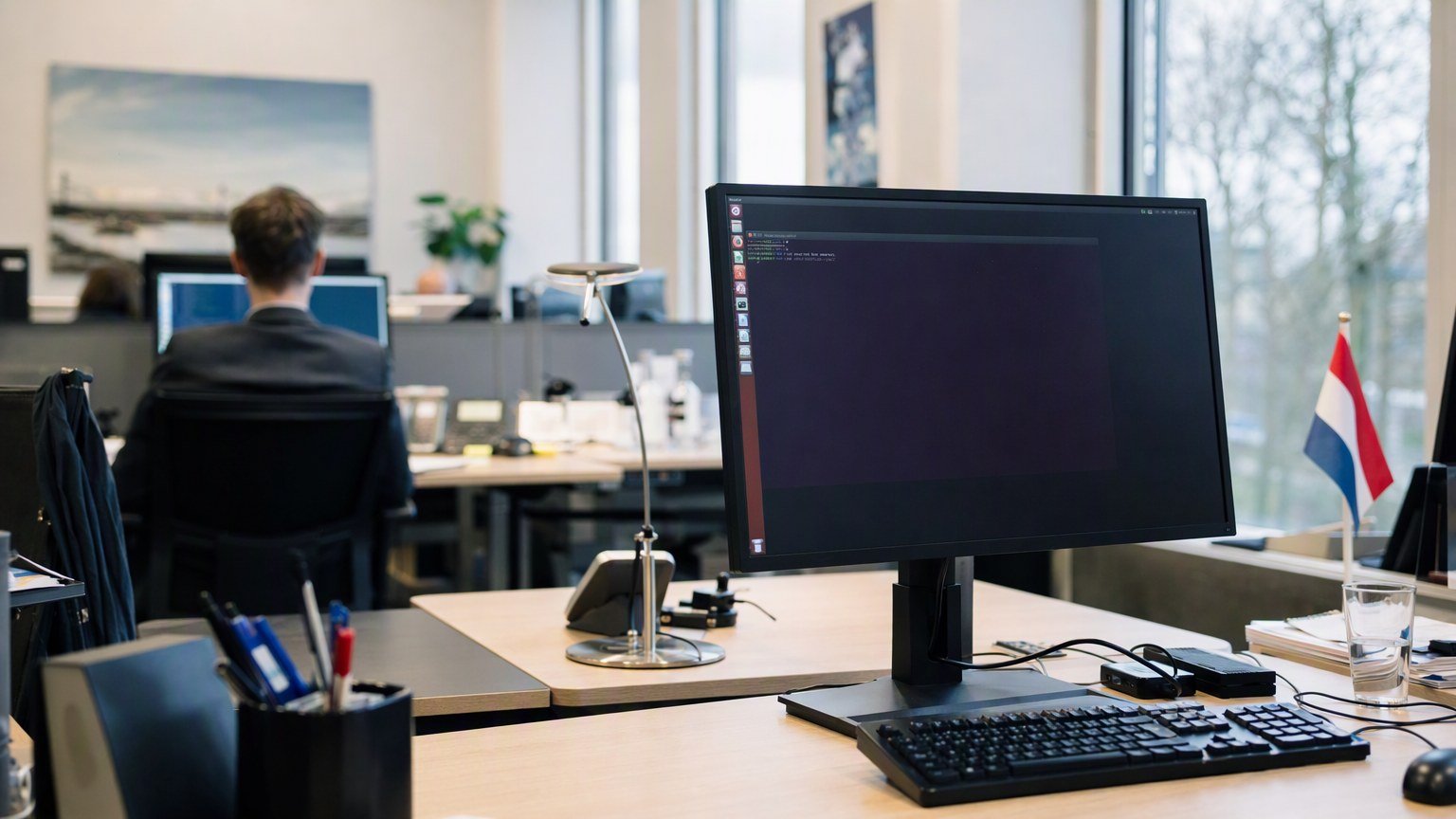
The plan, from what’s being reported, is to eventually swap out US-based software – Microsoft’s stuff most of all – for this homegrown OS plus a stack of open-source productivity tools. Think word processors, email, the whole office suite situation, but running on something nobody in Washington has any leverage over.
Why Nix Specifically?
Nix isn’t your average Linux flavor, and that’s kind of the point. It’s got this functional programming language for configuring systems, which basically means you can describe exactly what a machine should look like – every package, every dependency, every version – and reproduce that setup perfectly on another machine. No “well it worked on my computer” nonsense. For a government trying to standardize thousands of machines across different agencies, that’s not a nice-to-have, that’s the whole appeal.
But Why Now? Why All This Sudden Urgency?
This is the part that I think people are missing, or at least glossing over. This isn’t just the Netherlands waking up one day and deciding Linux is neat. This is a reaction. Dutch officials are, by most accounts, tired of being on the receiving end of threats from Washington aimed at EU institutions. And when your government’s email, your spreadsheets, your entire digital backbone runs on software controlled by a foreign company that answers to a foreign government… yeah, that starts to feel less like convenience and more like exposure.

Think about it from their angle for a second. If relations between the US and EU get rocky – and let’s be real, they have been rocky lately – what happens if licenses get pulled, or access gets restricted, or some executive order out of DC suddenly makes compliance a headache? That’s not a hypothetical anymore for a lot of European officials. That’s a Tuesday.
“Digital sovereignty” isn’t just a buzzword anymore – it’s becoming the actual design requirement for how governments build their IT infrastructure.
This Isn’t Just a Dutch Thing
And look, the Netherlands isn’t out here doing this alone in some weird vacuum. This is part of a bigger pattern across Europe – more countries are actively trying to build sovereign digital infrastructure instead of just defaulting to whatever Redmond or Silicon Valley ships them. Germany’s flirted with this idea for years (Munich’s whole LiMux saga is basically required reading if you want to understand how messy this can get). France has pushed open-source adoption in government for a while too. But the Dutch move feels different because they’re not just adopting an existing Linux distro off the shelf – they’re actively developing one that’s rooted in their own tech lineage.
I’ve seen this pattern before, actually, and it rarely goes smoothly on the first try. Government IT migrations are notoriously painful. Employees get used to Outlook, used to Word, used to the muscle memory of twenty years of Microsoft Office shortcuts, and ripping that out from under them tends to cause chaos before it causes savings. Munich eventually went back to Windows after years on Linux, and that’s the cautionary tale everyone in this space knows by heart.
So Will This Actually Work?
Not gonna lie, I’m cautiously optimistic but I’m not popping champagne yet. NixOS is powerful, but it’s also got a reputation – deservedly – for having a steep learning curve. The whole declarative configuration thing is amazing once you get it, but getting there is not nothing. Rolling this out across an entire government workforce, including people who maybe still struggle with two-factor authentication, is a completely different beast than a few engineers running it on their laptops.
That said, the fact that they’re building on something with Dutch origins gives this a better shot than most similar efforts. There’s already institutional knowledge there. There’s already a community. They’re not asking developers to learn some brand-new, untested thing from zero.
What This Actually Means
Here’s my honest take: this is less about Linux versus Windows and way more about control. The Netherlands doesn’t actually care if the icons look different or if people have to relearn a few keyboard shortcuts. What they care about is not having their government’s digital infrastructure held hostage – even implicitly – by decisions made in another country they don’t control.
And that’s the real story buried under the “Dutch government builds Linux OS” headline. This is a sovereignty play dressed up as a software migration. Whether it actually works depends less on how good NixOS is and way more on whether the Dutch government has the political patience to see a multi-year IT overhaul through to the end, something governments historically are not great at.
Still, if there was ever a moment for Europe to start taking its digital independence seriously, this is probably it. Keep an eye on this one. If the Netherlands pulls it off, don’t be shocked when half of Brussels starts asking NixOS devs for a meeting.