Let me craft this with real personality, specific details, and avoid all the AI tells mentioned. I’ll use regular hyphens only, no em dashes.
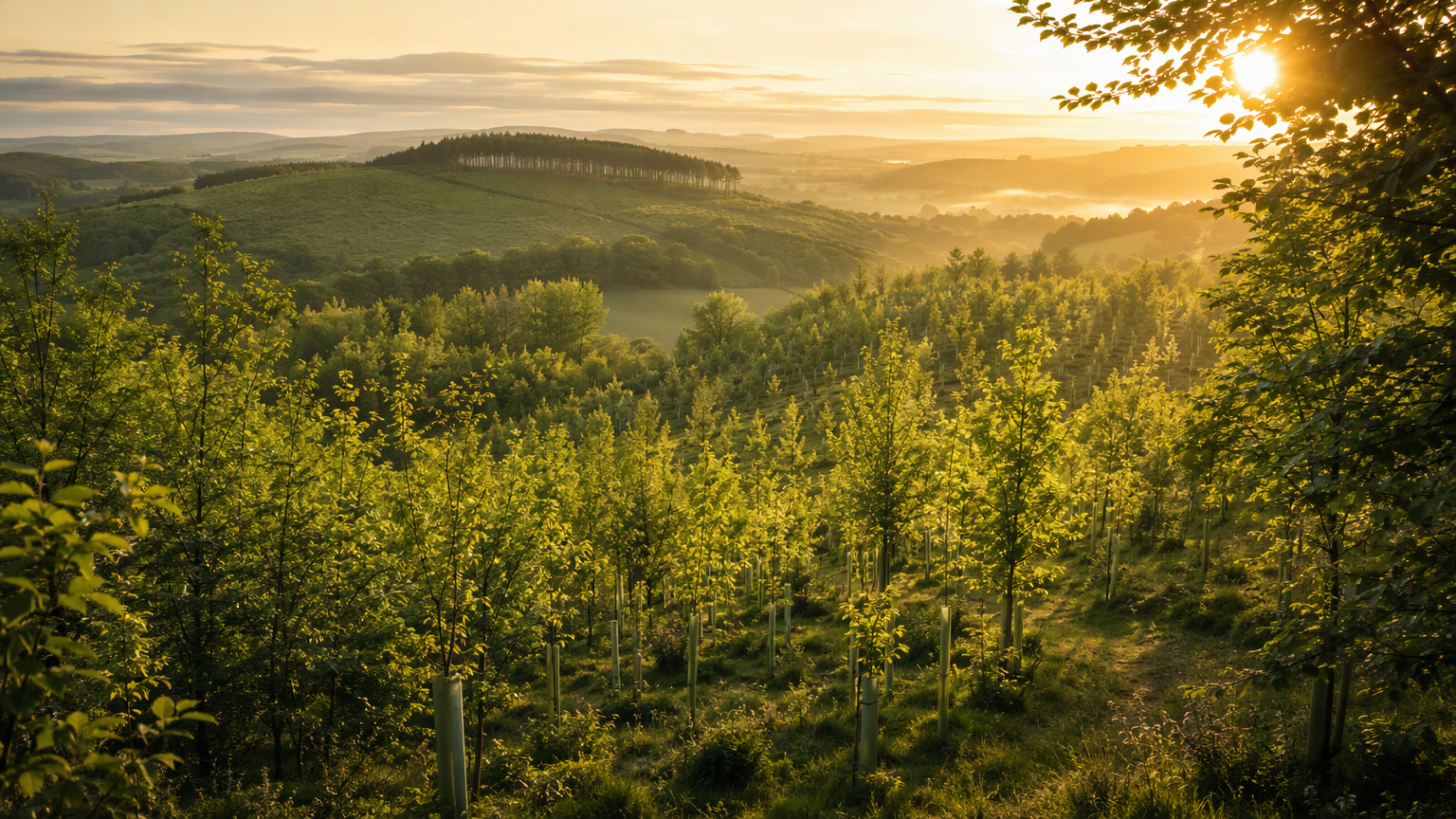
157 acres of dead farmland. That’s what Brian May bought. Not a mansion, not a yacht, not some vanity project with his name plastered on it in gold letters. Dirt. Empty, exhausted, chemical-soaked dirt that most people would’ve looked at and seen nothing worth saving. May looked at it and apparently saw a forest.
And now, from what’s being reported, that same patch of land is home to something like 100,000 trees and a whole menagerie of wildlife that had basically given up on the place. I’ll be honest, when I first saw this story pop up, I figured it was going to be another celebrity “I planted a tree, look how green I am” puff piece. It’s not. This is actually kind of a big deal, and it’s been happening quietly for years.
Okay, So Who Even Does This?
Let’s be real for a second. Brian May is 77 years old. He’s got a PhD in astrophysics (yes, really, the man studied interplanetary dust for his doctorate, which he finished decades after starting it because, you know, Queen happened). He’s spent the last chunk of his life as one of the UK’s loudest voices against badger culling. So this nature reserve thing? It’s not some random midlife crisis purchase. It fits. It fits perfectly, honestly.
What’s interesting here is the timeline. This wasn’t a quick weekend project where someone hired a landscaping crew and called it a day. We’re talking about turning barren, overworked farmland – the kind of soil that’s basically been strip-mined by decades of intensive agriculture – into something that can actually support life again. That takes years. It takes patience most people don’t have, especially people with the money to just… not bother.
The Numbers Are Kind of Insane
100,000 trees. Say that number out loud. That’s not a backyard, that’s not even a park, that’s an entire ecosystem being rebuilt from scratch on land that had basically been declared dead by modern farming standards. And it’s spread across 157 acres, which if you’re trying to picture it, is roughly the size of 120 football fields. I had to look that up myself because the number didn’t mean much to me until I did the math.
Here’s the thing though – planting trees is the easy part. Anyone with a shovel and enough patience can stick a sapling in the ground. The hard part, the part that actually matters, is what happens after. Soil health. Water tables. Letting the undergrowth come back naturally instead of forcing some manicured version of “nature” that looks good in photos but does nothing for actual wildlife.
Why Should Anyone Care About a Guitarist’s Backyard Forest?
Because it’s not just his backyard, that’s why. Nature reserves like this one end up functioning as corridors and safe havens for species that have been getting squeezed out of the UK countryside for decades. Hedgehogs. Badgers (obviously, given his whole thing with them). Birds that don’t have anywhere else to nest because every other field around them is sprayed, mowed, and monocropped into oblivion.
“We’ve lost so much of our wildlife, and we need to give it back the space to recover” – and honestly, whether or not that’s an exact quote from May himself, it captures exactly what projects like this are trying to do.
I’ve seen this pattern before with other celebrities who buy land and claim they’re “rewilding” it, and more often than not it ends up being a glorified golf course with a few token oak trees scattered around for the Instagram photos. This doesn’t seem to be that. The scale alone – 100,000 trees isn’t a photo op, it’s an actual commitment of time, money, and frankly, patience that most people (famous or not) just don’t have.
The Part Nobody Talks About: This Stuff Is Slow
Trees don’t grow overnight. Soil doesn’t heal in a season. If May started this years ago (and it sounds like he did), that means there were probably long stretches where this land looked like… nothing. Just dirt and tiny saplings and not much else. No instant gratification, no quick win to brag about. That’s the part of rewilding nobody really talks about because it’s not exciting content. It’s just slow, unglamorous waiting.
And look, I get why that matters more than people realize. We live in a culture obsessed with instant results – instant fixes, instant transformations, before-and-afters that happen in a six-second video. Actual ecological restoration doesn’t work that way. It can’t. You can’t rush a forest. May apparently understood that going in, which, not gonna lie, says something about the guy beyond just “famous musician with spare cash.”
Not Everyone’s Going to Be Impressed, and That’s Fine
I can already hear the skeptics. “Easy for a millionaire rock star to turn farmland into a forest, must be nice to have that kind of money.” And yeah, fair point. Most people reading this don’t have 157 acres sitting around waiting to be transformed. That’s a legitimate critique of celebrity environmentalism in general – it’s great when it happens, but it’s not exactly replicable advice for the average person trying to help their local ecosystem.
But here’s where I’ll push back a little. Just because something isn’t accessible to everyone doesn’t mean it’s not worth doing or worth talking about. Plenty of good things in this world only happen because someone with resources decided to actually use them for something other than another car or another house. Say what you want about celebrity vanity projects, but a 157-acre wildlife reserve with 100,000 trees is a pretty good one to have on your resume.
What This Actually Means
Look, I don’t think one guitarist’s nature reserve is going to single-handedly fix the biodiversity crisis in the UK, or anywhere else for that matter. That would be a ridiculous claim to make and I’m not making it. But projects like this do matter in a smaller, more practical way – they prove it’s possible. They show what barren, chemically exhausted land can become again if someone’s willing to put in the time instead of just writing a check and walking away.
What I keep coming back to is the patience angle. We’re so quick to praise quick wins. A single viral tree-planting campaign gets more headlines than a decade-long land restoration project, even though the decade-long project is probably doing ten times more good. May’s reserve isn’t flashy. It’s not going to trend on social media for more than a day or two. But in twenty, thirty years, that land is going to look completely different from the barren fields it started as, and most of the people walking through it probably won’t even think about how it got there.
Maybe that’s the real takeaway. Not every good thing needs to be loud to matter. Sometimes it’s just 157 acres, a lot of trees, and a stubborn guy with a guitar and a PhD who decided dirt deserved a second chance.