
An elderly woman walks into her bank, tries to do something completely mundane like update her account info or make a withdrawal, and somehow ends up getting flagged as a criminal. Not by a human teller who misread a name on a screen. By a machine. A facial recognition system that looked at her face and decided, with whatever confidence score these things spit out, that she matched a bank thief. Now she’s suing for $10 million, and honestly? Good. Let’s get into it.
So What Actually Happened Here
From what’s circulating, a grandmother got falsely accused of bank theft after an AI facial recognition system allegedly flagged her as a match for someone who’d committed fraud or theft at a bank. She wasn’t the person. Obviously. She’s a grandmother, not a criminal mastermind casing branches for a living. But once that algorithm made its call, it seems like the humans downstream just… went along with it. That’s the part that gets me every time with these stories – it’s never really just the AI’s fault. It’s the AI’s fault plus a whole chain of people who trusted a black box over their own judgment.
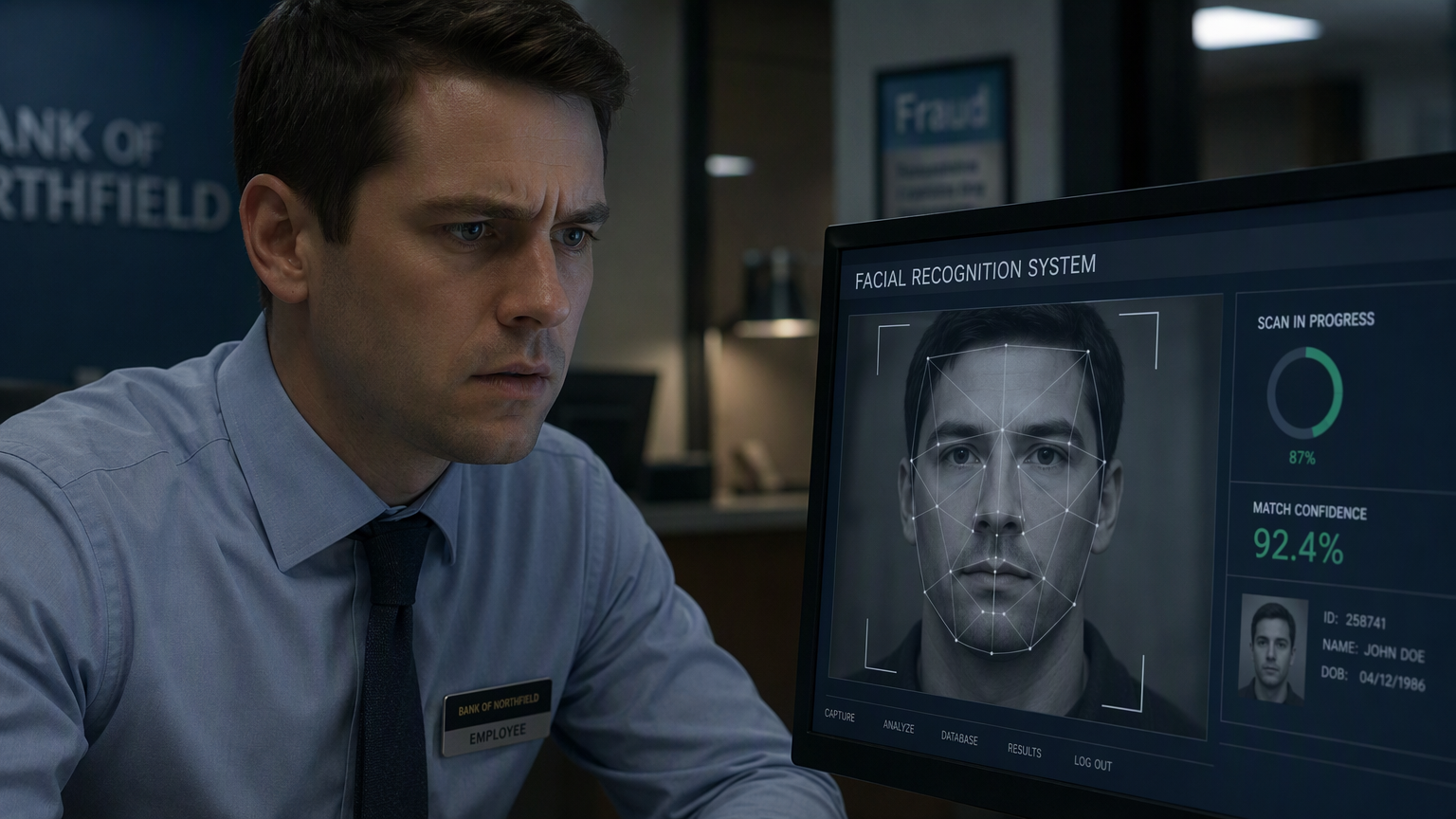
I’ve read about a bunch of these facial recognition misfire cases over the years, mostly involving police departments using flawed matching software, and there’s always this same pattern. Someone gets accused. They insist it’s not them. Nobody listens because “the computer said so.” And by the time it gets sorted out, the person’s already been humiliated, detained, or in this case apparently accused of theft they had nothing to do with. That’s not a glitch in the system. That’s the system working exactly as designed, which is honestly the scarier thought.
Why Grandmothers Keep Ending Up in These Stories
Not gonna lie, there’s something almost darkly comic about how often it’s older women who get caught up in these AI mishaps. Facial recognition tech has well documented accuracy problems with certain demographics, and older faces plus certain skin tones apparently trip these systems up more than a 25 year old’s face would. Researchers have been flagging this for years. So when a bank (or whoever ran this particular system) decided a grandmother was their thief, it’s not exactly shocking if you’ve been paying attention to how badly calibrated a lot of this software still is.
Why Is She Suing for $10 Million Specifically?
Ten million is a big number, and I’d bet the exact figure isn’t really about “here’s precisely what my suffering costs.” It’s a number designed to get attention, force a settlement conversation, and signal that this isn’t a nuisance complaint she’s filing to make a point. Defamation, false accusation, emotional distress, maybe reputational harm if this got reported to any kind of financial crimes database – all of that adds up fast, and lawyers know exactly how to stack those numbers to look big to a jury and terrifying to a bank’s legal department.
And here’s the thing – banks settle. A lot. Quietly. Because the alternative is a public trial where their AI vendor gets dragged through discovery and every other customer who ever got misidentified starts calling their own lawyers. Nobody wants that. So don’t be surprised if this case either settles for an undisclosed amount or just kind of disappears from headlines in six months while the actual terms stay sealed.
“I trusted my bank for decades, and in one afternoon a computer decided I was a criminal, and everyone just believed it.”

The Bigger Problem Nobody Wants to Say Out Loud
Look, this drives me nuts. Banks have been racing to bolt AI onto every part of their operations – fraud detection, customer service, identity verification – because it’s cheaper than paying humans to actually look at things carefully. I get the appeal. Fraud is a real problem and banks lose billions to it every year. But there’s a difference between using AI as one signal among many versus using it as judge, jury, and security guard all rolled into one.
What’s interesting here is that this case, whatever the actual outcome ends up being, is basically a preview of what’s coming. As more of these systems get deployed at scale, in more banks, more retail stores, more airports, we’re going to see more of these stories. Not fewer. The tech isn’t magically getting perfect just because companies keep insisting the newest version fixed all the old problems. It didn’t. It rarely does.
Who Actually Takes the Blame When AI Gets It Wrong
This is the question that never gets a clean answer. Is it the bank that deployed the system? The vendor that built the facial recognition model? The employee who saw a “match” flag pop up and didn’t bother double checking before treating a customer like a suspect? In most of these lawsuits, everybody points fingers at everybody else, and the actual accountability gets diffused into nothing. That’s probably the real reason lawsuits like this one keep landing on the “sue for a massive number” strategy – because good luck getting a clean admission of fault otherwise.
I’ve seen this pattern before with other tech failures too – self driving car crashes, algorithmic hiring tools rejecting qualified candidates, you name it. Somebody always says “well, the AI made an error,” like that’s a satisfying explanation. It’s not. An AI doesn’t operate itself. Someone built it, someone deployed it, someone decided not to add a human review step that might’ve caught this before a grandmother got accused of robbing a bank she probably visits to deposit birthday checks from her grandkids.
What This Actually Means
If I had to guess, this lawsuit is going to become one of those cases people cite for years, kind of like how certain data breach lawsuits became the reference point for privacy law arguments. Whether she wins outright, settles, or the case gets dragged out for years, the underlying issue isn’t going away. Banks, retailers, and basically every industry touching facial recognition are going to keep facing this exact scenario until either regulation forces better standards or enough lawsuits make it financially painful to cut corners on human oversight.
My honest take? This isn’t really an “AI is bad” story, even though it’s tempting to frame it that way. It’s a story about institutions trusting automation more than they trust actual verification, because verification costs time and money and automation feels efficient right up until it wrongly accuses somebody’s grandmother of theft. The tech will keep improving, sure. But improving tech doesn’t fix a culture that treats “the algorithm said so” as good enough. That part’s on the humans. It always was.