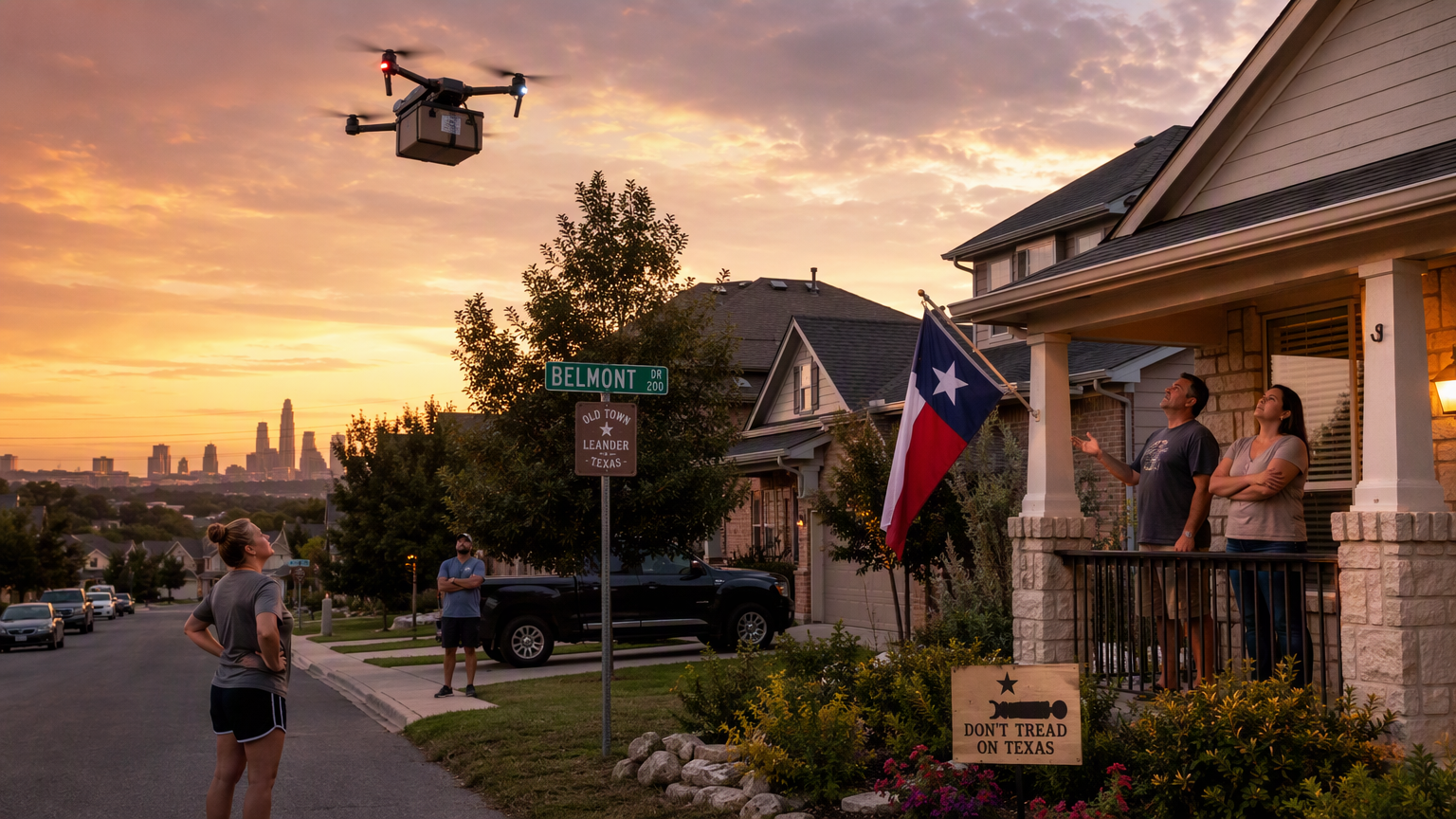
So there’s a neighborhood in College Station, Texas right now that sounds like it’s being buzzed by a swarm of angry weed whackers every single day, and no, that’s not a typo or an exaggeration. It’s Amazon’s Prime Air drones, and they’ve basically turned one unlucky patch of suburbia into a live noise experiment nobody signed up for. I read through the original discussion on this and honestly, my jaw kind of dropped at how bad it’s gotten.
Wait, It’s THIS Loud?
Here’s the thing about drone delivery – on paper, it sounds like the future. Package shows up in minutes, no truck idling in your driveway, no missed delivery notes taped to your door. Cool, right? Except residents near the Amazon drone hub in College Station are describing a sound that’s less “gentle hum of innovation” and more like a leaf blower had a baby with a chainsaw. Multiple people have compared it to a swarm of hornets. Not one or two cranky neighbors either – we’re talking about an entire community losing their minds over this, day after day.
And look, I get it. I’ve lived near a highway before. You adjust. Your brain kind of tunes it out after a while. But from what residents are saying, this isn’t background noise you learn to ignore. It’s sharp, it’s high-pitched, and it happens dozens of times a day because, well, that’s literally the business model. More drones, more deliveries, more money for Amazon. Nobody at that company is losing sleep over this (pun intended), because the noise complaints aren’t exactly showing up on their quarterly earnings calls.
Why Can’t They Just… Fix It?
You’d think this is a simple engineering problem, right? Quieter rotors, better sound dampening, maybe fly a little higher. And to be fair, drone companies have made some progress on this over the years. But “quieter” in engineering terms still means “audible from three blocks away and deeply annoying,” which, not gonna lie, isn’t much of a win for the people living underneath the flight path.
So Why Can’t Residents Do Anything About It?
This is the part that actually made me angry reading through it. Because drones fall under FAA jurisdiction, local governments have basically no authority to regulate where they fly or how loud they can be. Zoning laws that would normally protect a neighborhood from, say, a factory or a shooting range? Don’t apply here. The airspace above your house is federal turf once a drone enters it, and that means city councils, HOAs, even state lawmakers are stuck watching from the sidelines.
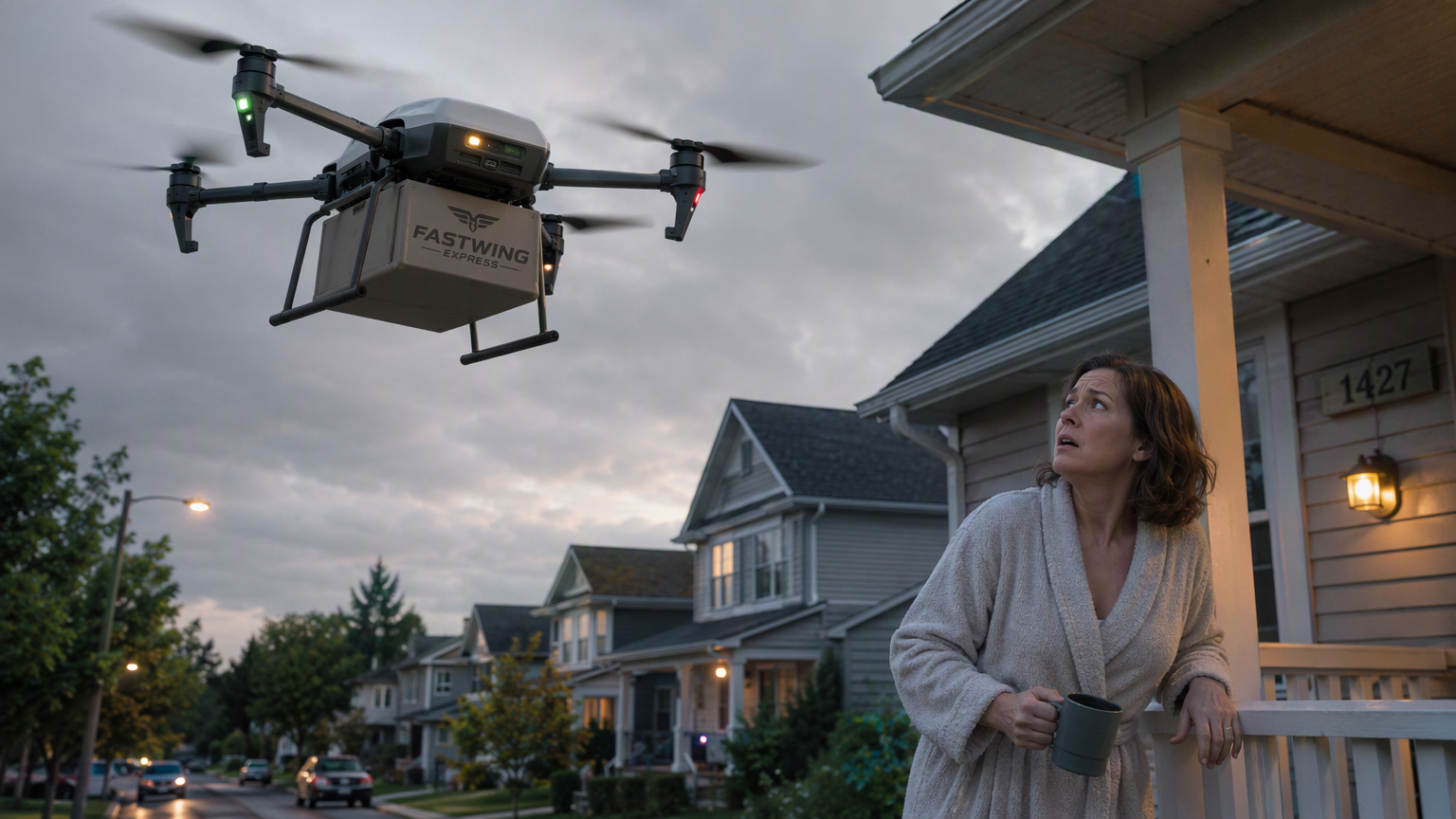
“We didn’t move next to an airport. We moved next to a quiet street, and now it feels like we live under one.”
That quote (paraphrased from the sentiment all over that Reddit thread) pretty much sums up the frustration. People bought homes expecting a normal residential soundscape – dogs barking, kids playing, the occasional lawn mower – and instead they got what amounts to a low altitude flight path with zero say in the matter. Property values, mental health, basic quality of life… all secondary to “innovation,” apparently.
The Bigger Problem Nobody’s Talking About
Here’s what’s interesting to me, and it’s bigger than just one neighborhood in Texas. This is a preview. Amazon isn’t the only company chasing drone delivery – Walmart, Google’s Wing, and a handful of startups are all racing toward the same finish line. If College Station is the test case and this is how it’s going with a relatively small fleet, what happens when this scales up to dozens of cities? What happens when it’s not just one neighborhood getting buzzed, but entire zip codes?
I’ve seen this pattern before with tech companies moving fast and asking permission later. Scooters flooded sidewalks before anyone figured out where they should be parked. Ride share apps disrupted taxi regulations that took decades to build. Drones feel like they’re following the exact same playbook: deploy first, deal with the noise (literal and political) later. The FAA’s rules were written for a world of airplanes and helicopters, not swarms of buzzing delivery bots doing loops over people’s backyards fifty times a day. Regulation always lags behind tech. Always. It’s basically the one constant in every one of these stories.
Amazon’s Response (Or Lack Thereof)
From what I can tell, Amazon’s public stance has been pretty standard corporate speak – they’re “committed to being good neighbors” and “continuously improving” the drone technology. Sure. That’s the kind of statement that sounds nice in a press release and means basically nothing to someone trying to nap at 2pm while a drone does a flyby with their cat food order.
To be fair, I don’t think Amazon is out here twirling a mustache trying to torture suburban Texas. They probably didn’t fully anticipate how concentrated and constant the noise complaints would get. But “we didn’t mean for this to be annoying” doesn’t really fix the fact that it is annoying, and residents don’t have a real mechanism to push back on. That’s the actual failure here. Not that the tech is loud (all new tech is loud until it isn’t), but that there’s no accountability loop connecting the people affected to the people making decisions.
What This Actually Means
Look, I’m not anti-drone. I actually think delivery drones could be genuinely useful someday – rural areas with long delivery times, medical supply drops, emergency situations where minutes matter. There’s real potential here. But rolling this out in dense residential neighborhoods without solving the noise problem first, and without giving residents any regulatory recourse, feels like putting the cart way before the horse. Or maybe the drone before the flight plan.
My honest prediction? This is going to keep happening in more cities before anything changes, because right now there’s zero financial incentive for Amazon to slow down and every incentive to keep scaling. The complaints will pile up, maybe a local politician will make some noise (last pun, I promise), and eventually the FAA or Congress will have to actually update rules that were never built for this. But that’s going to take years, and in the meantime, one neighborhood in Texas is stuck living under a permanent hornet’s nest that never actually has any hornets in it.
So the next time someone tells you the future is quiet and clean, maybe ask the people in College Station how their afternoons have been going lately.