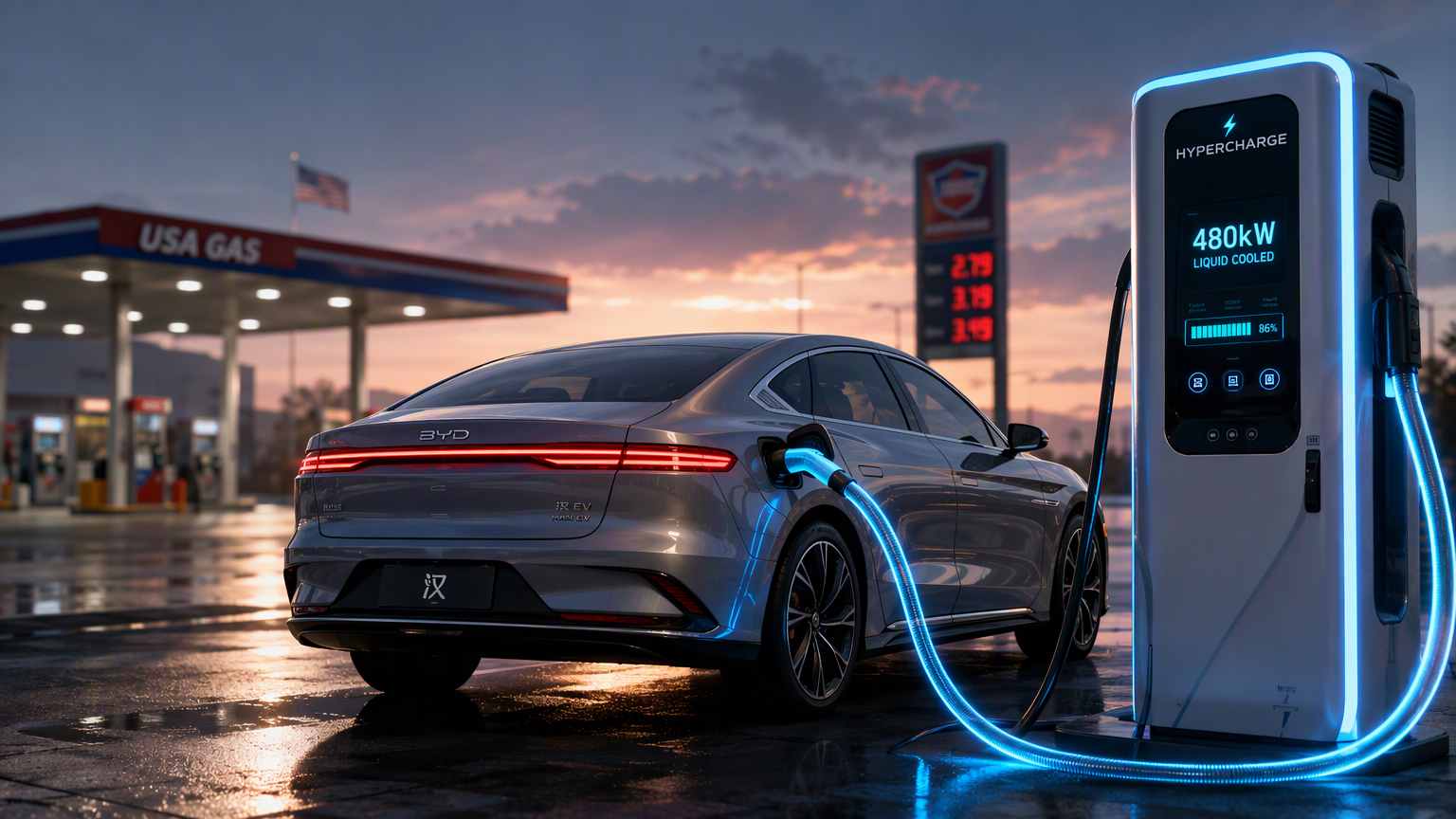
So China just figured out how to charge an electric vehicle to 70% in under five minutes. Five. Minutes. Meanwhile, I’m over here in the States waiting 20-30 minutes at a Tesla Supercharger wondering why my “cutting-edge” EV feels like it’s stuck in 2015. This isn’t just embarrassing – it’s a wake-up call that we’re maybe not ignoring fast enough.
The Numbers That Should Make Us Uncomfortable
Here’s what’s actually happening: Chinese EV makers like NIO, XPeng, and a bunch of others you’ve probably never heard of are rolling out charging stations that can pump 480 kW or more into a battery. For context, that’s roughly double what most Tesla Superchargers in the US can do. And the real kicker? They’re not just building a few showcase stations for press releases. They’re deploying this stuff at scale.
I mean, look – I’ve been following the EV space for years now, and there’s always been this assumption that America would lead the charge (pun completely intended). We had Tesla. We had the infrastructure plans. We had the, you know, innovation reputation. But somewhere along the way, China just… lapped us. And not by a little bit.
The technical specs are pretty wild. We’re talking about charging systems that can handle 600 kW peaks, with liquid-cooled cables that actually make it possible to transfer that much power without melting everything. Some of these stations are hitting 5.5C charging rates, which – if you’re not a battery nerd – basically means they’re filling up batteries insanely fast relative to their capacity.
But Wait, What About Battery Degradation?
Yeah, I know what you’re thinking. Because I thought it too. Charging a battery that fast has got to destroy it, right? That’s been the conventional wisdom forever. Fast charging equals faster degradation equals your expensive EV turns into a paperweight in three years.
Except… it’s not playing out that way. At least not according to the data coming out of China. These companies are using newer lithium iron phosphate (LFP) batteries and some fancy silicon-anode tech that apparently handles ultra-fast charging way better than older battery chemistry. NIO claims their batteries can handle this kind of charging without significant degradation over the vehicle’s lifetime. Now, do I take that claim at 100% face value? Not exactly. But the fact that they’re betting their entire business model on it suggests they’re pretty confident.
So Why Is America Still Stuck at 350 kW?
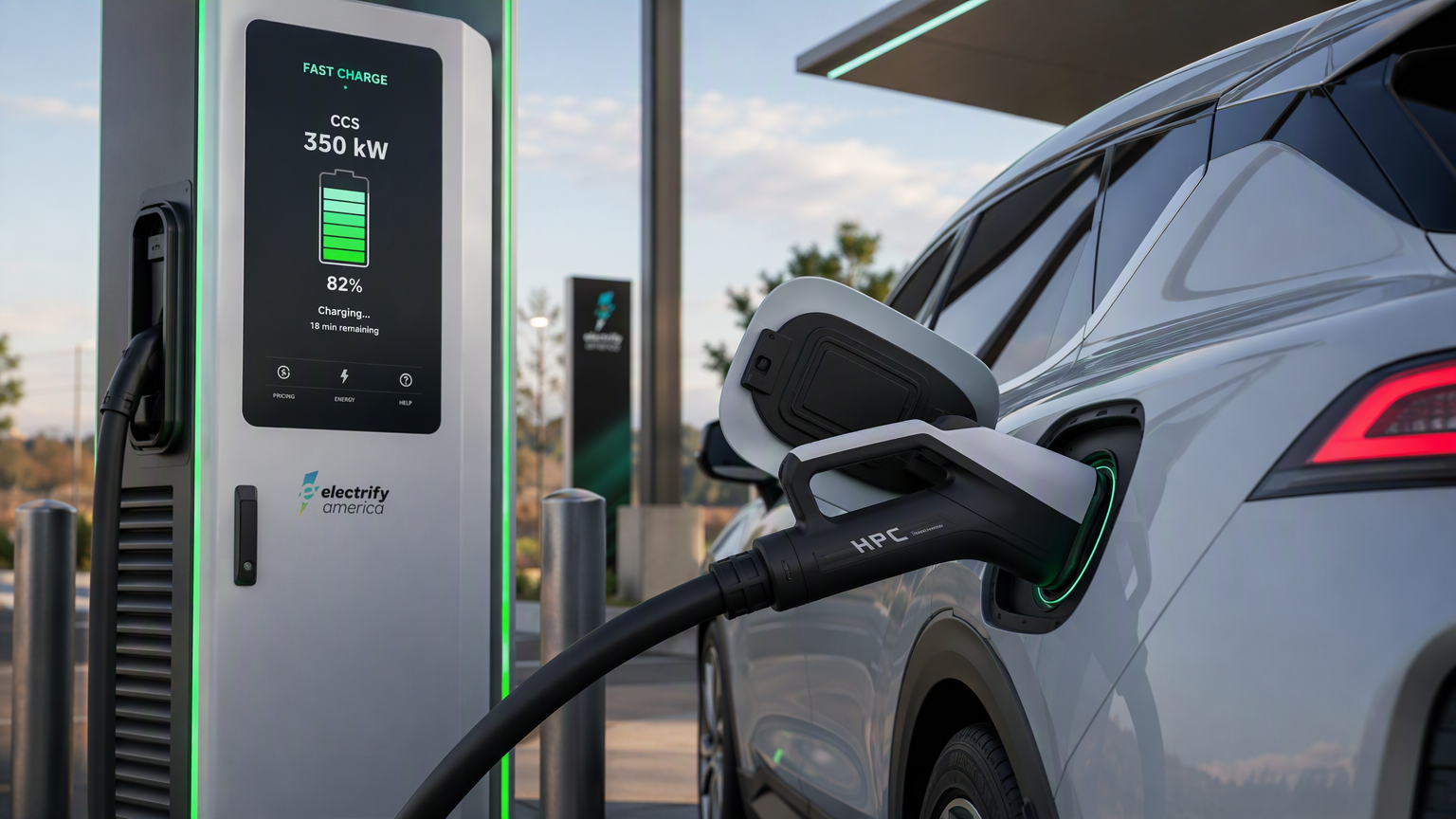
This is where it gets frustrating. Because it’s not like we don’t have the technology. We do. Electrify America has some 350 kW chargers scattered around. Tesla’s been working on their V4 Superchargers. But the rollout is slow, the coverage is spotty, and – here’s the thing that really gets me – there doesn’t seem to be any urgency.
Part of it is infrastructure. Our electrical grid in a lot of places just can’t handle the kind of power delivery you’d need for widespread 500+ kW charging. China’s been building out their grid specifically with EVs in mind for the last decade. They planned for this. We’re kind of retrofitting as we go, which is never the optimal approach.
But honestly? I think it’s also a mindset thing. American EV companies – Tesla included – have been operating under this assumption that 20-30 minutes of charging is “good enough.” Get a coffee, stretch your legs, whatever. And sure, it’s workable. But it’s not competitive with filling up a gas tank, and it’s definitely not competitive with what China’s doing now.
“The US is still debating whether EVs are even viable while China is already solving the last major pain point that was holding them back.”
The Bigger Picture That Everyone’s Missing
Look, this isn’t just about charging speeds. It’s about what this represents. China’s not just catching up in EVs – they’re defining what the next generation looks like. And they’re doing it faster, cheaper, and increasingly better than we are.
I’ve watched this pattern before with solar panels, with batteries, with high-speed rail. America invents something or pioneers a technology, then gets complacent, and suddenly we’re buying everything from overseas because they actually scaled it while we were still arguing about subsidies and regulations.
And here’s what really keeps me up at night: the vehicles themselves are getting better too. Chinese EVs aren’t the joke they were five years ago. Companies like BYD are making cars that are legitimately competitive with anything Tesla or GM is producing. Better interiors in some cases. More features. And now, way faster charging.
The US market is still somewhat protected – tariffs, different safety standards, the whole import rigmarole. But that’s not going to last forever. And when Chinese EVs with sub-5-minute charging eventually make their way here (and they will), American automakers are going to have a really uncomfortable reckoning.
What About Tesla?
Tesla’s in a weird spot here. They built the best charging network in America, no question. But it’s starting to look… dated? The Supercharger network is great for Tesla owners, but it’s not pushing the envelope anymore. Elon’s been talking about faster charging for years, but the actual rollout of V4 stations has been glacial. And meanwhile, the competition – both in China and from European manufacturers – is moving faster.
Not gonna lie, this worries me. Tesla’s whole value proposition was being years ahead of everyone else. But if you can get a Chinese EV that charges in five minutes versus a Tesla that takes 25, that gap starts to matter. A lot.
What This Actually Means
Here’s my honest take: we’re watching the American auto industry lose its edge in real-time, and most people don’t even realize it’s happening. We’re still focused on gas vs. electric debates while China’s already moved on to optimizing the entire EV experience.
Can we catch up? Sure. Probably. The technology exists. But it requires actually prioritizing this stuff – investing in grid infrastructure, pushing automakers to adopt newer battery tech, building out charging networks that don’t feel like afterthoughts. And I’m not seeing that urgency from policymakers or most American car companies.
What I do see is a lot of “well, 30 minutes isn’t that bad” and “range anxiety is overblown anyway” takes. Which, fine. But that’s not how you win. That’s how you become the cautionary tale in someone else’s business school case study about market disruption.
Five minutes. That’s what we’re up against now. And if we keep telling ourselves that good enough is actually good enough, we’re going to wake up one day and realize the race is already over.