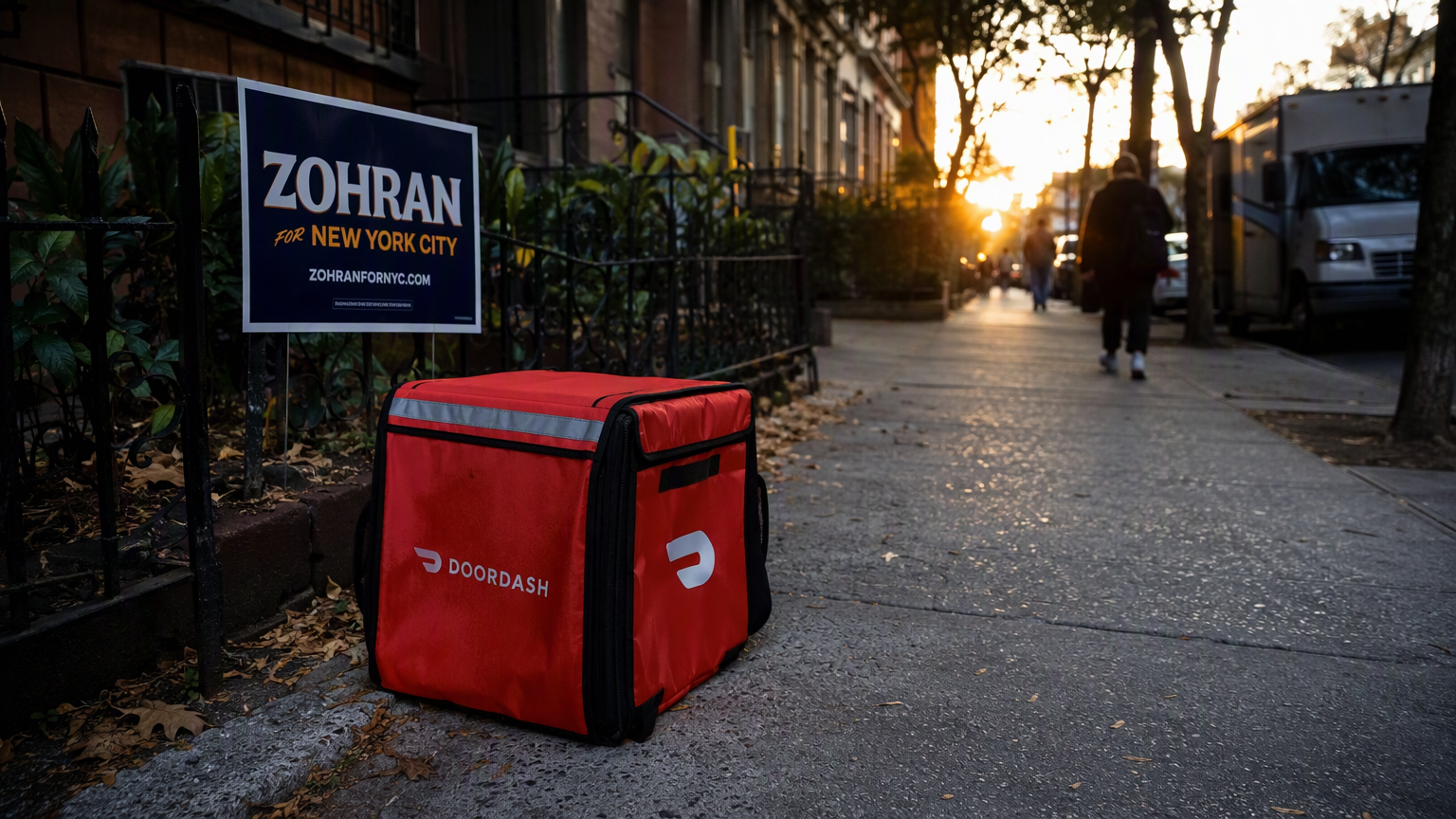
DoorDash dropped $1.4 million trying to keep Zohran Mamdani out of Gracie Mansion. That’s not a typo. Not $140,000. Not $14,000. One point four million dollars, funneled into a mayoral race in a city where the company already operates like it owns the sidewalks. And now that Mamdani’s actually won, the “why” behind that number is looking a lot less like normal corporate politics and a lot more like a company that saw something coming and panicked.
So What Was DoorDash So Scared Of?
Let’s not dance around it: minimum pay standards for delivery workers. That’s the thing. New York’s gig delivery minimum wage rules have been a thorn in the side of every app in this space, DoorDash included, and Mamdani has been pretty vocal about siding with workers over platforms on this stuff. Not exactly a shocking position for a democratic socialist to hold, but apparently shocking enough that DoorDash decided to open up the checkbook in a big way.
Here’s the thing though, when a company spends this kind of money against a single candidate, it’s not because they’re worried about “business climate” in some vague sense. It’s because they’ve run the numbers and they know exactly what a hostile mayor could cost them. DoorDash isn’t dumb. They know their margins in New York, they know how many delivery workers are logging into the app every day, and they know what happens to those margins if the city starts enforcing pay floors with actual teeth.
The Money Trail Tells Its Own Story
Money in politics always tells you what a company is actually afraid of, way more honestly than any press release ever will. DoorDash can put out all the statements it wants about “supporting a thriving delivery ecosystem” or whatever corporate speak gets workshopped in a boardroom somewhere. But $1.4 million says something else entirely. It says: this guy might actually make us pay our workers more, and we cannot let that happen.
Why Did It Backfire So Spectacularly?
Mamdani won anyway. And I have to say, there’s something almost poetic about that. You spend over a million bucks trying to stop a guy, and the voters just… don’t care. Or worse for DoorDash, maybe they cared in the opposite direction. Nothing motivates New Yorkers quite like watching a massive corporation try to strong-arm a mayoral race.
Think about who’s actually voting in these elections. A huge chunk of New York’s population either works gig jobs, knows someone who does, or has a very direct relationship with delivery workers as customers who tip and interact with these people constantly. When DoorDash throws that kind of money at defeating a candidate who’s promising better conditions for those same workers, it doesn’t exactly read as a neutral business decision. It reads as exactly what it is.
“Corporations don’t spend seven figures on politics because they’re bored. They spend it because they’re scared of losing money, and that fear is usually pretty specific.”
This Isn’t Really About Mamdani
Let’s zoom out for a second, because I think the Mamdani angle, while juicy, is kind of a distraction from the bigger pattern here. This is happening in cities all over the country. Gig economy companies, Uber, Lyft, DoorDash, Instacart, you name it, have been pouring money into local and state elections for years now, trying to shape labor laws before they get written. California’s Prop 22 fight cost these companies over $200 million. Two hundred million. For one ballot measure.
New York’s $1.4 million against a single mayoral candidate is small potatoes by comparison, but the strategy is identical. Get ahead of the regulation. Buy the outcome before the vote even happens. And when that fails, which it clearly did here, you’re left with a company that’s now on record, very publicly, trying to stop a popular candidate from winning because he wanted delivery workers to make more money.
The Optics Problem Nobody at DoorDash Seems to Have Considered
Not gonna lie, this is a pretty bad look. Even if you don’t care about the politics of it at all, from a pure PR strategy standpoint this seems like a mess. You’re now the company that spent over a million dollars trying to defeat a guy who wanted your workers paid fairly, and he won anyway, so now you have to work with a mayor who knows exactly how you tried to stop him. That’s not a great starting point for any kind of productive relationship going forward, is it?
What This Actually Means
I think the real story here isn’t really about Mamdani at all, if I’m being honest. It’s about what happens when companies get a little too comfortable throwing money at problems instead of, you know, actually fixing them. DoorDash could’ve spent that $1.4 million lobbying for better regulations, working with the city on a compromise, literally anything else. Instead they bet big on stopping a guy from getting elected, and it didn’t work.
Now they’ve got a mayor who’s already shown he’s not afraid of them, and they’ve spent a small fortune proving to every gig worker in the city exactly whose side they’re on. That’s the part that sticks with me. Companies love to talk about being “on the side of workers” in their marketing, their app notifications, their little thank-you messages after every order. But when the actual money shows up, it tends to tell a very different story. And in this case, the story cost $1.4 million and still ended in defeat.
What happens next in New York is anyone’s guess. But I’d bet DoorDash is thinking twice before it writes another check like that one.