So the White House built an arcade website. And Tetris, of all things, sent them a legal letter about it. If you’d told me a year ago I’d be writing a sentence like that, I would’ve laughed you out of the room. But here we are.
Wait, The White House Made Video Games?
Yeah. Apparently someone on the digital team thought it’d be a fun idea to launch a browser-based arcade full of parody games, the kind of thing that riffs on classic titles everyone recognizes instantly. Think blocky falling shapes, pixelated characters, that whole retro aesthetic that’s basically shorthand for “nostalgia” at this point. The problem? One of those games looked a little too much like Tetris. Not “inspired by,” not “in the style of” – like, actually Tetris, just with different branding slapped on top.

And that’s when things got messy. The Tetris Company – yes, that’s a real entity, and yes, they guard this brand like a dragon sitting on gold – fired off a legal warning. Cease and desist energy, basically. I have to admit, there’s something almost funny about imagining a government office getting a strongly worded letter from the company that owns the rights to falling blocks. But copyright law doesn’t care how absurd the optics are.
The Legal Angle Nobody Wants to Talk About
Here’s the thing about Tetris and its parent company: they’ve spent decades in courtrooms defending the “look and feel” of the game, not just the code. There was a famous case back in 2012, Tetris Holding v. Xio Interactive, where a court ruled that even if you rewrite the game from scratch, if the visual experience feels like Tetris, you’re still infringing. That’s a big deal legally. It means you can’t just swap out colors and call it original. The White House’s arcade apparently didn’t get that memo, or maybe someone did and figured, eh, who’s gonna sue the federal government over a browser game?
Turns out, Tetris will.
Why Would The White House Even Do This?
Good question. From what I can tell, this was part of some broader push to make government websites feel more “engaging” or whatever buzzword got tossed around in a planning meeting. I get the impulse, honestly. Government sites are famously boring, clunky, stuck in like 2009 design language. Someone probably thought a little arcade corner would make things feel fresh, maybe even a little fun. Not a terrible idea on paper.
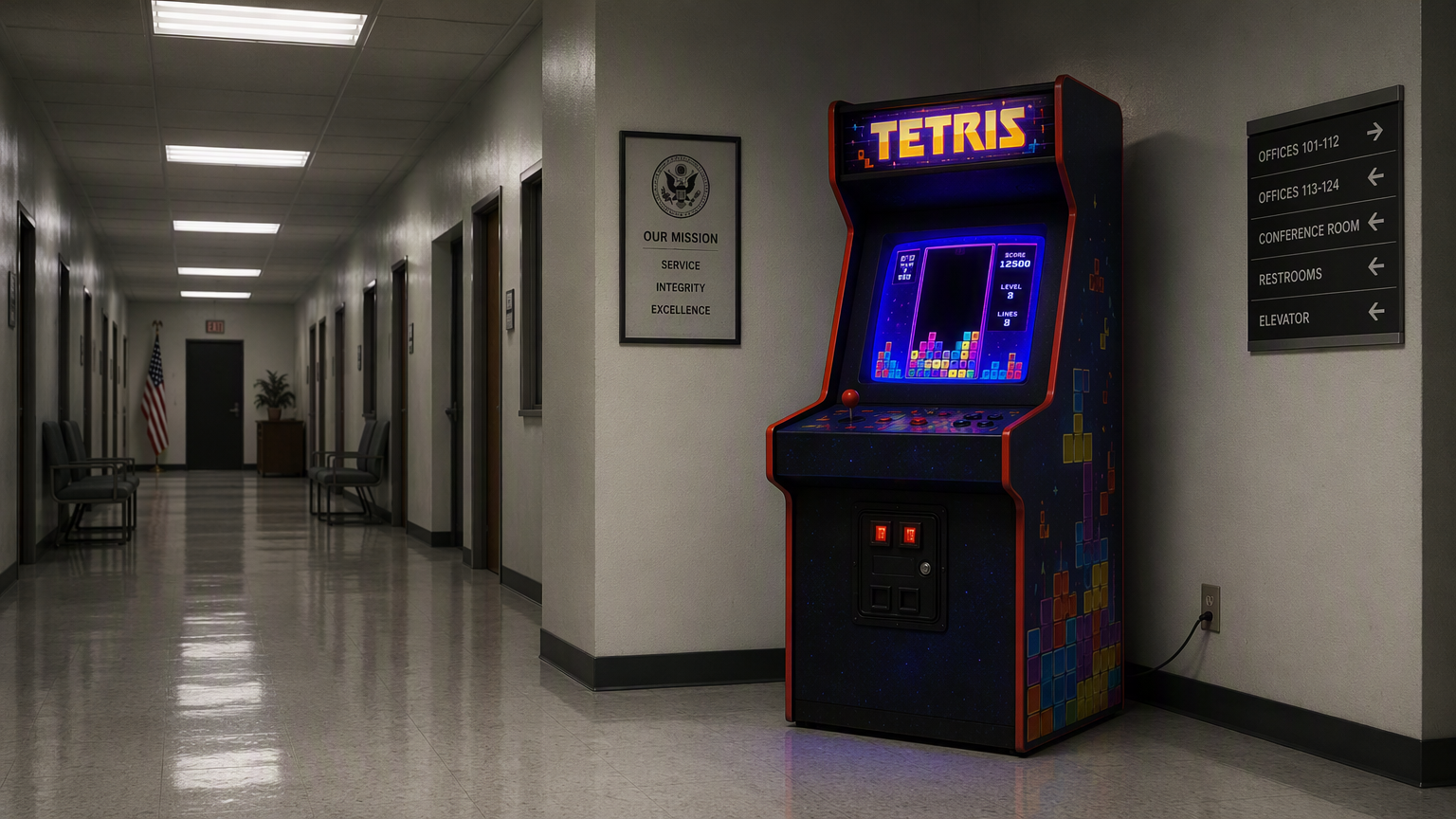
But execution matters. And execution here seems to have involved either lifting existing game mechanics wholesale or hiring someone who leaned way too hard into “homage” without checking if that homage crossed into legally risky territory. Either way, somebody dropped the ball. I’ve seen this pattern before with smaller companies and indie devs who don’t have legal teams double-checking their work, but the White House? They’ve got lawyers. Lots of them. This should’ve been caught before it ever went live.
“You’d think an entire legal department would flag ‘hey, this looks exactly like a billion-dollar franchise’s flagship game’ before hitting publish.”
The Internet’s Reaction Was… Predictable
Reddit found this thread almost immediately, and the comments basically wrote themselves. People pointing out the absurdity of a government agency getting IP-checked by a puzzle game company. Others making jokes about tetrominoes being classified information now. A few people actually defending the arcade idea, saying government sites need more personality and this was at least a step in a fun direction, even if the legal side flopped.
And look, I get both takes. The idea itself? Kind of charming, not gonna lie. The execution? A mess. Big mess. The kind of mess that makes you wonder who actually reviewed this before it launched, because either nobody did, or somebody did and just didn’t care enough to flag the obvious problem sitting right there in plain sight.
This Isn’t Just About One Game
What’s interesting here is this probably isn’t really about Tetris blocks specifically. It’s about precedent. If a government website can just recreate a beloved, heavily litigated game without consequence, that opens a door nobody in the IP world wants opened. Companies protect their intellectual property fiercely because losing even one case, even a small embarrassing one against a federal website, weakens their position everywhere else. Tetris Company isn’t just annoyed about a browser game. They’re protecting decades of legal groundwork.
It’s not entirely clear yet whether the White House pulled the game down immediately or if there’s some back-and-forth happening behind closed doors. These things tend to move slower than people expect, especially when government bureaucracy gets involved. But my guess? That parody game is quietly disappearing from the arcade page sometime very soon, probably without much fanfare or acknowledgment.
What This Actually Means
Honestly, this whole situation is a pretty perfect little snapshot of what happens when good intentions meet sloppy execution. Someone wanted to make government digital services feel more human, more playful, and instead ended up creating a legal headache that’s now getting written about by outlets that normally cover, you know, actual policy. That’s not a great trade.
I don’t think this ends in some dramatic courtroom showdown. Realistically, the arcade game quietly gets pulled, maybe a statement gets issued saying it was “removed out of respect for intellectual property rights,” and everyone moves on within a week. But it’s a good reminder that even the biggest, most resourceful institutions can trip over something as basic as checking whether their fun little side project is legally distinct from a wildly famous, aggressively protected franchise.
Next time someone in a government office says “let’s make this more fun,” maybe just… run it by legal first. Seems obvious. Apparently it wasn’t.