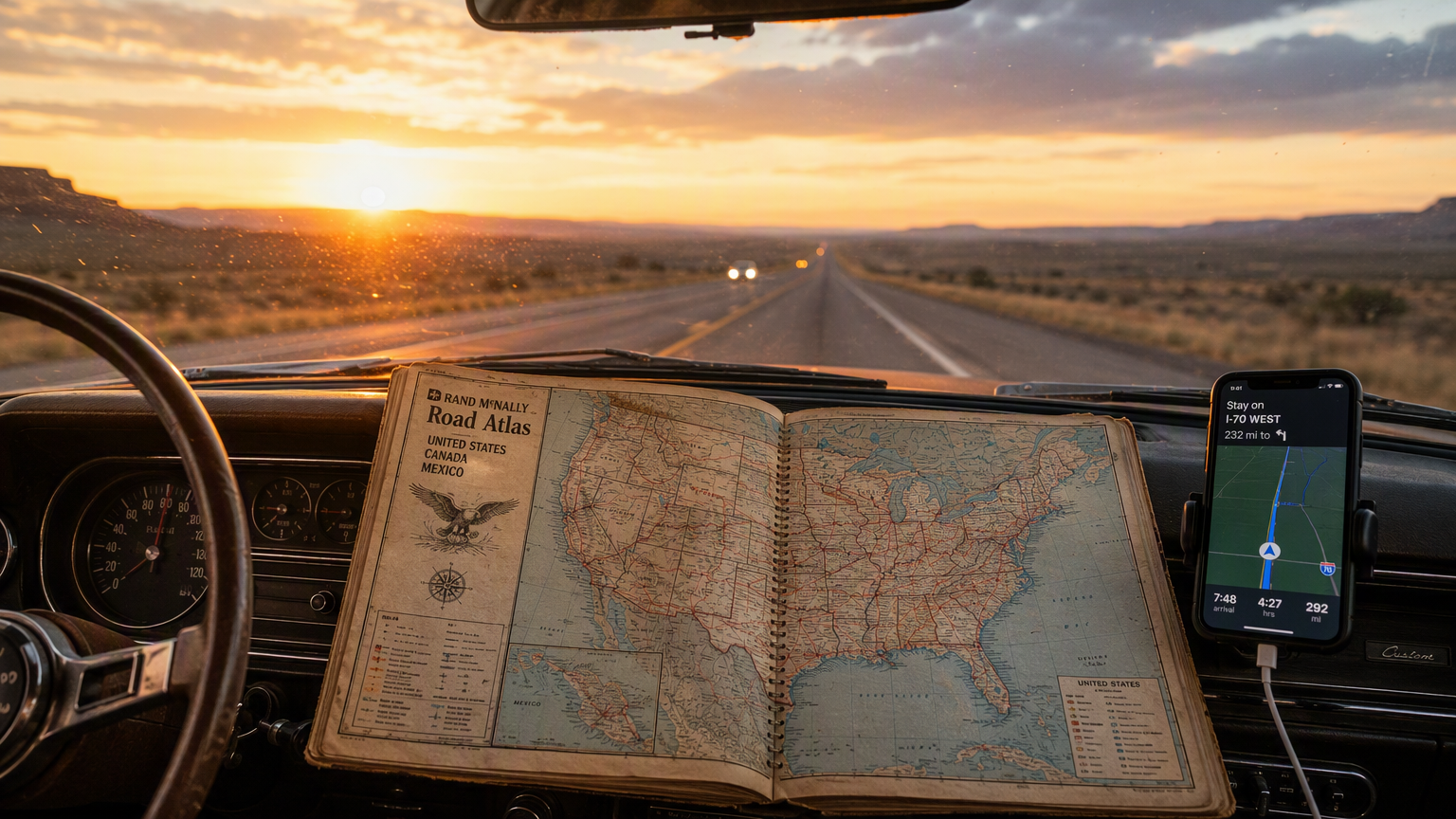
Remember MapQuest? The website your parents used to print out turn-by-turn directions before every road trip, complete with 40 pages of paper because heaven forbid step 14 got cut off? Yeah, that MapQuest. It just clawed its way to the No. 1 spot in the Navigation category on the app store, beating out Google Maps and Waze. And the reason why is honestly kind of glorious.
MapQuest refused to rename Lake Ontario. That’s it. That’s the whole story, more or less. While other mapping apps have been quietly bending to political pressure and renaming things to match whatever administration happens to be in charge at the moment, MapQuest just… didn’t. And people noticed. Big time.
Wait, Why Was Anyone Renaming a Lake?
Okay so here’s the backstory, because I know some of you are confused. This whole thing kicked off after Google Maps changed the Gulf of Mexico to the “Gulf of America” for U.S. users, following an executive order. That move got a ton of backlash, and honestly, it opened up this weird can of worms about who gets to decide what a body of water is called on your phone screen. Once that dam broke (pun intended), speculation started swirling about other geographic names being next on the chopping block. Lake Ontario became kind of a flashpoint in the discourse, a symbol of “how far does this go.”
MapQuest’s parent company, System1, basically looked at all that chaos and said nah, we’re good. They kept the names as they’ve always been on official maps and international agreements. No rebrand, no political theater, just… a lake staying a lake. Wild concept, I know.
The Internet Loved It
This is where it gets fun. Reddit picked up the story (shoutout to r/technology, where this thing blew up) and people went nuts in the comments. Not gonna lie, I scrolled through a bunch of them and the sentiment was pretty unanimous: people are tired of their apps making political statements without asking them first. Whether you’re on the left or the right on any of this, there’s something universally annoying about opening a map app and feeling like you stumbled into a culture war just trying to find the nearest gas station.
“I just want directions to Applebee’s, not a geopolitics lesson.” – a comment that’s basically the whole internet’s mood right now
So Is This Really About Maps, Though?
Here’s the thing. I don’t think this is really about cartography at all. It’s about trust. People downloaded MapQuest again, an app most of them probably deleted around 2010, because it felt like the one company that wasn’t going to mess with the product to score political points. That’s a pretty low bar, if I’m being honest, but apparently it’s a bar a lot of tech companies keep tripping over lately.
And look, I get why Google made the change they did. There was an executive order, they’re a massive company operating in a heavily regulated space, and compliance is compliance. But consumers don’t really care about the fine print of why something happened. They care about the vibe. And the vibe Google gave off was “we bend when pushed.” The vibe MapQuest gave off was “we don’t really care that much, we’re just trying to get you from point A to point B.” Turns out people respect that a lot more than I think anyone expected.
The Underdog Thing Is Real
There’s also just a straight up underdog story here that people can’t resist. MapQuest has been a punchline for over a decade. It’s the app equivalent of a flip phone at this point, something people mention ironically. So watching it suddenly surge past Google Maps, even temporarily, even for reasons that have nothing to do with better routing or nicer UI, is a genuinely fun plot twist. I’ve seen this pattern before with other “legacy brand makes an unexpected comeback” stories, and there’s always this shared glee in it, like watching the quiet kid from high school show up to the reunion having actually figured their life out.
What This Actually Means
I don’t think MapQuest is about to dethrone Google Maps for good. Let’s be real, Google’s got better traffic data, better search integration, better everything from a pure functionality standpoint. This is a moment, not a permanent shift. But it’s a moment that says something real about where people’s heads are at right now. Folks are exhausted by the feeling that every single piece of software they use is quietly making choices for them based on pressure from somewhere else, and when a company just… doesn’t do that, it stands out. A lot.
Maybe the lesson here isn’t really about maps or lakes or politics at all. Maybe it’s just that in a moment where everything feels engineered and managed and A/B tested into oblivion, the most refreshing thing a company can do is basically nothing. Keep the name the same. Don’t overthink it. Let a lake be a lake. Weird world we live in where that counts as a bold move, but here we are.