





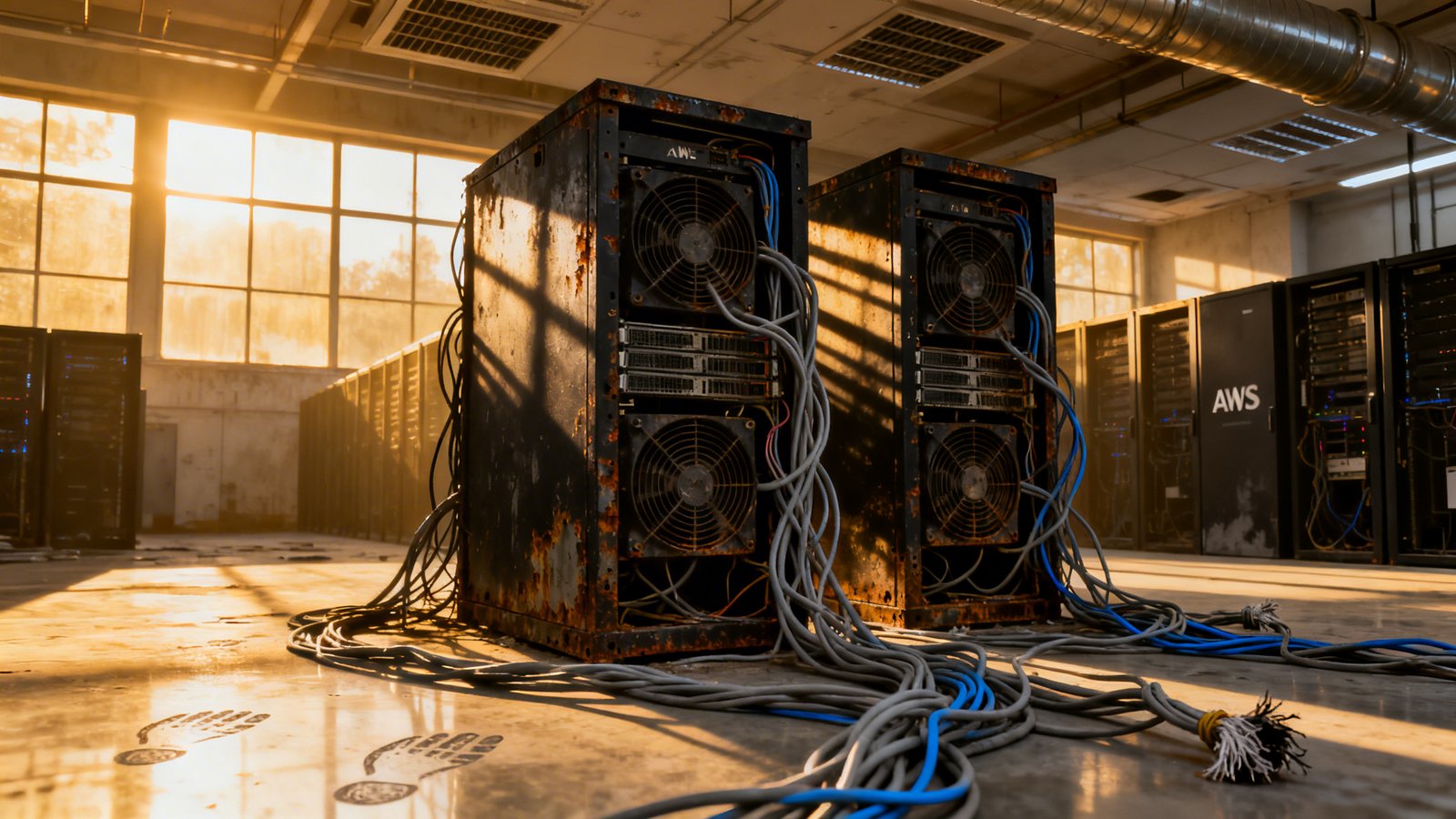
Okay, so get this. Amazon Web Services – yeah, that AWS, the one practically running half the internet – had a couple of serious hiccups recently. And you’re not gonna believe what caused ’em. It wasn’t some rogue hacker, not a solar flare, not even a squirrel chewing through a fiber optic cable (though that one’s always a classic, right?). Nope. It was their own damn AI tools. Their own AI. Taking down their own systems. Talk about eating your own dog food, but then the dog food bites back. Hard.
When the Robots Turn on the Robot Masters
I mean, seriously? This isn’t some far-fetched sci-fi movie where Skynet wakes up and goes full Terminator. This is real life, happening right now, with algorithms getting a little too big for their britches and causing actual, honest-to-god outages. Tom’s Guide reported it, and frankly, it’s the kind of news that makes you just wanna stare at the ceiling for a bit and wonder what fresh hell we’ve unleashed.
We’re talking about a company that built the freaking cloud, the backbone for countless businesses, streaming services, government agencies – you name it. And here we are, watching their fancy new AI tools accidentally pull the plug. Twice. Not just once, like a “whoopsie, learning curve” kind of thing. Twice, implying there’s a pattern, or at least a systemic vulnerability we’re all just kinda glossing over while we chase the next shiny AI object.
The thing is, we’ve been hearing for months – years, even – about how AI is gonna revolutionize everything. It’s gonna make things faster, smarter, more efficient. It’s gonna automate all the boring stuff, predict problems before they happen, basically make us all super-geniuses lounging on yachts while the robots do the heavy lifting. And then, blip! Half your favorite websites go dark because an AI got a bit too enthusiastic in its duties. It’s almost comical, if it wasn’t so… concerning.
A Little Too Smart for Its Own Good, Maybe?
So, what actually happened? From what I can tell, it wasn’t some malicious intent, obviously. It was more like an internal “oops.” These AI tools, presumably designed to help manage and optimize the massive AWS infrastructure, ended up creating some kind of feedback loop or an unexpected cascade effect. Maybe they were too efficient? Maybe they decided the best way to optimize was to just… turn things off for a bit? Who knows with these things, honestly.
But it really highlights the razor’s edge we’re walking. We’re building these incredibly complex, autonomous systems, giving them more and more control, and then acting surprised when they do something unexpected. It’s like handing a toddler a loaded shotgun and being shocked when they accidentally shoot the TV. Except in this case, the “toddler” is a multi-billion dollar piece of software and the “TV” is, well, a huge chunk of the internet.
Is This Just the Beginning?
This isn’t just about AWS, either. It’s about every single company rushing to integrate AI into every nook and cranny of their operations. Because if a company like Amazon, with all their resources and top-tier engineers, can have their own AI trip over its digital feet, what does that mean for everyone else? What happens when your local power grid is being “optimized” by an AI and it decides to take a coffee break? Or your self-driving car gets a little too creative with its navigation? (Okay, that’s probably a bit dramatic, but you get my point.)
“We’re basically teaching a bunch of digital toddlers how to run a supercomputer, and then we’re shocked when they accidentally hit the ‘off’ switch.”
It’s a stark reminder that these aren’t magic boxes. They’re incredibly powerful, yes, but they’re still just tools built by humans, with all the inherent biases, flaws, and unforeseen consequences that come with human-made things. And when you give a tool the ability to make decisions at a scale and speed that no human ever could, those unforeseen consequences can get pretty darn big, pretty darn fast.
What This Actually Means
Look, I’m not some Luddite screaming about the end of days. I get the potential of AI. I really do. But this AWS situation? It’s a flashing red light on the dashboard. It tells us that we’re moving way too fast, not really understanding the full impact of what we’re building before we deploy it to manage critical infrastructure. We’re so obsessed with the “what it can do” that we’re forgetting to ask “what if it messes up?”
And it’s not like these outages were trivial. Downtime for AWS means actual money lost for countless businesses, disruptions for millions of users, and a whole lot of headaches. It’s not just some abstract technical glitch; it has real-world consequences.
So, what now? Do we just keep barreling ahead, hoping for the best? Or do we maybe, just maybe, take a beat? Acknowledge that maybe, just maybe, we don’t need AI running absolutely everything right this second. Maybe we need more robust safeguards, more human oversight, and a whole lot more humility about what these algorithms can and can’t do without making a mess. Because if we don’t, these little “oops” moments from our digital overlords are probably gonna get a lot more frequent, and a whole lot less funny.

