





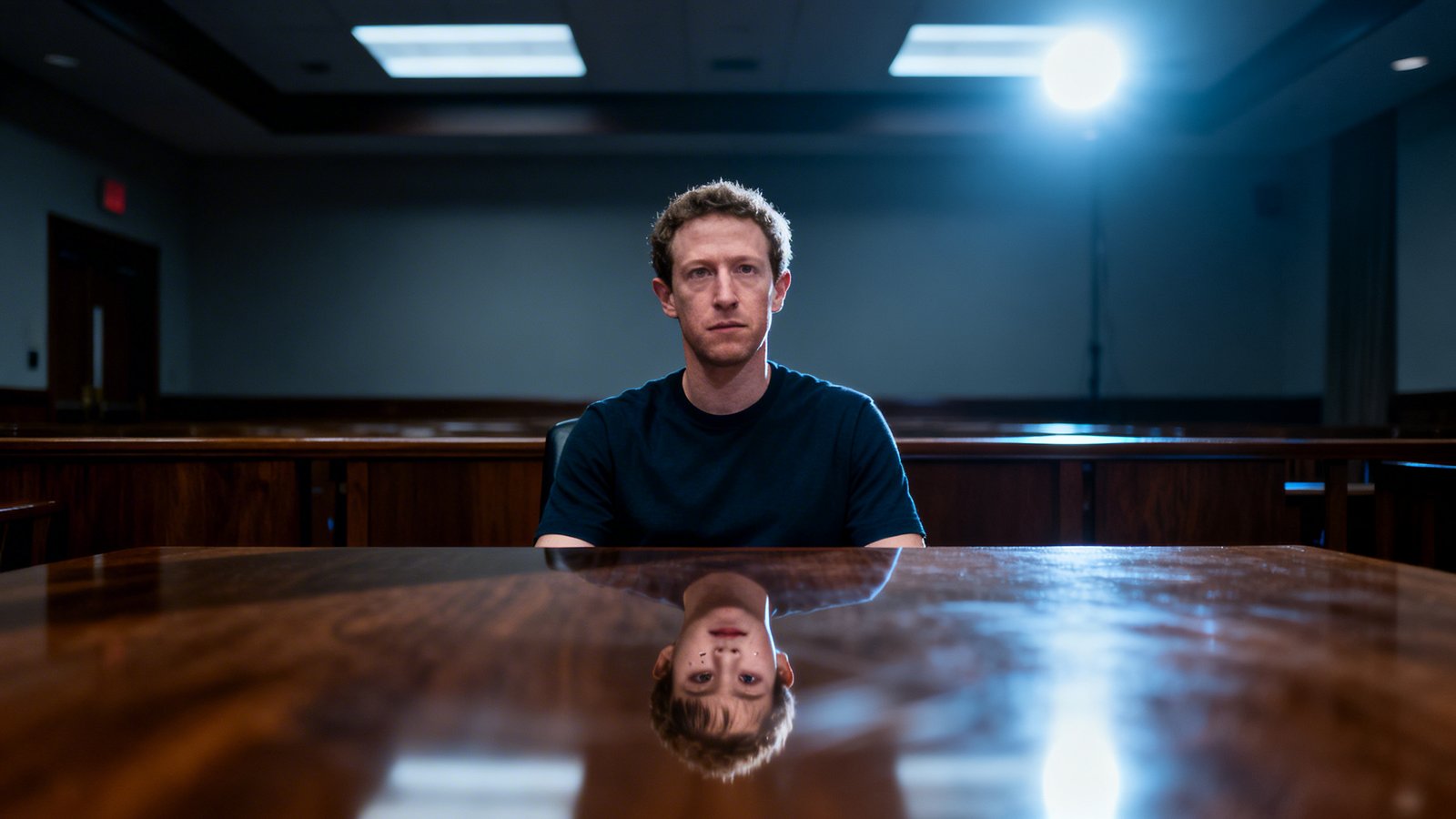
Zuckerberg vs. The Jury: Is Meta Addicting Your Kids?
Alright, so here’s the deal. Mark Zuckerberg, the guy who basically invented how half the planet wastes its time (and, let’s be honest, connects too), is gonna face a jury. A jury. Not a bunch of tech bros in Silicon Valley, not a panel of academics, but actual regular people, pulled from the community, to decide if his multi-billion-dollar empire – Meta, Facebook, Instagram, whatever you want to call it today – is intentionally getting our kids hooked. And if that’s the case, who’s gonna pay for it. I mean, holy smokes, this is big. Really big.
When Billions Meet Reality
Look, we’ve been talking about social media addiction for years, right? It’s been bubbling under the surface. Parents whispering, teachers complaining, therapists seeing a tsunami of anxiety and depression among young people. But it’s always been this amorphous, sort of “everybody knows it but who’s gonna do something” kind of problem. Now? Now it’s hit the courtroom. And when something hits the courtroom, especially with a jury involved, things get real. Fast.
We’re not just talking about some minor regulatory slap on the wrist here. This isn’t about data privacy anymore, or whether they’re stifling competition (though those are totally still issues, don’t get me wrong). This is about the fundamental design of these platforms. The algorithms. The endless scroll. The notifications that ping, ping, ping, demanding your attention. It’s about whether Meta knew what it was doing to developing brains and, frankly, just kept on doing it because, well, money. Profits. Growth. All the usual suspects.
You gotta wonder, what’s it like to be Zuckerberg right now? To be the face of a company that’s facing down parents and mental health experts, all alleging that your product is essentially a digital drug for kids? I mean, who cares how many metaverse avatars you’ve got if the real world is suing you for ruining a generation? This isn’t just about PR anymore. This is about accountability. And I have to admit, seeing it get to this stage, it’s pretty satisfying, if I’m being honest. It’s about time.
The Deep Dive into Dopamine
So, what are these lawsuits actually claiming? Basically, they’re alleging that Meta’s platforms are designed, intentionally, to be addictive. And not just generally addictive, but specifically for young, impressionable minds. Think about it. Kids are vulnerable. Their brains are still cooking, still developing the impulse control and critical thinking skills that adults (theoretically) possess. They’re more susceptible to peer pressure, to validation, to the dopamine hits that come from likes and comments.
And Meta, according to the claims, basically engineered its platforms to exploit those vulnerabilities. The constant notifications. The “fear of missing out” (FOMO) that keeps them checking. The personalized feeds that show you exactly what will keep your eyes glued. It’s a feedback loop, a Skinner box on steroids, and it’s built to keep you scrolling, watching, engaging. For hours. Every single day. We’ve all seen it, right? Kids glued to their phones, sometimes for what feels like an eternity. My own nephew, God bless him, can barely look up from TikTok for dinner. It’s terrifying.
But Wait, Isn’t This Just a “Bad Parenting” Problem?
Ah, the old “blame the parents” argument. You hear it all the time, don’t you? “Just take their phones away!” “Limit screen time!” And yeah, parental responsibility is huge. Absolutely. But here’s the thing: these platforms are not just passively available. They’re active participants in this struggle. They’re designed by literal rocket scientists (or at least, people with similar brainpower) to be irresistible. It’s like putting a bowl of candy in front of a kid and then blaming the kid for eating too much.
“The design choices made by Meta are not accidental; they are intentional, and they have consequences that extend far beyond the screen into the mental well-being of our children.”
It’s not about whether social media can be used positively. Of course it can. We all know that. It’s about whether the default mode of these platforms, especially for young people, is harmful. It’s about whether the company prioritized engagement metrics and advertising revenue over the known risks to mental health. And from what I can tell, the evidence that’s been mounting up for years – from internal documents (hello, whistleblower Frances Haugen!) to countless studies – suggests a pretty clear picture. They knew. Or at least, they should have known.
The Stakes: More Than Just Money
So, what’s really on the line here? Yeah, there’s a ton of money. Billions, probably. If a jury decides Meta is liable, we’re talking about damages that could make even a company as rich as Meta wince. But honestly, I think the bigger stakes are about precedent. This isn’t just about Meta. This is about every single tech company that designs platforms for our kids. YouTube, TikTok, Snapchat – they’re all watching this trial, I guarantee it. Because if Zuckerberg goes down, or even takes a serious hit, it could fundamentally change how these companies operate.
It could force them to rethink their algorithms. To prioritize well-being over endless engagement. To actually build in features that protect young users, not just exploit them. I mean, imagine a world where the default setting on a social media app for a 13-year-old isn’t maximum addiction, but rather, maximum safety and healthy interaction. Sounds kinda crazy, right? But that’s what’s being pushed for.
And it’s not just about the kids either. It’s about us. About how we, as a society, decide to regulate these incredibly powerful digital forces. We’ve seen this pattern before, haven’t we? Tobacco companies, opioid manufacturers, even fast food joints – eventually, society pushes back when it feels like corporate greed is actively harming public health. Social media is just the latest battleground.
What This Actually Means
Look, I’m not gonna lie, I’m cautiously optimistic. A jury trial? With Zuckerberg himself potentially on the stand? That’s a different beast than a Senate hearing where politicians grandstand for the cameras. A jury is about facts, about evidence, and about common sense. They’re going to hear testimony from experts, from affected families, and from Meta’s own people. And then they’re going to make a decision.
This isn’t going to fix everything overnight, obviously. The internet is still the internet, and kids are still going to find ways to spend too much time online. But this trial, if it goes the way I hope it does, could be a turning point. It could finally force these behemoth tech companies to acknowledge the real-world, deeply human consequences of their digital creations. It could signal that you can’t just build an addictive product, market it to kids, and then wash your hands of the consequences. There has to be accountability. And maybe, just maybe, this is where it finally begins.

